Corsica is the best beach destination in France that most travelers are skipping. While crowds pour into Nice and Saint-Tropez, this 8,680 km² island sitting just south of the French mainland offers more than 200 beaches, a UNESCO-protected interior mountain range, and a food culture unlike anything else in Western Europe, all at prices that undercut the French Riviera by 30 to 40 percent. This Corsica France travel guide 2026 cuts through the generic advice and gives you what actually works: the secluded coves that locals protect, the ferry logistics that save you hundreds, the seasonal windows when the island is perfect, and the interior villages that no package tour will ever show you.
Corsica receives roughly 3 million tourists per year according to the Agence du Tourisme de la Corse, yet the vast majority of that traffic concentrates in July and August around five or six well-known resorts. The other 195-plus beaches, the 3,000 km of hiking trails, and the entire mountainous spine of the island sit uncrowded for most of the year. That imbalance is exactly the opportunity this guide targets.

Why Corsica Is the Best-Kept Secret in France for 2026
Corsica sits at the intersection of French administration and deeply rooted Corsican identity, a combination that keeps it off the radar for travelers who rely on mainstream travel content. The island is legally and politically part of France, so EU and Schengen rules apply the same way they do in Paris. But the culture, cuisine, language, and attitude belong to a place that spent centuries under Genoese rule before Napoleon’s birth here in 1769 put it on the map. That layered identity produces something genuinely different: charcuterie that rivals anything from the Auvergne, wines grown at altitudes impossible on the mainland, and a hospitality that is warm but without the performative tourism polish you find in Provence.
For 2026 travelers, one logistical note matters before anything else. The EU Entry/Exit System (EES) for non-Schengen passport holders is expected to be fully operational by the time you read this. If you are arriving in France from outside the Schengen zone before boarding a ferry or domestic flight to Corsica, check the France EES Guide 2026 first, border processing times at Nice and Marseille (the two main ferry departure ports) have been running longer than expected and missing a sailing window is an expensive mistake.
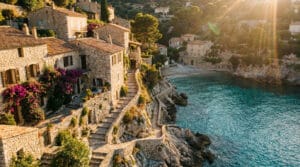
The island covers roughly 1,000 km of coastline according to the Office de Tourisme de la Haute-Corse, with granite cliffs, river-fed lagoons, and powder-sand coves sharing the same shoreline within a few kilometers of each other. That geological variety is the core reason Corsica outperforms comparably sized Mediterranean islands for repeat visitors.
Best Hidden Beaches in Corsica: The Corsica France Travel Guide 2026 Shortlist
Skip the tourist brochure beaches. The ones below require slightly more effort to reach and reward that effort with empty water and intact scenery. Each is reachable without a boat charter, though arriving by sea makes some of them markedly easier.
Plage de Saleccia
Saleccia sits in the Désert des Agriates on the northern coast and is widely considered the finest beach in the Mediterranean by travelers who have seen most of it. The 1.5 km of white sand backed by low umbrella pines is accessible only by a 4×4 track (rentable locally), a 90-minute coastal hike from Ghisonaccia, or a short taxi-boat from Saint-Florent harbor. There are no facilities except a seasonal refreshment van. Go before 9 am or after 5 pm in summer and you may have a kilometer of that sand to yourself. In September it stays warm enough to swim and the crowd drops by 70 percent.
Plage de Tamaricciu
Located south of Porto-Vecchio near Palombaggia, Tamaricciu is accessible via a 15-minute walk through maritime pines from the main road. It is technically part of the Palombaggia beach system but most visitors stop at the first parking lot and never walk far enough. The southern end of Tamaricciu is sheltered by a granite headland that blocks wind from the north and creates water clarity rivaling any snorkel site in the western Mediterranean. Arrive between 6 and 8 pm and watch the granite turn orange while the day-trippers leave.
Cala di l’Albitreccia
This small bay south of Ajaccio requires a 40-minute walk from the nearest road through maquis scrubland that smells of rosemary, lavender, and wild mint. The reward is a cove entirely free of infrastructure with a freshwater stream cutting across the sand in spring. It is the kind of place where you feel the island as it was before it became a tourism product. Keep the hike trail unmarked intentionally, respect that by not sharing GPS coordinates publicly.

Getting to Corsica in 2026: Ferries, Flights, and What Actually Saves Money
Flights to Corsica are not cheap when booked late. The four airports, Ajaccio (AJA), Bastia (BIA), Calvi (CLY), and Figari (FSC near Porto-Vecchio), serve direct routes from Paris, Lyon, Marseille, Nice, and several other French cities, plus seasonal connections from Germany, Switzerland, Belgium, and the UK. Air Corsica and Air France operate the domestic routes year-round. Book these at least eight weeks out and you can find one-way fares from Paris for €60 to €90. Book two weeks out and the same seat costs €180 to €250.
Ferries are the better option for travelers who want to bring a car or travel on a tighter budget. Corsica Ferries, La Méridionale, and Brittany Ferries (from the UK via Toulon) all operate regular crossings. Marseille to Ajaccio takes roughly 11 hours overnight, you sleep on board, arrive at dawn, and start the day fresh without paying for a hotel night. Marseille to Bastia runs about 12 hours. Nice to Calvi or Île-Rousse is faster at 6 to 7 hours and better for north-island focused itineraries. A passenger foot-passenger ticket with a cabin berth from Marseille runs €80 to €130 depending on season. Adding a car doubles the cost but gives you freedom on the island that no rental can match during peak weeks when Corsican car hire inventory runs out.
If you are doing a France mainland trip and then adding Corsica, the France by Train Travel Guide 2026 covers the TGV connections to Marseille and Nice, both ferry departure ports, and shows how to stack train and ferry tickets into a single logical chain rather than two separate bookings that may not connect well.
Corsica France Travel Guide 2026: When to Visit (and When to Skip It)
June and September are the months this guide recommends without reservation. The sea temperature in June is between 20°C and 22°C, warm enough for swimming from day one. Accommodation prices are 25 to 40 percent lower than July and August. Restaurants are fully open without the queues. The mountain trails, including the famous GR20, rated among the top ten long-distance walking routes in Europe by the French Federation of Alpine Clubs, are accessible before the full summer heat makes high-altitude sections genuinely dangerous.
July and August are not impossible but require strategic planning. Book accommodation before March. Avoid driving between noon and 4 pm when the roads through mountain passes become gridlocked. Target beaches by 7 am or by 6 pm. The reward for tolerating peak season logistics is that Corsica in full summer is genuinely spectacular, the maquis is in full fragrant bloom, the evenings in port towns like Bonifacio and Calvi last until midnight with real atmosphere, and the water is at its warmest at 26°C to 28°C.
October is underappreciated for hikers. The GR20 empties almost completely, mountain villages return to their pre-tourist rhythm, and chestnut season in the Alta Rocca region produces the raw ingredient for chestnut flour, chestnut beer, and the polenta-adjacent dish called pulenda that you will not find reliably outside Corsica at any other time of year. (source: U.S. travel advisories)
Avoid January to March unless you are specifically chasing the hiking and skiing combination on Monte Cinto (2,706 m, the island’s highest peak). Most restaurants and hotels outside the main towns close between November and April, and the ferry schedule reduces to one or two crossings per week on some routes. (source: EU tourism statistics)
The Corsican Interior: Villages, Food, and Culture
The interior is where Corsica separates itself from every other Mediterranean beach destination. The mountains run north to south like a spine and rise fast from the coast, you can be on a beach one hour and at 1,500 meters looking down at the sea an hour later. That compression of geography within short driving distances gives the island an almost impossible density of different experiences.
Village Life in the Haute-Corse
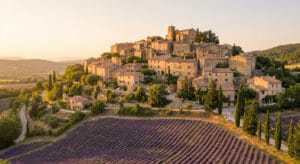
Villages like Speloncato, Sant’Antonino, and Evisa cling to ridgelines and granite outcrops at altitudes between 700 and 1,000 meters. The streets are sometimes too narrow for two people to pass comfortably. The churches hold Baroque art that would be behind rope barriers and €15 entry fees if they were on the mainland. The bars open at 7 am for pastis and close when the last local leaves. Sant’Antonino, often cited as one of the most beautiful villages in France by the Association des Plus Beaux Villages de France (which lists it officially), sits on a granite peak 475 meters above the Balagne plain with unobstructed views of the Ligurian Sea on clear days. The drive up the switchback road is a legitimate spectacle on its own.
What to Eat in Corsica
Corsican charcuterie earns its own paragraph. The porcu nustrale pig, raised semi-wild on chestnuts and acorns in the maquis, produces lonzu (cured loin), coppa (cured neck), figatellu (liver sausage best eaten grilled), and prisuttu (air-cured ham aged a minimum of 18 months). These products have EU Protected Designation of Origin status, which means what you buy on the island cannot be replicated elsewhere. A charcuterie plate at a village shop with a glass of local Nielluccio red wine costs €8 to €12 and is one of the genuinely great cheap eating experiences in southern Europe.
Brocciu, a fresh sheep or goat cheese made only when the animals are in milk (roughly November to June), appears in pasta stuffed dishes, desserts like fiadone (a cheesecake with lemon and eau-de-vie), and simply crumbled over salad greens. Outside the production window you get a pasteurized version called brocciu passu, it is good but different. If you visit in spring, order anything with fresh brocciu at least once.
Corsican wine is underrated and underpriced relative to quality. The Patrimonio AOC in the north produces Nielluccio reds and Vermentino whites that consistently score well in blind tastings against Burgundy and Bordeaux at a quarter of the price. The Figari AOC in the south has some of the smallest production domaines in France, and bottles sometimes sell only at the domaine door. Buy several, they rarely appear on the mainland.

Outdoor Activities Beyond the Beach in Corsica
The GR20 is the headline. Running 180 km from Calenzana in the north to Conca in the south, it crosses the island’s main mountain chain and is technically demanding enough that roughly 40 percent of hikers who start do not finish according to the Parc Naturel Régional de Corse. The full route takes 15 days at an average pace. But the trail is accessible in shorter segments, the section from Vizzavona (the midpoint, reachable by train) to Bocca di Verdi is an excellent two-day sample of the southern section with less vertical gain than the north.
The Gorges de la Restonica near Corte offer one of the most dramatic non-coastal day hikes on the island. Two glacial lakes, Lac de Melo at 1,711 m and Lac de Capitello at 1,930 m, are reachable in a half-day from the valley car park. The path crosses fixed chains and polished granite slabs at the top and is not appropriate for small children or people uncomfortable with exposure, but it requires no technical equipment.
Sea kayaking around the Scandola Nature Reserve on the west coast, a UNESCO World Heritage Site, is one of the rare activities where paying for a guided half-day makes more sense than renting equipment independently. The reserve prohibits motorized boats from entering many of its finest sections, so a kayak gives you access that the tourist boat tours cannot match.
Mountain biking is developing fast on the island. The area around Ghisoni in the central mountains has 120 km of marked trails ranging from green to black grade, and the Massif du Coscione plateau in the south offers long open ridge rides with no vehicle traffic for hours at a time.
Practical Tips for Visiting Corsica in 2026
Getting Around the Island
Renting a car is the honest recommendation for most visitors. The public bus network (run by Autocars Ceccaldi and other regional operators) connects the main towns on a schedule that works if your itinerary is linear and unhurried. The Chemins de Fer de la Corse (CFC) train, a narrow-gauge line running from Ajaccio to Bastia via Corte, is genuinely charming and practically useful for the interior segment. But reaching the hidden beaches, the mountain villages above road level, and the national park trailheads without a car requires significant planning and flexibility around infrequent departures.
Book your rental car before arriving on the island during June through August. Local agencies in Ajaccio and Bastia are often cheaper than the international chains but have smaller fleets that disappear quickly. A manual transmission compact SUV with reasonable ground clearance handles the vast majority of Corsican roads, including the mountain passes. High-clearance 4×4 is only strictly necessary for Saleccia and a handful of forestry tracks, for everywhere else a normal rental is fine.
Budget Planning for Corsica 2026
Corsica sits in a middle position between mainland French costs and budget Mediterranean destinations. A realistic daily budget for two people sharing a gîte or mid-range hotel, eating one restaurant meal and one self-catered meal, and doing one paid activity works out to approximately €120 to €160 per person in June and September. In July and August the same trip runs €160 to €220 per person due to accommodation premiums. If you cook from markets for most meals and stay in gîte d’étape accommodation along hiking routes, you can comfortably stay under €80 per person per day outside peak months.
The Budget Travel France 2026 guide has a solid section on ferry booking strategy and accommodation-cost comparison tools that apply directly to Corsica planning, worth reading before you start pricing out the trip.
If you are combining Corsica with a broader France itinerary, the France 2 Week Itinerary 2026 shows how to sequence mainland regions before a Corsica ferry crossing from Marseille or Nice so that you are not backtracking and wasting transit days.
Insider Secrets for the Corsica France Travel Guide 2026
The single most effective thing you can do to improve your Corsica trip is to avoid the island’s east coast corridor. The coastal strip between Bastia and Porto-Vecchio on the eastern side is where the campsite-and-resort infrastructure concentrates, where the traffic jams form in August, and where the beaches are the least distinctive. The west coast, the north, and the interior reward the detour with the scenery that the island is actually famous for.
Time your visit to a village fête. Between June and September almost every interior village holds its annual saint’s day festival, which typically means a free outdoor dinner, live music mixing traditional Corsican polyphony with contemporary styles, and local producers selling products that never reach any shop. The tourist offices in Ajaccio, Bastia, and Corte maintain updated lists, ask specifically for village fêtes rather than organized tourist events, which are a different category.
Book the Scandola kayak tour before you arrive. It sells out weeks in advance in peak season and the number of guide operators with permits to enter the reserve is strictly limited by the park authority. This is not something you can arrange the morning you want to go.
The village of Corte in the center of the island is chronically underused as a base. It sits at the junction of three valleys, has the only university in Corsica (which keeps prices down and energy up), and is within 30 minutes of the Restonica gorge, the forest of Vizzavona, and the GR20 midpoint. Accommodation in Corte costs 20 to 30 percent less than in Ajaccio or Bonifacio for equivalent quality. If your goal is to experience the interior rather than the coast, Corte deserves at least two nights.
Corsican polyphony, the traditional multi-voice choral music that UNESCO recognized on its Intangible Cultural Heritage list in 2009, is most accessible at evening concerts in cathedral towns. Bastia’s place Saint-Nicolas is the best free venue in summer. Groups like A Filetta have international reputations but perform locally throughout the year. Attending one live performance is the kind of travel memory that survives every other detail of a trip fading.

Essential Planning Checklist for Corsica 2026
- Book ferry tickets at least 6 to 8 weeks ahead for July and August; 3 to 4 weeks ahead for June and September.
- Reserve rental car before traveling, do not plan to find one on arrival in peak season.
- Check EES entry requirements if you hold a non-Schengen passport; see the France EES Guide 2026 for current processing times.
- Book the Scandola Nature Reserve kayak tour well in advance, permit slots are fixed and finite.
- Pack for two climates in the same bag: sun protection and light cotton for the coast, a waterproof shell and mid-layer for anything above 1,000 meters.
- Download offline maps (Maps.me or OSM-based apps) for the mountain roads, mobile signal is absent in large portions of the interior.
- Bring cash for village markets, roadside charcuterie stands, and small restaurants in the interior that may not accept cards reliably.
- Allow at least one completely unplanned day. The best finds in Corsica are the ones you stumble into.
Frequently Asked Questions About Corsica
Do you need a visa or special entry documents for Corsica in 2026?
Corsica is a French department and part of the Schengen Area, so the same entry rules that apply to mainland France apply here. EU and Schengen passport holders enter without additional documentation. Non-Schengen visitors (including UK, US, Canadian, and Australian passport holders for stays under 90 days) do not need a visa but are subject to EES biometric registration at their first Schengen port of entry. Since most travelers fly into Paris, Nice, or Marseille before connecting to Corsica, EES registration happens at that first entry point, not on the island itself.
What is the best month to visit Corsica for beaches without crowds?
June and September are the optimal months by almost every measure. Sea temperatures are 20°C to 23°C, comfortable for swimming. Accommodation costs are 25 to 40 percent lower than peak July and August. The most popular beaches have perhaps 20 to 30 percent of their peak-season visitor numbers. The hiking trails are also in better condition in June (before the summer dry heat stresses the path surfaces) and September (after the main summer traffic wears them down). If budget is a secondary concern and atmosphere matters most, late June after French schools let out catches the island in full swing without quite reaching August levels.
Can you visit Corsica without a car?
Yes, but it changes what is realistic. The coastal towns, Ajaccio, Bastia, Bonifacio, Calvi, Porto-Vecchio, are reachable by ferry and served by bus connections that allow movement between them. The CFC train from Ajaccio to Bastia via Corte adds an inland route. Within the main towns, everything is walkable. The limitation without a car is that the hidden beaches, mountain villages, and trailheads outside walking distance of bus stops become very difficult or impossible to reach on a normal itinerary. For hikers doing the GR20, a car is genuinely unnecessary, you start in Calenzana (reachable by taxi from Calvi ferry port) and finish in Conca (with transfer service back). For beach-focused travelers who want to explore beyond the main resort zones, a car transforms the trip.
Is Corsica expensive compared to the rest of France?
Corsica sits roughly in line with southern French cities like Marseille and Montpellier for everyday costs, slightly cheaper than the French Riviera and noticeably cheaper than Paris. Restaurant meals in village settings often run €15 to €25 for a main course. Market food is priced for locals. The main costs that exceed mainland expectations are accommodation during July and August (when the island’s limited hotel and gîte stock gets bid up hard) and any activity requiring a permit or guide in protected areas. Self-catering in a rented gîte or camping (Corsica has excellent campsite infrastructure) reduces daily costs dramatically.
What language do people speak in Corsica?
French is the official administrative language and is spoken universally. Corsican, a Romance language closely related to Italian and with deep ties to the Tuscan dialects of the mainland, is co-official and widely spoken in village communities. Street signs, menus, and local products are often labeled in both languages. English is spoken in tourist-oriented businesses in the main towns and resorts. Outside of those zones, some French is useful, not for survival (most transactions work with gesture and goodwill) but for the conversations that actually make a trip worth remembering.