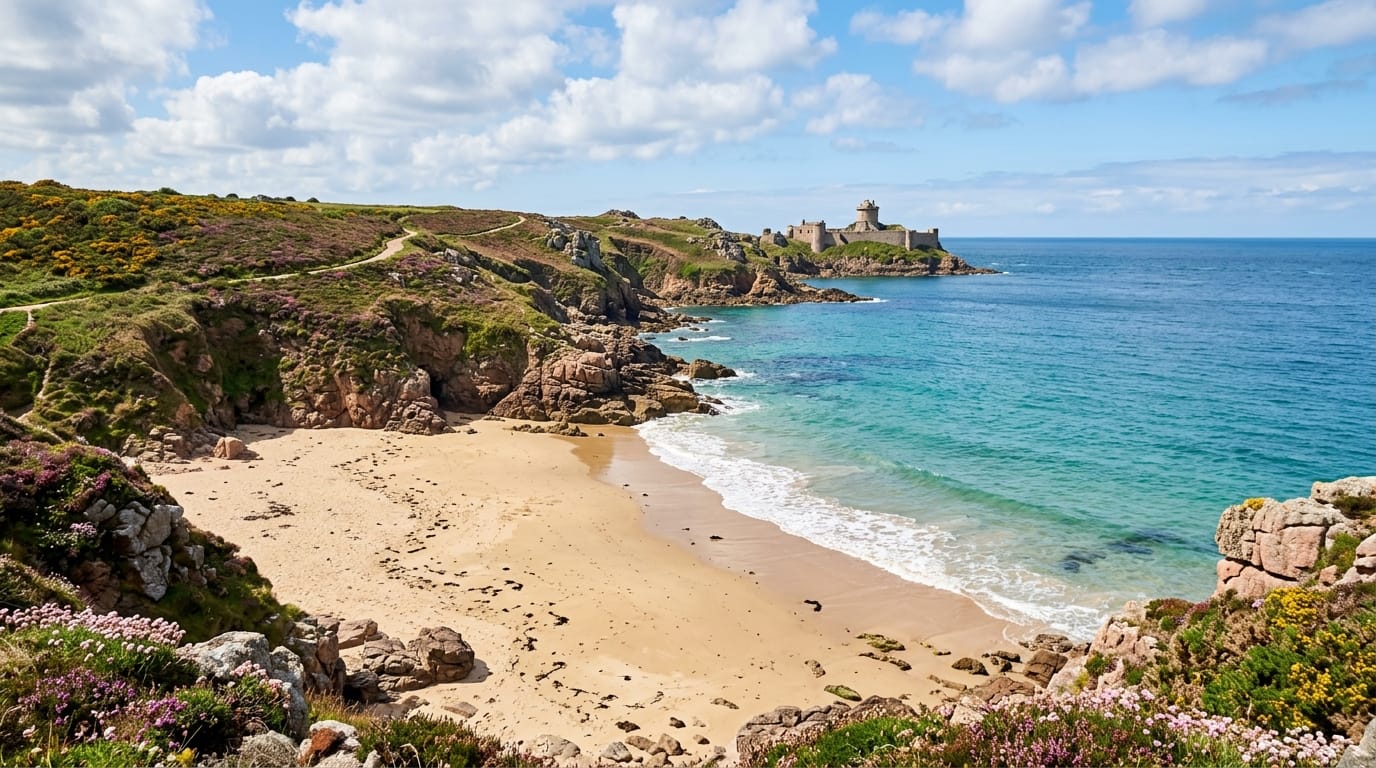
Underrated Beaches Brittany France 2026: A Local’s Secret Guide
The most breathtaking underrated beaches in Brittany, France in 2026 are Plage du Veillon near Talmont-Saint-Hilaire, Plage de Pen-Hat at Camaret-sur-Mer, and the stunning wild shores of the Presqu’île de Crozon — all dramatically beautiful, largely unknown to international tourists, and accessible without the crushing summer crowds that plague Brittany’s famous beaches further north.
I discovered Brittany’s hidden coastline by accident. I was supposed to spend a week in Paris, but a train strike rerouted me west, toward a region I’d always assumed was just a rainy peninsula with good crêpes. What I found instead was a coastline so raw and magnificently wild that I’ve returned every summer since — and I’ve made it my mission to find the beaches the guidebooks skip.
This is that guide. No crowds, no queues for parking, no overpriced crêperies blocking the view. Just Brittany as the Bretons know it.
Key stat: According to the Comité Régional du Tourisme de Bretagne, Brittany received 11 million visitors in 2025, but over 70% concentrated on fewer than 15% of its beaches — meaning dozens of extraordinary stretches of sand remain almost entirely to yourself.
Why Brittany’s Hidden Beaches Outshine the Famous Ones
Saint-Malo is magnificent. Quiberon is undeniably beautiful. The Pink Granite Coast near Perros-Guirec is otherworldly. But in July and August, these places can feel more like queuing exercises than beach escapes. Parking lots fill by 9am. The water’s edge becomes a shoulder-to-shoulder affair. The magic gets diluted.
The secret Brittany that locals know operates differently. Because the region stretches nearly 2,730 kilometers of coastline — the second longest in France — there is simply more beach than tourism can fill, even in peak season. You just need to know where to look, and more importantly, where NOT to look (which usually means: not where Google Maps sends you).
The Hidden Beach List: Brittany’s Best-Kept Secrets in 2026
1. Plage de Pen-Hat, Camaret-sur-Mer (Presqu’île de Crozon)
If you visit only one beach from this list, make it Pen-Hat. Located on the wild western tip of the Presqu’île de Crozon, this crescent of grey-gold sand is backed by dramatic heath-covered cliffs that glow copper in evening light. The Atlantic swell here is constant and powerful — it’s a surfer’s spot, though beginners can find calmer patches near the rocky outcrops.
Access: Take the D8 from Camaret-sur-Mer toward Pointe de Pen-Hat. A small parking area sits 200 meters from the beach (free, fills by 11am in summer).
Parking: Free roadside parking; arrive before 10am in July-August.
Best season: May–June and September for calm weather and zero crowds. Sublime in Atlantic storms (from a safe distance) in winter.
What makes it special: The Pointe de Pen-Hat headland to the south offers a 30-minute walk with views of Camaret’s harbor and, on clear days, the Pointe du Raz across the bay.
2. Plage des Grands Sables, Île de Groix
Here’s Brittany’s best-kept maritime secret: the Île de Groix, a small island 14 kilometers off Lorient, hosts the only convex beach in Europe at Grands Sables. The beach curves outward toward the sea rather than inward like a bay — a geological anomaly that creates a completely unique visual experience. The island has no cars for tourists, which means getting here requires a 45-minute ferry from Lorient and then a bicycle or your own feet.
Access: Ferry from Lorient to Groix harbor (Compagnie Océane, approximately €14 return). Bicycle rental available at the port.
Best season: June and September. July-August the island fills with French families, but it never reaches mainland levels of congestion.
What makes it special: The entire island feels like a time capsule. No supermarkets, no chain restaurants, no tourist kitsch. Just stone villages, wildflower heathland, and extraordinary light.
3. Anse de Pen-Al-Lann, Carantec
The Carantec peninsula near Morlaix is one of northern Brittany’s best-kept secrets. While tourists flood to Saint-Malo and the Mont-Saint-Michel Bay further east, Carantec sits quietly with its tidal beaches, pine forests running down to the water, and views across to the Château du Taureau (a 16th-century sea fortress). Anse de Pen-Al-Lann is accessible at low tide by foot across a sandbar — a beach that literally appears and disappears with the sea.
Access: From Carantec village center, follow signs to Pointe de Pen-Al-Lann. The walk takes 20 minutes from parking.
Tidal warning: Check tide tables before visiting. The sandbar crossing is safe for 3 hours either side of low tide.
Best season: Late May through June when tidal patterns align with daylight and wildflowers are in bloom along the coastal path.
4. Plage du Kersiguénou, Belle-Île-en-Mer (Southern Coast)
Belle-Île-en-Mer is Brittany’s largest island and gets substantial tourist traffic in summer. But most visitors cluster around Port-Goulphar and the famous Aiguilles de Port-Coton. Kersiguénou, on the island’s southern coast, is accessible only by a 15-minute walk from the nearest road — and that walk eliminates 90% of visitors.
Access: From Le Palais (the island’s main town), take the D25 toward Locmaria. Park near the hamlet of Kersiguénou and follow the coastal path south for 15 minutes.
Best season: May and September–October for golden heathland colors and uncrowded conditions.
What makes it special: The beach is backed by schist cliffs in shades of purple and black — colors you won’t find on any other Brittany beach.
5. Plage de Pors-Poulhan, Plouhinec (Pays Bigouden)
Down in the Pays Bigouden, the forgotten southern tip of Finistère, Pors-Poulhan is a small cove that sees almost no tourism outside of local families. The village above it is postcard-perfect: white-painted stone houses, a tiny harbor with fishing boats, and a bakery open on Saturday mornings. The beach itself is rocky at the edges with a clean sandy center, warm enough for swimming from late June through September.
Access: Take the D784 south from Audierne toward Penmarch. Turn toward Plouhinec and follow signs to Pors-Poulhan. Parking is roadside and free.
Best season: July and August for warmest water, though the village vibe peaks in June before tourists arrive from further north.
Practical Tips for Visiting Brittany’s Hidden Beaches
- Tides matter enormously. Brittany has some of Europe’s largest tidal ranges (up to 13 meters in the Bay of Mont-Saint-Michel). Many hidden beaches exist only at low tide. Always check the Météo France marine tide tables before planning beach days.
- Morning is golden, literally. Brittany’s western light at sunrise is extraordinary. Empty beaches at 7am glow in ways that no Instagram filter can replicate. Most beaches are empty until 10am even in August.
- Pack for weather changes. Even in summer, Brittany’s Atlantic weather can shift rapidly. Bring a light waterproof layer even on sunny mornings.
- The GR34 coastal trail connects everything. The GR34 long-distance path follows Brittany’s entire coastline and passes many of the beaches on this list. Combining beach stops with coastal walking sections is the optimal Brittany experience.
- Wild camping rules: Camping on Brittany beaches is generally prohibited within national marine parks but tolerated on some remote stretches outside protected zones. Check local regulations before setting up.
Where to Stay Near Brittany’s Hidden Beaches
Staying in the right base makes day-tripping to hidden beaches infinitely easier. For the Presqu’île de Crozon and its beaches, Crozon town or Camaret-sur-Mer are ideal bases — small enough to feel authentic, large enough to have good restaurants and bakeries. For Belle-Île and Groix, plan to stay on the islands themselves (ferries run frequently enough to allow day trips, but island stays are infinitely more magical). For northern Brittany and the Carantec area, Morlaix makes an excellent base — a medieval town with a stunning viaduct, excellent train connections, and proximity to some of Finistère’s finest coastline.
When planning your accommodation, book your Brittany hotel early — the best small guesthouses and chambres d’hôtes near these hidden beaches fill 3–6 months in advance for summer peak season.
Getting to Brittany’s Hidden Beaches Without a Car
Brittany’s rural transport can be challenging without a vehicle, but it’s not impossible:
- TGV from Paris: Paris Montparnasse to Brest takes 3.5 hours; to Quimper, 4 hours; to Rennes, 1.5 hours. All are excellent bases for exploring by rental car.
- Car rental: Essential for reaching most hidden beaches. Book in advance from Brest, Quimper, or Rennes airports.
- Cycling: The Vélodyssée cycling route runs along much of Brittany’s coast. For those comfortable with longer distances, several hidden beaches on this list are accessible by bike from larger towns.
- Local bus networks: BreagoBreizh operates regional bus services across Brittany for €2 per journey — remarkable value and surprisingly useful for reaching some coastal villages.
Frequently Asked Questions
What are the most underrated beaches in Brittany?
Plage de Pen-Hat (Camaret-sur-Mer), Plage des Grands Sables (Île de Groix), Anse de Pen-Al-Lann (Carantec), Plage du Kersiguénou (Belle-Île-en-Mer), and Plage de Pors-Poulhan (Plouhinec) are consistently underrated by international visitors and among the most beautiful spots on the entire Brittany coastline.
When is the best time to visit Brittany beaches?
June and September are ideal: warm enough to swim, far fewer crowds than July-August, and Brittany’s famous light at its most dramatic. May is excellent for wildflowers and empty beaches if cooler temperatures don’t deter you. July-August offers the warmest water but the most crowds at popular spots.
Are Brittany beaches safe for swimming?
Most supervised beaches (indicated by green, yellow, or red flags) are safe. However, Brittany’s tidal currents can be strong, particularly on the western Finistère and Presqu’île de Crozon coasts. Always check flag status and never swim at unsupervised beaches when conditions are rough.
Do I need a car to explore Brittany’s coastline?
For reaching hidden beaches specifically, a car is strongly recommended. Regional buses exist but don’t reach most of the remote coastal spots on this list. Car rental from Brest, Rennes, or Quimper is the most practical option for visitors arriving by train.
What makes Brittany beaches different from other French beaches?
Brittany’s beaches are defined by their wild, Atlantic character — powerful waves, dramatic rocky coastlines, tidal flats, and a raw quality absent from the manicured beaches of the Côte d’Azur. The light is extraordinary (painters have come here for centuries), the seafood is exceptional, and the region retains a cultural distinctiveness — Celtic traditions, Breton language, and a pride of place — that makes it feel like a country within a country.
How does Brittany’s tide affect beach visits?
Significantly. The tidal range in Brittany is among the largest in the world. At low tide, vast sandy expanses appear that are underwater at high tide. Some of the most beautiful spots — tidal islands, sandbar-accessed beaches — exist only for a few hours each day. Planning beach visits around low tide maximizes both beach space and scenery.