Sustainable Wine Tours in Bordeaux 2026: How to Explore France’s Wine Capital Responsibly
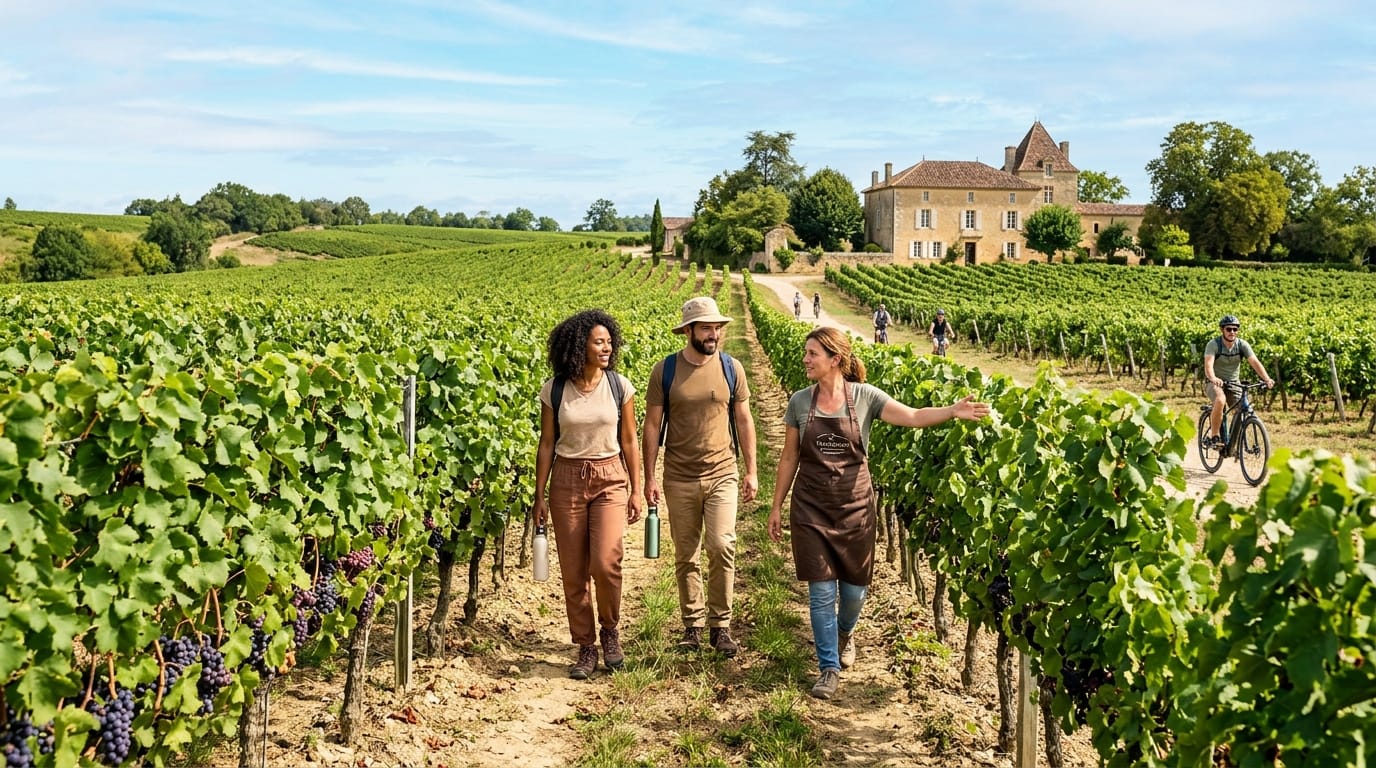
There’s a particular afternoon in Bordeaux that stays with you. You’re standing in a vineyard where the owner has farmed biodynamically for three generations, and he’s explaining why the soil beneath your feet has more microbial life than a forest floor. That’s when you understand why sustainable wine tourism in Bordeaux isn’t just a trend — it’s a return to something the region’s best winemakers never abandoned.
Bordeaux in 2026 is in the middle of a genuine green transformation. More than 60% of Bordeaux châteaux now hold some form of environmental certification, up from 15% in 2010, according to the Bordeaux Wine Trade Council. This makes it one of the best wine regions in the world for travelers who care about where their glass of Merlot comes from.
Understanding Sustainable Wine Certifications in Bordeaux
Before booking anything, it helps to understand what certifications actually mean, because the labeling can be confusing.
HVE (High Environmental Value — Haute Valeur Environnementale): France’s national sustainability certification for agriculture. Three levels exist; HVE Level 3 is the highest and requires measurable targets for biodiversity, pest management, water use, and fertilization. Most major Bordeaux châteaux pursuing sustainability hold HVE Level 3.
Biodynamic (Biodynamie): A more holistic certification governed by Demeter. Goes beyond HVE to include lunar farming calendars, specific biodynamic preparations, and complete prohibition of synthetic inputs. More demanding and relatively rare — about 8% of Bordeaux producers, but these are often the most interesting to visit.
Organic (Agriculture Biologique — AB): Prohibits synthetic pesticides and fertilizers. About 15% of Bordeaux is now certified organic.
Sustainable Bordeaux: The regional collective label aggregating châteaux that meet broad sustainability criteria across environmental, social, and economic dimensions.
The Best Sustainable Château Tours in Bordeaux
Left Bank: Médoc and Graves
Château Pontet-Canet (Pauillac): Perhaps the most famous biodynamic conversion in the Médoc. This Grand Cru Classé property converted entirely to biodynamics in 2010 and has become a reference point for what’s possible. Tours here show you horses still used for plowing (to avoid soil compaction), remarkable biodiversity plots between vine rows, and a gravity-fed cellar. Wine quality has only improved since the conversion — their vintages now command prices comparable to Second Growths. Booking: essential months in advance; available through their website or Bordeaux winery tour operators.
Château Léoville Barton (Saint-Julien): One of the most respected properties in the Médoc, now fully organic. The Anthony Barton family — Anglo-Irish, Bordeaux-rooted — runs tours that are refreshingly unpretentious for a Second Growth property. The tasting room looks onto working vineyards, not a museum.
Right Bank: Saint-Émilion and Pomerol
Château Canon (Saint-Émilion Grand Cru Classé A): One of the most beautiful properties in Saint-Émilion, with HVE Level 3 certification and a strong commitment to biodiversity corridors across their 23-hectare domaine. The underground chalk quarry cellar is extraordinary — one of Bordeaux’s most memorable wine cave experiences. Combined with a visit to Saint-Émilion’s medieval village (a UNESCO World Heritage Site), this makes for a perfect sustainable day trip from Bordeaux city.
Château Figeac (Saint-Émilion Premier Grand Cru Classé B): Biodynamic since 2012, recently upgraded to Premier Grand Cru Classé B. The estate’s 40-hectare vineyard sits on a uniquely diverse terroir of gravel, clay, and sand — the winemaking team will explain how sustainable practices have revealed more of this terroir in the wines over the past decade.
Between the Waters: Entre-Deux-Mers
The region between the Dordogne and Garonne rivers is where sustainable Bordeaux is most accessible and least tourist-crowded. Dozens of small family estates here have converted to organic or biodynamic farming without the Grand Cru price tags. Château Marjosse (Pierre Lurton’s family property), Château Bonnet, and the Château Ducasse cooperative all offer tours showcasing sustainable practices without the Grand Cru premium.
How to Structure a Sustainable Wine Tour in Bordeaux
Day 1: The City and Its Wine Culture
Start in Bordeaux city itself. The Cité du Vin (Wine Museum) on the Garonne waterfront has dedicated sustainable wine exhibitions in 2026, including an interactive section on organic viticulture and climate adaptation. It’s worth the €22 entry. The evening wine bar scene on the Rue Saint-Rémi offers natural and biodynamic wines by the glass from dozens of Bordeaux producers — a low-pressure way to discover the region’s sustainable estates before visiting them.
Day 2: Médoc Discovery
Rent a bicycle or join a small-group guided tour heading north through the Médoc. The D2 highway (Route des Châteaux) is designed for château-hopping. Focus on: Pontet-Canet (book ahead), Château Clerc Milon (biodynamic conversion ongoing), and the village of Saint-Estèphe for lunch. The return route via Pauillac offers views across the Gironde estuary that no photograph does justice.
Day 3: Saint-Émilion and Right Bank
The medieval village of Saint-Émilion is itself worth half a day. The underground monolithic church, the limestone catacombs, and the panoramic views across vine-covered hills are memorable even before you open a bottle. Château Canon and Château Figeac (both require advance booking) are within walking distance of the village center. The afternoon train back to Bordeaux takes 35 minutes from Saint-Émilion station.
This itinerary pairs well with the broader context in our complete Bordeaux travel guide for 2026, which covers accommodation, restaurants, and day trip logistics in detail. For those combining Bordeaux with wider French wine country exploration, our Alsace wine route guide offers an interesting contrast to Bordeaux’s style.
Practical Booking Tips for Sustainable Château Visits
Book 6-8 weeks ahead for Grand Cru estates — This is non-negotiable for the most sought-after sustainable properties in peak season (April-October). Email directly to the château; they appreciate direct contact over intermediary booking platforms for serious wine tourism.
Language: Most Bordeaux châteaux offer English-language tours, particularly in tourist-oriented Saint-Émilion. Médoc properties tend to be more French-focused; a phrase book helps or book through an English-speaking guide service.
Transport: Unless staying in the châteaux themselves (many Grand Cru estates offer accommodation now), hiring a driver for a day (€200-350) or joining small group tours is more practical than self-driving — wine tasting is incompatible with safe driving, regardless of how you feel about it.
Best months: September-October for harvest season (the most atmospheric time to visit), May-June for pleasant weather without peak summer crowds, and late March-April when the vines are budding and the countryside is vivid green.
Sustainable Wine Shopping in Bordeaux
Not all visitors have time for château visits, but sustainable Bordeaux wines are accessible through the city’s excellent wine merchants.
- L’Intendant (Allées de Tourny): Multi-floor Bordeaux wine shop with a dedicated organic/biodynamic section. Staff speak English and are genuinely knowledgeable about sustainable producers.
- Planète Bordeaux (Blanquefort): The Bordeaux Wine Trade’s own shop, with curated sustainable producer selections and regular tasting events.
- La Vinothèque de Bordeaux: Focus on smaller producers; excellent natural wine selection from Entre-Deux-Mers and other less-touristed appellations.
For getting the most from French travel more broadly, our guide to regional French food specialties covers what to eat alongside your wine in Bordeaux — the local cuisine is as much a part of the experience as the wine itself.
Climate Change and Bordeaux Wine in 2026
This isn’t just background context — it’s directly relevant to why sustainable practices matter now more than ever. Bordeaux has warmed by approximately 2°C since 1950 (INRAE data). Harvests that once happened in October now regularly conclude in September. Some châteaux are experimenting with heat-tolerant varieties like Touriga Nacional and Marselan as supplementary blending components.
The most forward-thinking sustainable estates are treating climate adaptation as part of their environmental commitment: increasing canopy shade to slow ripening, selecting later-ripening clonal material, and restoring hedgerows and tree lines to moderate microclimate temperatures. Visiting these properties in 2026 puts you in a front-row seat for one of the wine world’s most consequential adaptations.
Frequently Asked Questions About Bordeaux Sustainable Wine Tours
Are sustainable Bordeaux wine tours more expensive than regular château visits?
Slightly, in some cases. Biodynamic and organic certification increases production costs, and some estates reflect this in tasting fees (€20-40 versus €10-15 for standard visits). However, many Entre-Deux-Mers sustainable estates charge nothing or minimal fees for tours, particularly if you purchase wine. The Grand Cru estates command premium tour prices regardless of their sustainability status.
Can I visit Bordeaux châteaux without booking in advance?
For smaller estates and cooperatives, often yes — especially in November to March. For the well-known sustainable estates like Pontet-Canet, advance booking is essential year-round. Walk-in visits to major Saint-Émilion properties are almost impossible in summer without a booking.
What’s the best way to get from Bordeaux city to wine country?
Train from Bordeaux-Saint-Jean to Saint-Émilion (35 minutes). Organized minibus tours for Médoc. For independent Graves and Entre-Deux-Mers exploration, car hire or cycling is most flexible. Bus Connexion and Transports Bordeaux Métropole cover some wine villages.
Is Bordeaux wine tourism child-friendly?
Some sustainable estates have embraced family-oriented tours that include vineyard walks, grape harvesting activities (in season), and non-alcoholic grape juice tastings for children. Château Bonnet in Entre-Deux-Mers and several Saint-Émilion properties specifically market family experiences.
Which Bordeaux appellation has the most sustainable producers?
Entre-Deux-Mers has proportionally the highest density of certified organic and HVE producers, largely because smaller family estates have more flexibility to convert without the financial pressure facing large Grand Cru operations. The Côtes de Bordeaux appellations (Castillon, Francs, Cadillac) are also rich in sustainable producers offering excellent value.