Marseille 3-Day Itinerary: What Locals Actually Do in 2026
TL;DR
- Total budget: €280–490 per person for 3 days (mid-range), excluding transport to Marseille
- Best months: May, June and September, October for hiking the Calanques without the 34°C heat; avoid July, August for the crowds and the fire risk (the Calanques close partially above 32°C)
- Must-do: Eat a proper bouillabaisse at a certified restaurant (not the Vieux-Port tourist traps), hike to Calanque d’En-Vau at sunrise, take Metro 2 up to Notre-Dame de la Garde for sunset, walk Le Panier at 9am before the cruise groups arrive
- Skip: The Vieux-Port restaurants with photo menus and English-only waiters – the Panier bistros two streets back do the same dishes 40% cheaper
- Getting around: RTM metro + tram + bus (€1.80 single, €5.40 day pass); walk Le Panier and the port; ferry to Frioul-If €12; BlueBike bikes €1/day
Marseille is the French city that does not care what you think. While Paris preserves itself, Nice polishes, and Lyon refines, Marseille just keeps being Marseille – loud, sunburnt, full of scooters, smelling of the sea. It is the oldest city in France (founded 600 BC by Greek sailors from Phocaea), the second-largest, and the only one that makes you feel like you are somewhere else. The street names are half Italian, the cuisine is North African, Corsican, Provençal, and the arguing never stops. It is my favourite French city precisely because it has never learned to behave.
I moved to Marseille from Aix-en-Provence eight years ago and have not been bored once. This Marseille 3-day itinerary is the one I give to visiting friends who say “I only have three days – is Marseille dangerous? is it worth it? what should I do?” The answers are: not really, absolutely, and the following. Not the version where you take a photo at Notre-Dame de la Garde and leave. The version where you eat panisse at the Noailles market, take the ferry to the Frioul islands, and understand why Marseille is the only French city that looks Italian and Algerian at the same time.
Find flights to Marseille Provence (MRS) on Trip.com – Marseille gets cheap direct flights from 100+ European cities with Ryanair, Vueling, easyJet, Volotea, and Transavia.
How to Get to Marseille (and Why the Shuttle Bus Is Your Friend)
Marseille Provence Airport (MRS) sits 25 km northwest of the city. The best link is the Shuttle Bus Navette Aéroport – every 15 minutes to Saint-Charles train station, process time 25 minutes, €10 one way or €16 return. Book at the airport kiosk or online. [Source: Navette Marseille Aéroport]
The budget alternative is the TER train from Vitrolles-Aéroport station (reached by a free shuttle from the terminal): €5.80, 15 minutes to Saint-Charles, runs hourly. Slightly slower total but half the price. Taxi to the centre is €55–65 daytime, €70–80 at night – expensive, skip it unless you have heavy luggage.
From Paris, the TGV runs direct to Marseille Saint-Charles in 3h10 for €45–130 depending on booking window. Book 4–8 weeks ahead for the €45–70 window. From most European cities, compare direct flight prices on Aviasales – Marseille is on budget-carrier routes from London, Rome, Barcelona, Berlin, Istanbul, and 40+ others. [Source: SNCF Connect]
Book trains on Omio if you are chaining Marseille with Nice, Lyon, Avignon, or Montpellier – all under 3 hours by TGV or TER. Nice to Marseille is 2h40 by TER or 2h25 by TGV.
Once in town, the RTM network covers everything. Two metro lines (M1 and M2), three tram lines (T1, T2, T3), the Vieux-Port ferry (the “César”) across the port, and a big bus network. A single ticket is €1.80, a day pass (Pass 24h) is €5.40, a 3-day tourist pass is €12.50. [Source: RTM Marseille]
For more on timing a Provence trip, see our guide on 3 days in Avignon.
Where to Stay in Marseille: 3 Neighbourhoods Locals Recommend
Do not stay around the train station (Saint-Charles) or anywhere north of Cours Belsunce unless your priority is the cheapest hotel possible. Those districts are loud, gritty, and far from everything worth seeing. Here is where to book instead.
Le Panier (2nd arrondissement) – The oldest quarter of Marseille, the hill above the Vieux-Port, winding medieval streets, street art on every wall. Boutique hotels in 17th-century buildings, guesthouses, Airbnbs. €100–160/night for a 3-star, €190–320 for a 4-star. 5-minute walk to the Vieux-Port, 10 minutes to MuCEM. The best neighbourhood to stay for first-time visitors.
Vieux-Port (1st arrondissement, south side) – The classic postcard view, hotels with balconies over the harbour, tourist-central. €120–200/night for a 3-star, €230–400 for a 4-star. Excellent central location, slightly noisier at night, zero local character because it’s mostly tourists.
Cours Julien + La Plaine (6th arrondissement) – The arty, student, hipster quarter, 10 minutes from the centre. Guesthouses, Airbnbs. €80–140/night. The best restaurants, bars, concert venues, and nightlife in Marseille. Quieter than the Vieux-Port early, louder than it late. Where I tell repeat visitors to stay.
| Neighbourhood | Price Range/Night | Best For | To Vieux-Port |
|---|---|---|---|
| Le Panier | €100–320 | First-timers, photos | 5 min walk |
| Vieux-Port | €120–400 | Harbour views | 0 min |
| Cours Julien | €80–140 | Foodies, nightlife | 15 min walk |
| Malmousque / Endoume (7th arr.) | €150–300 | Seafront, quiet | 20 min bus |
| Budget hostels (Noailles) | €25–50 dorm | Backpackers | 10 min walk |
Find hotels in Marseille on Trip.com – free cancellation on most Panier and Vieux-Port bookings up to 24 hours before check-in. [Source: Marseille Tourism]
Day 1: Vieux-Port, MuCEM, and Le Panier
Morning (8:30 – 12:30)
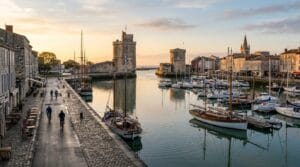
Start at the Vieux-Port at 8am if possible. Between 8 and 9, fishermen sell the morning’s catch directly from their boats on the Quai des Belges – the daily fish market (Marché aux Poissons), Monday, Sunday 8:00–13:00 but you want to be there early. No tourist stalls, no middlemen, just plastic trays of sea bass, rouget, dorade, octopus, and occasionally langoustines being weighed with old analog scales. Free to watch, worth the 20 minutes. [Source: Office de Tourisme Marseille]
Grab a coffee and a chichi frégi (the sugar-dusted Marseillais fried dough, like churros) at Chichifrégi Noailles (7 Rue du Marché des Capucins) or a navette (shuttle-shaped orange-flower biscuit, Marseille’s traditional sweet) at Le Four des Navettes (136 Rue Sainte, since 1781 – the oldest continuously operating bakery in Marseille). Navettes €6 for a box of 12. [Source: Le Four des Navettes]
Walk west along the north side of the Vieux-Port to MuCEM – the Museum of European and Mediterranean Civilisations, opened in 2013 in a Rudy Ricciotti building with a lace-concrete façade. €11 adult, closed Tuesdays. The permanent collection is uneven but the temporary exhibitions are consistently excellent, and the rooftop footbridge connects MuCEM to Fort Saint-Jean – a 12th-century Knights of Malta fortress now a free-entry cultural space with the best daytime view of Marseille from its parapets. The footbridge itself – 130 metres above the entrance to the Vieux-Port, free to walk – is one of the best free experiences in the city. [Source: MuCEM]
From Fort Saint-Jean, walk 5 minutes south to the Cathédrale de la Major – the 19th-century Byzantine-revival cathedral, absurdly oversized, free entry, rarely visited. Underneath, in the 2010s renovation, the city created Les Voûtes de la Major – a set of arcaded vaults with cafés, shops, and a very good seafood restaurant. Worth a detour for a glass of rosé on the terrace facing the sea.
| Attraction | 2026 Price | Time Needed | Book Ahead? |
|---|---|---|---|
| MuCEM + Fort Saint-Jean | €11 combined | 2h | Weekends yes |
| Notre-Dame de la Garde | Free | 45 min | No |
| Palais Longchamp | Free (museum €6) | 1h | No |
| Château d’If ferry | €12 ferry + €6 entry | 2h30 total | Weekends yes |
| Frioul Islands ferry | €12 round trip | Half day | Weekends yes |
| Calanques hike | Free | 4–6h | No (start early!) |
| Bouillabaisse dinner | €65–95 | 2h | 3–7 days |
[Source: Marseille Museums, Frioul If Express]
Afternoon (12:30 – 17:30)
Lunch: Chez Fonfon (140 Rue du Vallon des Auffes, 7th arr.). The classic Marseille bouillabaisse institution, run by the same family since 1952, in the tiny fishing cove of Vallon des Auffes (20-minute walk from the Vieux-Port along the seafront Corniche). Their bouillabaisse is a certified one – meaning it includes the 6 minimum fish species specified in the 1980 Bouillabaisse Charter – and costs €75 per person, served in two courses (soup first, then the fish filleted at the table with the rouille and garlic toasts). Book 5+ days ahead. A cheaper menu without the bouillabaisse runs €38. [Source: Chez Fonfon]
If Fonfon is full or bouillabaisse at lunch is too much, Chez Michel (6 Rue des Catalans) is the other bouillabaisse institution, similar prices and quality, also requires booking. For a cheaper but legitimate bouillabaisse option, Le Miramar (12 Quai du Port) is on the Vieux-Port and charges €72 per person – touristic location, serious kitchen, still on the official list of bouillabaisse-certified restaurants.
Most important rule: bouillabaisse under €55/person is not bouillabaisse. The minimum cost of the fish alone (rascasse, saint-pierre, grondin, vive, congre, baudroie) is €40/person wholesale. Anything listed at €25 is soup with some fish in it.
After lunch, walk back along the Corniche Kennedy – the 4-kilometre seafront boulevard with the sea on one side, mid-century villas on the other, and the Prado beaches at its southern end. A 30-minute walk from Vallon des Auffes to the David statue (a full-size copy of Michelangelo’s David at the Rond-Point David, because Marseille) and then back to the Vieux-Port via bus 83 or the Metro 2 from Castellane.
Return to the Vieux-Port area. Walk up into Le Panier – the oldest district, full of 16th-to-18th-century houses, street art (most of the walls are painted by Marseille and international artists), tiny squares, and hundreds of cats. Key spots: Place de Lenche (the former Roman agora, now a coffee square), Hôtel-Dieu (the 18th-century hospital now an InterContinental – walk through the lobby for the courtyard, free), and La Vieille Charité (a 17th-century poorhouse turned museum complex, €5 adult, closed Mondays, excellent Museum of African-Oceanic-Amerindian Arts).
Evening (19:30 – 22:30)
Dinner: La Poule Noire (61 Rue Sainte). A 30-seat Panier bistro, chef Marc de Passorio’s younger sister restaurant, €38 for a four-course tasting menu. Provençal ingredients, modern plating, Mediterranean-Levant influences. Book 4+ days ahead. Fills up with French visitors on weekends.
For cheaper and more casual, Chez Etienne (43 Rue de Lorette, Le Panier). A Marseillais institution that has refused to put its phone number online – you walk up, put your name on the list, and wait on the street for 30–90 minutes. Pizza marseillaise (on chard leaves, served in portions of 4 slices) €16, supions frits €18, tarte aux pommes maison €7. Cash only. No reservation. Open Tuesday, Saturday dinner only. The most Marseille experience you’ll have.
End the evening on the rooftop of Fort Saint-Jean – free, open until 10pm in summer, with a view of the Vieux-Port lit up underneath and Notre-Dame de la Garde glowing on the hill. Bring a bottle of rosé from the Voûtes de la Major. Or take a drink at Les Buvards on Rue Caisserie (natural wine bar, €5/glass, best sommelier in Le Panier). (source: U.S. travel advisories)
Day 2: Notre-Dame de la Garde, Cours Julien, and the Calanques
Today you do the iconic Marseille – the hilltop view and a hike into the Calanques. (source: EU tourism statistics)
Morning (7:00 – 13:00)
Early start. The Calanques – the white-limestone-cliff coves between Marseille and Cassis – are the reason many visitors come to Marseille. They are also insufferably crowded after 10am in summer and regularly closed to the public in July, August when the fire-risk index exceeds threshold. You want to be walking by 7:30am, ideally earlier.
Take bus 21M from Castellane metro (Metro 1) to Luminy campus (25 minutes, €1.80). This is the start of the main Calanques hiking trail – the GR98-51.
The three realistic hikes:
- Calanque de Morgiou – 1h15 each way, medium difficulty, best for swimming, small fishing village at the bottom
- Calanque de Sugiton – 45 min each way, easier, most scenic for a short visit, very crowded after 10am
- Calanque d’En-Vau – 2h each way from Luminy, hardest, steep scrambling on the last descent, absolutely the most spectacular swim in Provence. This is the Calanque most visitors come for. Not recommended in heatwaves (there is no shade). [Source: Parc National des Calanques]
Bring: 2 litres of water per person, swimsuit, sun hat, sunscreen, proper shoes (trainers fine, sandals no). No restaurants or cafés in the park. Check the Calanques website the morning of the hike – the fire index traffic-light colour determines whether access is allowed. Red means closed to the public.
The alternative if Calanques are closed or crowded: take a Calanques boat tour from the Vieux-Port. 3.5 hour cruise through the Calanques from the sea, €35–45, no landing (the inaccessibility is the point). The view from the boat is stunning but you don’t swim – choice between boat and hike depending on weather.
Back at the Vieux-Port by 1pm.
Afternoon (13:30 – 18:00)
Lunch at Noailles market. Take Metro 2 from Castellane to Noailles. The market around Rue du Marché des Capucins is North African, Sub-Saharan, and Middle Eastern Marseille – the district locals call “Marseille’s belly.” Street food options:
- Délices du Levant (Rue du Musée) – Lebanese, best shawarma in the city, €8
- Chez Yassine (Cours Julien end) – Tunisian, brik à l’œuf and couscous royal €12
- La Cantine de Nour d’Égypte (Rue d’Aubagne) – Egyptian koshari €9 and falafel €4
Budget €12–15 per person. Then get a Lebanese coffee and a baklawa from any of the 10 pastry counters on Rue du Marché des Capucins.
After lunch, walk 10 minutes east to the Cours Julien – the arty-bohemian square, surrounded by galleries, small shops, tattoo parlours, and 20+ bars. Most of the walls are painted (this is the Marseille mural district – the Panier has the oldest street art, Cours Julien has the newest). Cafés with terraces, independent record stores, concert bar L’Intermédiaire for live music.
Walk up to Notre-Dame de la Garde – the basilica on top of the 154-metre hill, visible from everywhere in Marseille, called “la Bonne Mère” (the Good Mother) by locals who mostly aren’t religious but consider it theirs anyway. Free entry. Built 1853–1897 in Romano-Byzantine revival style, the gold statue of the Virgin on top was gilded with 500g of gold leaf during the 2020s restoration. [Source: Notre-Dame de la Garde]
The climb is steep. You can walk from the Vieux-Port in 40 minutes (up Rue Paradis then a series of stairs) or take Bus 60 from the Vieux-Port (10 min, €1.80). The view from the parvis (the platform around the church) is the view you came to Marseille for – 360° over the city, the Vieux-Port, the Frioul Islands, the Calanques in the distance.
Stay for sunset. From 45 minutes before sunset to 30 minutes after, the parvis is the best place in Marseille to watch the city turn gold, pink, then blue. The basilica is lit at night and can be seen from anywhere in the city.
Evening (19:30 – 22:30)
Dinner: AM par Alexandre Mazzia (9 Rue François Rocca, 8th arr.) – three Michelin stars, the creative restaurant of Marseille. Lunch menu €155, dinner menus €230–380. Only 22 seats. Book 2–3 months ahead. If you can get a lunch table, this is the best meal you’ll have in France this year. [Source: Michelin Guide Marseille]
For more accessible dinner, Le Café des Épices (4 Rue du Lacydon, Le Panier) – Arnaud de Grammont’s 35-seat neighbourhood restaurant, €48 three-course menu, creative Mediterranean cooking with North African spices. Book 3 days ahead.
Or for a casual Cours Julien night, Le Massalia – natural wine bar with sharing plates, €25–40 per person depending on appetite, wines from €5/glass. No reservation needed.
Walk back to Le Panier via the Rue d’Aubagne and the Canebière. The Canebière is Marseille’s main boulevard – the central street that used to be the grandest in France. Now it’s slightly frayed but busy, with the Opera House and the new streetcar running down the middle.
Day 3: Frioul Islands, the Corniche, and a Proper Pastis Afternoon
Your third day is the Marseille the postcards skip – the islands, the sea-path, the village bits.
Morning (9:00 – 13:30)
Take the Frioul If Express ferry from the Quai de la Fraternité in the Vieux-Port. Boats leave every 90 minutes for the Frioul Islands and the Château d’If. Round-trip ticket €12 (Frioul only) or €18 (with Château d’If stop). Book online or at the kiosk on the quai. 25-minute crossing. [Source: Frioul If Express]
Château d’If (€6 extra entry) is the 16th-century island prison of Count of Monte Cristo fame. Small, takes 1 hour to visit, closed Mondays in low season. Worth it mostly for the view back at Marseille from the middle of the bay.
Frioul is the better stop. The islands (Pomègues and Ratonneau, connected by a causeway) have 14 small calanque-style beaches, a tiny port village with 4 restaurants, and hiking paths across the white limestone. Calanque de Saint-Estève and Plage de Ratonneau are the best swimming spots. A day at Frioul is what a day at Capri would be if Capri didn’t cost €300. [Source: Îles du Frioul]
Lunch on Frioul at Le Grand Bleu or La Ruche – two small restaurants in the port village, both serving daily catch plates at €22–28 and excellent rosé. Or bring picnic supplies from the Noailles market and eat on the rocks at Calanque de l’Huile (10 minutes’ walk from the port).
Return ferry at 3pm or 4:30pm.
Afternoon (15:00 – 18:30)
Back at the Vieux-Port, take a lazy pastis afternoon. The Marseille ritual: order a pastis (Ricard, Pastis 51, or the smaller Janot – all distilled within 30 km of the city), drink it slow, watch the port. Good spots:
- Les Grandes Halles du Vieux-Port (1 Quai du Port) – food hall with 15 counters, terrace facing the port, €5 pastis
- La Caravelle (34 Quai du Port) – the classic, in the Bellevue hotel, €6 pastis, 1920s interior
- Maison Empereur (4 Rue des Récolettes) – not a bar but the oldest hardware store in France (opened 1827), worth a 20-minute browse for proper olive-oil soaps, terracotta cassoles, and Provençal linens
If you still have energy, walk up to the Palais Longchamp (11th arrondissement, reachable in 20 minutes from Vieux-Port via Metro 1). The Second-Empire palace-and-fountain complex from 1869, built to celebrate the arrival of the Canal de Marseille (which solved the city’s water supply problem). The grounds are free and excellent for photographs. Two museums inside: the Musée des Beaux-Arts (€6, closed Mondays, 14th–19th century European art) and the Muséum d’Histoire Naturelle (€6, closed Mondays, good for kids). [Source: Palais Longchamp]
For those who want to explore more of Provence, check out our guides to 3 days in Avignon and 3 days in Nice.
Evening (19:00 – 22:00)
Last dinner: Le Petit Nice Passédat (Anse de Maldormé, 7th arr.) – three Michelin stars, on the Corniche at the edge of the sea, family-run since 1917. Lunch menu €160, dinner menus €280–380. Gérald Passédat’s seafood cooking is widely considered the best in Marseille. Book 2 months ahead. [Source: Le Petit Nice]
For an accessible seafront dinner, Chez Michel (6 Rue des Catalans) for bouillabaisse if you skipped it on Day 1, or La Mercerie (9 Cours Saint-Louis) – modern Provençal cooking, €45 set menu, the talked-about Marseille bistro of 2025 and 2026. Book 3 days ahead.
Or for a proper Marseille send-off, Chez Etienne if you didn’t go on night 1 (the legendary no-reservations pizza place in Le Panier, €16 for a huge pizza).
End the night on the Quai des Belges (the east end of the Vieux-Port). From 10pm the port lights reflect on the water, the Ferris wheel on the Cours d’Estienne d’Orves is lit (when it’s up – seasonal), and the boats clink on their moorings. Marseille is a loud city but the Vieux-Port at midnight is quiet, and you look up at Notre-Dame de la Garde floating on her hill. It is the Marseille view.
Marseille 3-Day Budget Breakdown
Here’s what three days in Marseille actually costs per person in 2026, based on mid-range choices:
| Category | Budget | Mid-Range | Splurge |
|---|---|---|---|
| Accommodation (3 nights) | €85–150 (hostel/Airbnb) | €290–460 (3-star hotel) | €590–940 (4-star Vieux-Port) |
| Food & drink (3 days) | €65–95 | €140–200 | €280–450 |
| Activities (ferries, museums, Calanques tour) | €35–60 | €75–120 | €180–300 |
| Local transport (RTM) | €12.50 (3-day pass) | €12.50 | €12.50 |
| Total per person | €197–317 | €518–793 | €1,063–1,703 |
The budget version assumes hostels or shared Airbnbs, Noailles street-food lunches instead of dinners, and the 3-day RTM pass (€12.50). Mid-range includes one bouillabaisse dinner (€75), a Calanques boat tour, the Frioul ferry, museum entries, and a 3-star hotel in Le Panier. Splurge adds AM par Alexandre Mazzia or Le Petit Nice and a 4-star hotel on the Vieux-Port.
Marseille is about 20% cheaper than Paris and 25% cheaper than Nice across most categories, with the exception of a certified bouillabaisse meal (€65–95 per person anywhere).
Getting Around Marseille Without a Car
You do not need a car in Marseille – and you really don’t want one, because parking anywhere central is a 45-minute daily negotiation. The RTM network covers everything:
- Metro M1: La Rose ↔ Vieux-Port ↔ La Timone (east-west through the centre)
- Metro M2: Bougainville ↔ Castellane ↔ Sainte-Marguerite Dromel (north-south, includes Notre-Dame access via Castellane)
- Tram T1/T2/T3: the east-of-the-city extensions, connects to Cours Julien and the 12th arrondissement
- Ferry du Port (“César”): crosses the Vieux-Port every 10 minutes, free with any RTM ticket – the most underused transport in Marseille, it turns a 20-minute walk into a 5-minute crossing
The 3-day RTM tourist pass costs €12.50 and includes unlimited metro, tram, bus, and ferry. Buy at any metro station machine. For a one-day visit, the €5.40 day pass covers everything. [Source: RTM]
BlueBike – the municipal bike-share, 130 stations, first 30 minutes free with €1/day pass. Marseille is hilly (the east side especially), so e-bikes are the better rental option at most bike shops from €25/day.
For longer trips in the region, the TER trains connect Marseille to Aix-en-Provence (30 min, €9.30), Cassis (25 min, €6.50), Arles (50 min, €14), and Avignon (1h30, €20). Nice is 2h40 (€20–35) and Lyon is 1h45 by TGV (€35–80).
When to Visit Marseille in 2026
May, June: The sweet spot. 18–25°C, sea already warm enough to swim from mid-June, Calanques accessible all day, terraces open, tourists still moderate. The Festival de Marseille (June, July 2026) brings dance, music, and theatre to 20+ venues. My favourite months to show the city.
July, August: Peak season. 28–35°C, the Calanques often partially closed for fire risk (check the traffic-light status daily), Plage des Catalans and Plage du Prado packed, restaurants booked out, hotel prices +50%. Still worth coming for the sea – but book 2+ months ahead.
September, October: Second sweet spot. Sea temperature 22–25°C (still swimmable), weather 20–27°C, restaurants back in full swing after August break, the Fiesta des Suds festival in October. The best month for Calanques hiking is October – 18–22°C and nobody around. [Source: Marseille Climate Data]
November, February: Marseille’s quiet season. 8–16°C, mostly dry, occasional mistral winds, hotel prices at their lowest. The city feels local and lived-in. Not beach weather but excellent for museums, bouillabaisse lunches, and long walks on the Corniche. The Christmas market at the Vieux-Port is small but charming. Hotel rates +10% around Christmas and New Year; +30% during the two weeks of winter holidays in February.
March, April: Spring return. 12–19°C, mimosa and almond blossoms in the Calanques, wildflowers on the trails. A great shoulder season, especially for hikers.
Book your Marseille trip on Trip.com – flights, hotels, and activities in one place with free cancellation on most bookings.
FAQ: Marseille 3-Day Itinerary
Is 3 days enough for Marseille?
Three days is right for the city itself, plus the ferry trip to Frioul and a Calanques morning. Day 1 covers Le Panier, the Vieux-Port, MuCEM, and a bouillabaisse lunch. Day 2 takes you into the Calanques, up to Notre-Dame de la Garde, and through the Cours Julien nightlife. Day 3 gives you Frioul islands, the Corniche, and Palais Longchamp. If you want to add an Aix-en-Provence day trip (30 min by train), stretch to 4 days. For serious Calanques hiking (the GR98-51 full traverse), add 2 more days.
How much does a trip to Marseille cost in 2026?
A mid-range 3-day trip costs roughly €518–793 per person, including a 3-star hotel in Le Panier, restaurant meals with one bouillabaisse, ferry tickets, and the 3-day RTM transport pass. Budget travellers can do it for €197–317 using hostels, Noailles street food, and the ferry-and-hike instead of paid tours. Marseille runs about 20% cheaper than Paris and 25% cheaper than Nice across most categories – with the notable exception of bouillabaisse, which is legitimately €65–95 per person anywhere serious.
Where do I eat the best bouillabaisse in Marseille?
For a certified bouillabaisse (minimum 6 fish species as per the Bouillabaisse Charter): Chez Fonfon (Vallon des Auffes, €75, book 5 days ahead), Chez Michel (Rue des Catalans, €75), Le Miramar (Vieux-Port, €72), Le Petit Nice (€280+ at the Michelin level). Do not eat bouillabaisse under €55 – the fish alone costs €40/person wholesale, so anything cheaper is soup with some fish bits. Always book at least 3 days ahead; most certified places require you to pre-order the bouillabaisse specifically because they portion the fish by reservation count.
Are the Calanques safe to hike?
Yes, with caveats. The Calanques are a protected national park with marked trails, and the main trails (Sugiton, Morgiou, Sormiou, En-Vau) are regularly used. Hazards: heat (the trails have almost no shade, bring 2L of water per person in summer), fire risk (the park closes partially or fully above 32°C in summer – check the daily traffic-light index at calanques-parcnational.fr), and the steep scramble down into En-Vau at the end (use proper shoes). Do not hike alone in summer afternoons. Start by 7:30am and be out by 13:00 in July, August.
Is Marseille walkable?
The centre is reasonably walkable but hilly. The Vieux-Port and Le Panier are compact – you can walk the 1 km perimeter of the Vieux-Port in 15 minutes. Cours Julien is a 15-minute uphill walk from the Vieux-Port. Notre-Dame de la Garde is a 40-minute uphill walk from the Vieux-Port or a 10-minute bus ride. The Corniche is walkable but long (4 km). The Calanques require a bus + a hike. Use the Metro, bus, and ferry actively – Marseille is larger than most first-time visitors expect.
What food is Marseille known for?
Classic Marseillais dishes: bouillabaisse (the 6-fish stew with rouille), bourride (a lighter white-fish version), pieds et paquets (tripe packages with sheep’s trotters – acquired taste), panisse (chickpea-flour fried cake, the Marseille chip), pizza marseillaise (at Chez Etienne, served on chard), supions frits (baby cuttlefish, flash-fried), navettes (orange-flower biscuits), chichi frégi (sugar-dusted fried dough). For North-African-influenced Marseille: couscous royal at any Cours Julien bistro, brik à l’œuf at Chez Yassine, Lebanese falafel at Noailles.
Is Marseille dangerous?
Marseille has a reputation as France’s “dangerous” city. The reality: statistically it has higher petty theft rates than Paris or Lyon, and certain northern districts (the 13th, 14th, 15th, 16th arrondissements) have ongoing gang-violence issues that do not affect tourists. The tourist zones (Vieux-Port, Le Panier, MuCEM, Cours Julien, the Corniche, the 6th, 7th, 8th arrondissements) are as safe as central Paris. Don’t flash valuables, avoid poorly lit streets in Noailles late at night, and you’ll be fine. Most tourist-visitor problems are pickpocketing, not violence.
Claire Fontaine writes about France from the inside – the real version, not the postcard. More Provence, Mediterranean, and southern France content coming to francevibe.com throughout 2026.