To actually avoid delays under the EES Entry Exit System France 2026 regulations, you must add at least 90 minutes to your airport arrival time, ensure your ETIAS authorization is valid, and have all documents ready before reaching border queues. This mandatory EU biometric system launches fully in 2026, and unprepared travelers risk significant disruptions at busy French entry points like Paris CDG. Proper preparation is no longer optional; it is a requirement for smooth entry. Paris on a Budget 2026: 12 Proven Tips to Save Big
What Is the EES Entry Exit System and Why Is It Launching in France in 2026?
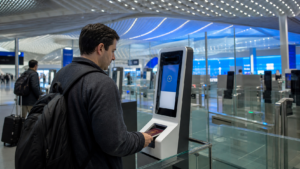
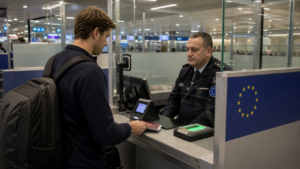
The Entry/Exit System (EES) is a cornerstone of the European Union’s Smart Borders package, established under Regulation (EU) 2017/2226. It is a fully automated, digital border control system designed to replace manual passport stamping for non-EU nationals entering and exiting the Schengen Area. France, as a Schengen member since 1995, will implement EES at all its external borders starting in 2026, following final technical readiness and member state deployment. The system digitally records each traveler’s name, type of travel document, biometric data (four fingerprints and a facial image), and the date and place of entry and exit. This data is stored in a centralized EU database for three years from the last exit, enabling rapid verification on subsequent trips. EES Entry Exit System France 2026: What Travelers Must Know
The primary drivers for EES are enhanced security, accurate enforcement of the 90/180-day rule, and the reduction of long-term border congestion. Prior to EES, border guards manually stamped passports and calculated stay durations, a process prone to human error and fraud. The European Commission estimates that EES will automate over 400 million border crossings annually across Schengen, with France accounting for approximately 100 million international tourist arrivals each year. The 2026 launch date follows extensive pilot testing at borders in Greece, Finland, and Bulgaria, with full operational capability required by EU law. For France, this means every international airport, seaport, and land border will have dedicated EES kiosks and integrated systems.
Biometric registration is the core of EES. Upon first entry, travelers provide four fingerprints (excluding children under 12) and a facial photograph. This creates a unique digital identity that is verified against EU security databases in real-time. The system automatically calculates days spent in Schengen over a rolling 180-day period, flagging any overstays instantly. According to Frontex, the EU border agency, this automation is expected to reduce average border processing time per traveler from the current manual baseline of 45-90 seconds to under 30 seconds for repeat entries, but first-time registration adds 2-5 minutes at the kiosk itself. Paris Budget Travel Guide 2026: How to Visit Paris Cheap
Who Must Register with EES at French Borders in 2026?
EES registration is mandatory for all third-country nationals—travelers who are not citizens of an EU member state, Iceland, Liechtenstein, Norway, or Switzerland—when crossing an external Schengen border into France. This encompasses a vast range of nationalities, and understanding your status is critical to preparation.
- British Citizens: Since Brexit took full effect on January 1, 2021, UK passport holders are classified as third-country nationals. All British travelers entering France from 2026 will undergo EES registration at their first Schengen entry, must carry a valid passport (national ID cards are not accepted), and are subject to the 90/180-day rule.
- Visa-Exempt Nationals: This includes citizens from the United States, Canada, Australia, New Zealand, Japan, South Korea, and most Latin American countries. These travelers do not need a visa for short stays but must register with EES and obtain ETIAS authorization prior to travel.
- Schengen Visa Holders: Travelers from countries requiring a short-stay (Type C) Schengen visa will also be processed through EES. The visa information is linked digitally to their EES record, and biometrics captured during the visa application may be reused, potentially speeding up border checks.
- Transit Passengers: Non-EU nationals transiting through French airports to a destination outside Schengen are generally exempt if they remain in the international transit zone. However, if they enter French territory, even briefly, EES applies.
Exemptions are limited. EU/EEA/Swiss citizens are not subject to EES. Additionally, non-EU nationals holding valid French or EU long-stay residence permits (Type D) or those with right of residence are exempt, as their status is tracked through other systems. Diplomatic passport holders may have facilitated procedures, but they are not automatically exempt. Data from the French Ministry of the Interior indicates that over 3.5 million British nationals and 4 million Americans visit France annually, representing a significant portion of initial EES registrations in 2026.
What Are the Most Effective, Data-Driven Tips to Prevent EES Delays?
Avoiding delays requires a proactive strategy based on official EU operational forecasts and pilot program observations. These tips are ranked by impact, with concrete time savings estimates.
1. Radically Extend Your Airport Arrival Buffer
For your first EES entry into France via air, arrive at the airport a minimum of 3 hours before a long-haul flight departure, and 2.5 hours for short-haul flights from non-Schengen points. This is a 50-100% increase over standard advice. EU border modeling for Paris Charles de Gaulle (CDG) anticipates peak queue times for first-time registrants exceeding 60 minutes during summer weekends. Adding this buffer protects against missed flights due to extended kiosk queues, system familiarization, and potential technical checks.
2. Secure and Validate ETIAS Authorization Well in Advance
The European Travel Information and Authorisation System (ETIAS) is a mandatory pre-travel screening for visa-exempt nationals. Apply at least 72 hours before departure, though approvals often come within minutes. The €7 fee grants authorization valid for three years or until passport expiry. Airlines will deny boarding without valid ETIAS, and at the border, your ETIAS status is automatically checked when your passport is scanned. As of 2025, over 30 million ETIAS applications are projected annually, with potential system slowdowns during initial launch phases. Keep a printed or digital copy of your authorization number.
3. Optimize Your Entry Point and Timing
Flight and route choice significantly affects EES queue exposure. Data from Aéroports de Paris shows that CDG Terminal 2E, handling most intercontinental flights, experiences its shortest non-EU queues for arrivals before 07:00 and after 21:00. Consider flying into regional airports like Nice Côte d
Related reading: Budget Travel France 2026: 15 Essential Money-Saving Tips · Biarritz 3-Day Itinerary: What Locals Actually Do in 2026