
Auvergne France Travel Guide 2026: Where to Go, What to See
Disclosure: This article contains affiliate links. If you book through our links, we may earn a small commission at no extra cost to you. This does not affect the price you pay or the recommendations we make.
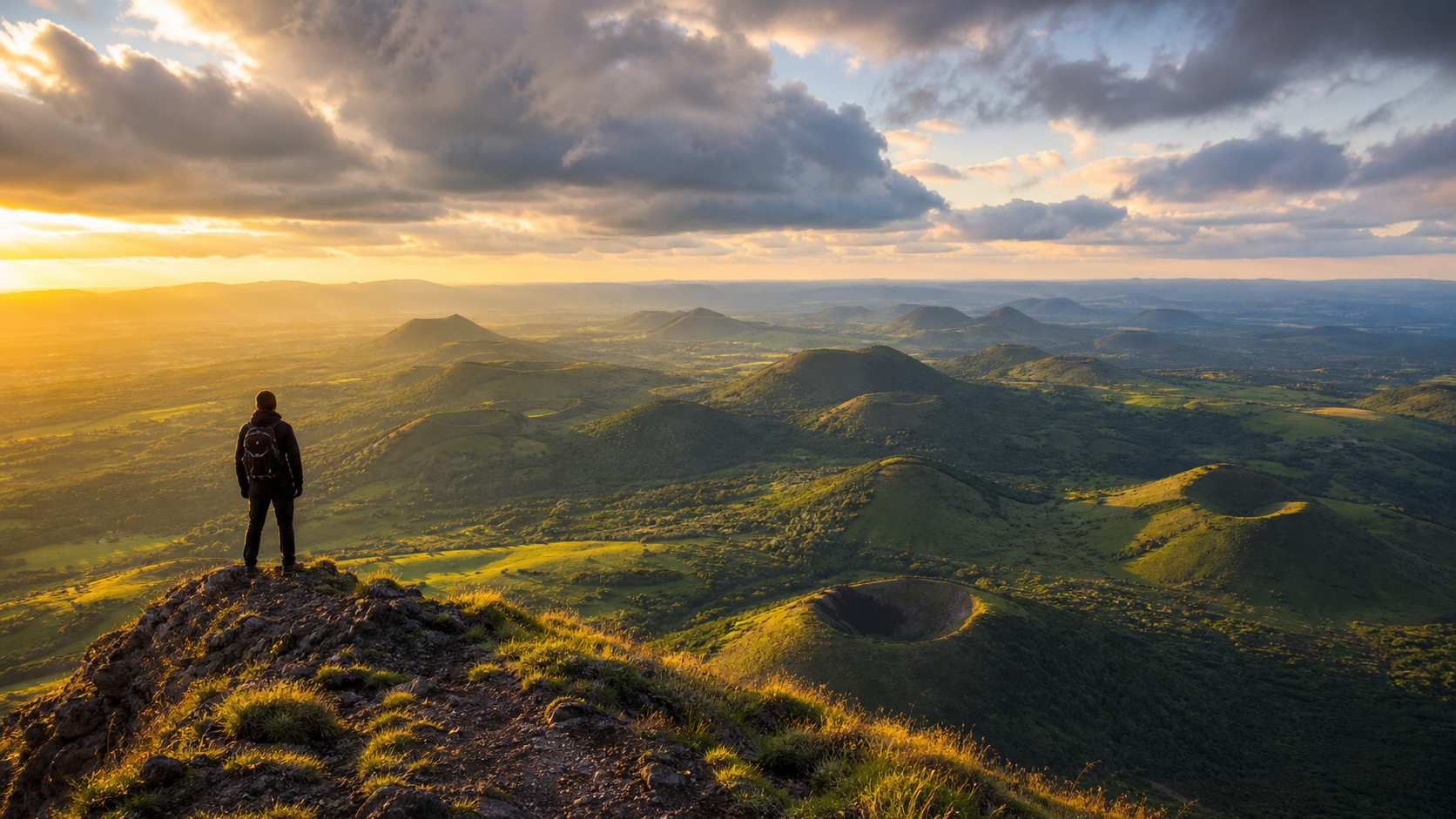
Stand at the top of the Puy de Dôme on a clear June morning. Eighty extinct volcanoes stretch south in a long black arc. No souvenir stall in sight. Just the wind and old lava.
That view belongs to Auvergne. Most visitors to France never see it, sticking instead to the crowded coasts of the Riviera or the museums of Paris. Yet, Auvergne sits in south-central France, between Lyon and Bordeaux, offering a landscape that feels almost alien compared to the rest of the country.
This region holds the Chaîne des Puys, a UNESCO World Heritage volcanic chain, plus the Cantal Massif, thermal towns like Vichy, and five AOC-certified cheeses that Paris restaurants pay a premium for. This Auvergne France travel guide covers where to go, what to hike, how to spend a day at Vulcania, things to do in Clermont-Ferrand, and how to book adventure tours and camping in the volcanic parks. It includes verified 2026 prices and honest booking advice.
Why Should Auvergne Be on Your France Itinerary?
Auvergne offers geological drama, medieval villages, and almost zero tourist crowds in one region. If you have already done Paris and Provence, this is where France gets genuinely interesting. It is a destination for travellers who want authenticity over Instagram fame.
The region covers the Puy-de-Dôme and Cantal departments, though locals and tour operators use “Auvergne” broadly to include parts of Haute-Loire and Allier. What binds it together is the volcanic geology and a distinct identity that feels nothing like the south. The culture is rooted in the land, with a cuisine heavy on cheese, cured meats, and hearty stews designed for mountain winters.
The Chaîne des Puys: A UNESCO Chain You Can Walk
The Chaîne des Puys received UNESCO World Heritage status in 2018. It is a chain of 80 dormant volcanoes running 40 kilometres north to south, with the Puy de Dôme as its highest and best-known peak. This is not a heritage site buried under visitor infrastructure. You walk it, touch the lava fields, and stand inside ancient craters. The access is real and the entry is free.
What Kind of Traveler Auvergne Suits
Auvergne works best for travellers who prefer outdoor activity over museum schedules. It rewards those who enjoy small towns, regional food, and terrain that actually changes underfoot. A car is close to essential outside Clermont-Ferrand. The TGV from Paris takes around 3 hours to reach the city. But once you arrive, the volcanic parks and rural villages require a rental car or a guided tour to explore properly.
The Auvergne Volcanoes: How Do You Read the Terrain?
The Chaîne des Puys contains 80 volcanoes spread across a 40km corridor north of Clermont-Ferrand. The chain last erupted roughly 10,000 years ago. On the ground, you move between ash-grey lava fields, dense beech forests, and crater lakes that sit impossibly blue in summer. The chain is well-marked and accessible to walkers of most fitness levels.
Puy de Dôme: The Reference Point
At 1,465 metres, the Puy de Dôme is the highest and most visited summit in the chain. According to Clermont Auvergne Volcans, the summit holds the ruins of a Gallo-Roman temple dedicated to Mercury, excavated in the 19th century. A meteorological station has operated here since 1875. On a clear day, the summit view takes in 60 or more other volcanoes. In ideal conditions, the Alps are visible to the east.
Puy de Sancy and the Cantal Massif
Puy de Sancy, near the town of Mont-Dore, reaches 1,885 metres. It is the highest point in the Massif Central. The terrain here is older and more eroded than the Chaîne des Puys, with rounded ridges and wide open views. The Cantal Massif further south is the remnant of one of the largest ancient volcanic systems in Europe. Hiking around the villages of Salers and Murat gives you high-altitude scenery without the summer crowds that gather near Clermont-Ferrand.
Puy de Dôme Hike: Everything You Need to Know
The main trail to the Puy de Dôme summit takes 45 to 60 minutes from the Col de Ceyssat parking area. The route follows the Chemin des Muletiers, a historic mule track that climbs steeply for around 2.5km with approximately 450m of elevation gain. The path is well-marked and rated moderate. Most fit adults complete the ascent without difficulty. The descent is faster, around 35 to 45 minutes.
Trail Options: Walk or Take the Rack Railway?
Two options get you to the summit. Walk the Chemin des Muletiers from the car park. Or take the Panoramique des Dômes, a rack railway that runs directly to the top from the same Col de Ceyssat area. The railway is useful for families with young children and for visitors with mobility limitations. Check operating hours before you arrive. The schedule is reduced outside the peak summer period.
What to Bring and What to Expect at the Top
Summit temperatures run 10 to 15°C cooler than in Clermont-Ferrand below. Bring a windproof jacket even in July. Arrive before 9am on weekdays if you can. By 10am in July and August, the trail and summit fill quickly. The morning light also gives better visibility for views across the volcanic chain.
Vulcania Park: Is It Worth a Full Day?
Vulcania is a science and adventure park built into an extinct volcano crater, about 20 minutes west of Clermont-Ferrand on the N89. It opened in 2002 and blends volcano science with rides, a 4D cinema, and outdoor attractions across a dramatic natural setting. It is not a typical theme park. The focus on volcanoes and Earth sciences throughout makes it more engaging for adults than most parks of this type, while children enjoy the rides and cinema.
What Is Inside Vulcania
The main attractions include a 4D cinema projection of a volcanic eruption sequence, a roller coaster built into a volcanic structure, outdoor areas with real volcanic rock formations, and live science demonstrations during peak season. Visitor reviews on Tripadvisor consistently highlight the natural setting as one of the strongest aspects. Morning hours are quieter and work better for families with young children.
Ticket Prices and 2026 Season Dates
According to the official Vulcania website, the 2026 season runs from March 25 to November 1. Dated adult tickets start at €27. Children aged 6 to 1
Related reading: The Dordogne Valley Travel Guide 2026: Everything You Need t