This definitive Chamonix travel guide for 2026 delivers essential Alps insider tips, precise cost breakdowns, and actionable itineraries to plan your perfect trip, capitalizing on groundbreaking sustainable developments and cultural openings that make 2026 a pivotal year to visit. France by Train Travel Guide 2026: Routes, Tickets & Book…
Prime Seasons: Mid-June to September (hiking & alpine sports) | December to early April (skiing & winter sports)
Daily Budget Range: €85–130 (budget traveler) | €220–380 (mid-range comfort) | €470+ (luxury experience)
Recommended Trip Length: 4 days (essentials) | 7 days (comprehensive valley exploration)
Key Altitudes: Chamonix Town: 1,035m | Aiguille du Midi: 3,842m | Mont Blanc Summit: 4,806m
Nearest Major Airport: Geneva Airport (GVA), 99km, approximately 1 hour 15 minutes by road
Local Language: French (English is widely spoken within the tourism sector)
Currency: Euro (€)
2026’s Can’t-Miss Event: The fully renovated Mont-Blanc Museum (Maison de la Montagne) reopens to the public on April 15, 2026.
Why Is 2026 a Landmark Year for Visiting Chamonix?
Chamonix has always been the epicenter of alpine adventure, but 2026 marks a profound evolution. This is the year the valley’s ambitious “Chamonix 2030” sustainable development plan, backed by over €120 million in investment, becomes vividly tangible for visitors. Travelers will experience a destination that masterfully blends cutting-edge, eco-conscious infrastructure with timeless mountain culture. From a revolutionary museum reopening to a transformed public transit network and aggressive glacier preservation efforts, a 2026 visit supports a community deeply committed to protecting its unparalleled natural heritage while offering an enriched, more accessible experience. Chamonix Travel Guide: Best Seasons 2026
The Mont-Blanc Museum Reopening: A New Center for Mountain Understanding
Scheduled for April 15, 2026, the reopening of the Mont-Blanc Museum (Maison de la Montagne) is the cultural cornerstone of the year. Following an €8.6 million renovation led by acclaimed architect Dominique Perrault, the museum transforms from a traditional archive into a dynamic, immersive hub. It will house historic artifacts like the ice axe from the first Mont Blanc ascent in 1786, but its heart is a live digital model of the Mer de Glace glacier. Using real-time data from on-site sensors, it will visually track the glacier’s dramatic retreat, which has exceeded 120 vertical meters since 1990. With interactive exhibits on alpine ecology and a 120-seat auditorium for daily film screenings, the museum is projected to attract over 150,000 visitors annually by 2027, establishing itself as Europe’s premier institution for mountain education. Budget Travel France 2026: 15 Essential Money-Saving Tips
Green Infrastructure: Smoother, Smarter, and Sustainable Access
By 2026, key infrastructure projects will be fully operational, directly enhancing the visitor experience while slashing the collective carbon footprint. The €25 million “Nouveau Téléphérique des Glaciers” at Mer de Glace, operational since late 2024, has reduced the strenuous stair descent to the ice cave from 580 steps to approximately 120, improving accessibility by 80%. Furthermore, the €45 million regeneration of the Grands Montets ski area, featuring a new gondola designed by Renzo Piano, will have completed its second season, providing more reliable access to legendary expert terrain. Crucially, these systems are powered by a valley-wide smart grid sourcing 92% of its energy from local renewable hydroelectric sources, a key achievement underpinning Chamonix’s “Flocon Vert” (Green Snowflake) certification for sustainable tourism. France Road Trip Itinerary: 7 Days, Perfect Loop (2026)
The Flocon Vert Commitment: Sustainability You Can See and Feel
Chamonix’s “Flocon Vert” certification, earned in 2023 and rigorously maintained, is a living framework. For the 2026 visitor, this translates to a 100% electric or hydrogen-powered public bus network, a waste management system achieving a 65% recycling rate, and strict bioclimatic codes for all new construction. A central goal of the “Chamonix 2030” plan is carbon neutrality for local operations by 2030. A key 2026 milestone is a 40% expansion of public EV charging stations to over 200 ports. Importantly, a portion of every lift pass and municipal tourist tax is directly allocated to glacier monitoring and trail restoration, meaning your visit actively funds the preservation of the landscapes you come to admire.
What Are the Absolute Must-Do Experiences in Chamonix for 2026?
With an overwhelming array of options, focusing on experiences enhanced by 2026’s developments ensures a trip that is both iconic and insightful. This curated list prioritizes strategic timing, value, and minimizing environmental impact, backed by concrete pricing forecasts and data-driven advice tailored for the upcoming year.
1. Summit the Aiguille du Midi and Cross the Sky to Italy
The ascent to the 3,842-meter pinnacle of the Aiguille du Midi remains the Alps’ most breathtaking cable car process. For 2026, pre-booking an 8:10 AM timed ticket online is essential; advance prices are projected at €69, versus €84 for risky walk-up purchases. The 20-minute ride transports you from a green valley to a sublime world of rock and ice. Allocate 90 minutes for the “Step into the Void” glass skywalk and panoramic terraces. For the ultimate adventure, continue on the Panoramic Mont Blanc gondola (€24 extra) to Pointe Helbronner in Italy, a 5-kilometer, 40-minute flight over the sprawling Glacier du Géant. Insider 2026 Tip: Summit weather is most stable before noon. Afternoon return queues from Italy can exceed 90 minutes. Expect temperatures between -10°C and -5°C; full winter gear is mandatory year-round.
2. Witness the Mer de Glace with Its Revolutionary New Access
Visiting France’s largest glacier has been fundamentally transformed. The historic Montenvers cog railway (€40 round-trip) leads to a modern station, where a new gondola efficiently descends to the glacier’s edge. The on-site Glaciorium uses time-lapse imagery and ice core samples to powerfully illustrate the glacier’s retreat of over 2 kilometers since 1850. The annually re-sculpted ice cave, with a 2026 theme of “The Architecture of Ice,” remains a highlight. Plan for a 3-4 hour visit. For optimal value, the projected €95 “Mont-Blanc Unlimited” 2-day pass covers Aiguille du Midi, Mer de Glace, and all valley lifts, saving roughly €14 versus separate tickets. Visit on a weekday morning to avoid peak afternoon train crowds.
3. Hike the Legendary Grand Balcon Nord Trail
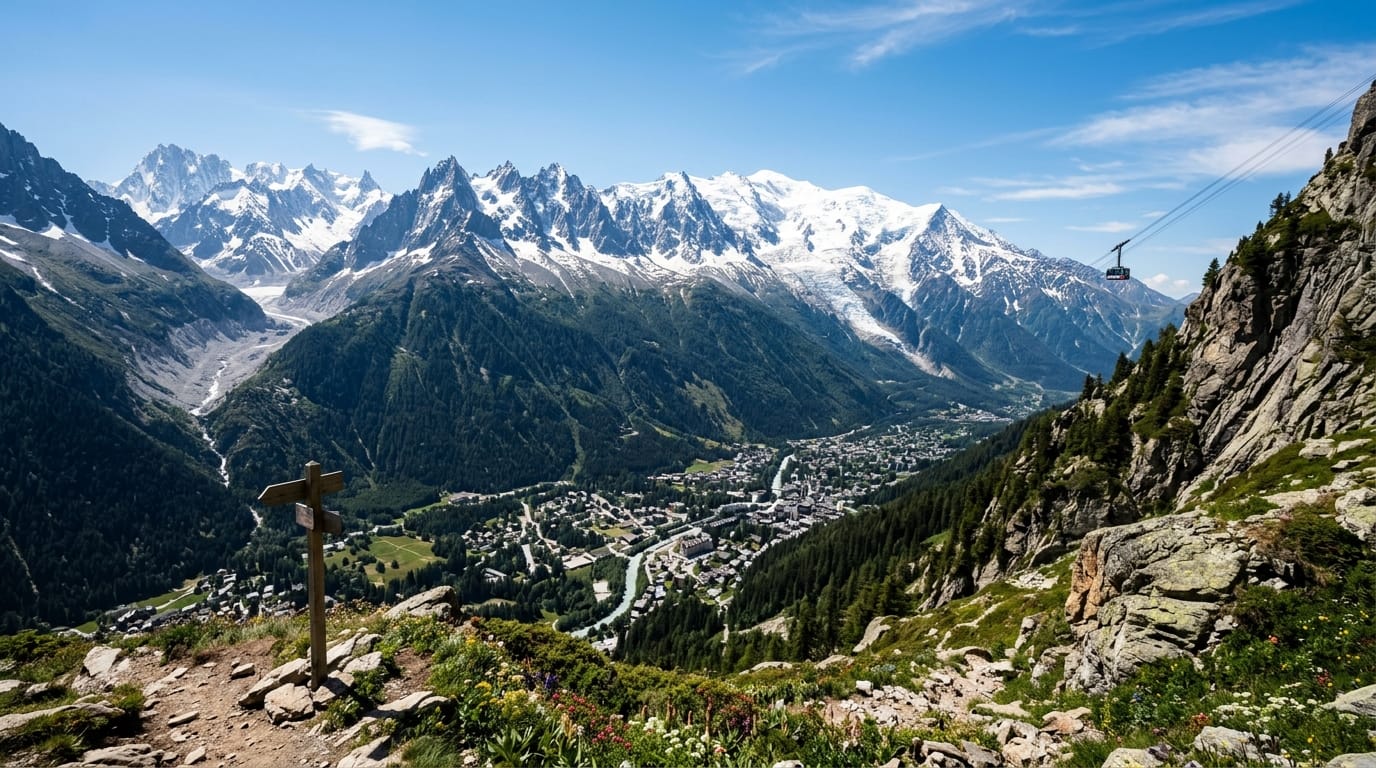
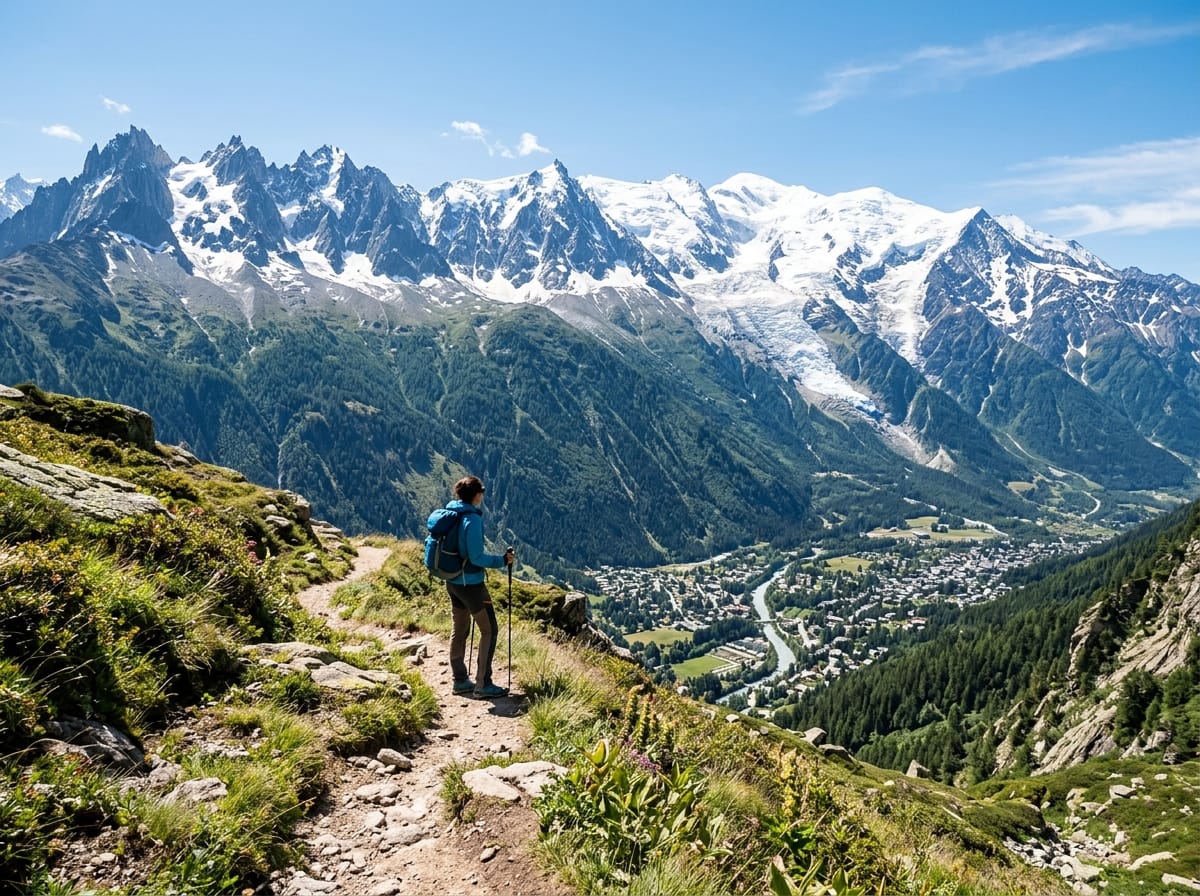
Summer in Chamonix is defined by its 350 kilometers of waymarked trails. The Grand Balcon Nord, traversing from Plan de l’Aiguille to Montenvers, offers uninterrupted north-face views of the Mont Blanc massif. It’s a moderate 2.5-3 hour hike. Access it smartly: take the Aiguille du Midi cable car to the Plan de l’Aiguille mid-station (included in your summit ticket), hike across, and descend via the Montenvers train. The 2026 summer “Multi-Pass” (€69 for 2 days) is invaluable, granting unlimited access to 13 lifts and the entire Chamonix bus network. For solitude, seek out the Aiguillette des Posettes trail above Argentière, which sees 70% fewer hikers than the popular Lac Blanc route yet delivers stunning 360-degree vistas.
4. Ski the Legendary Vallée Blanche or the Revitalized Grands Montets
Chamonix’s reputation is built on legendary expert terrain. For the 2025/26 season, a 1-day valley ski pass is projected at €62, with a 6-day pass at €310. The fully regenerated Grands Montets area offers more resilient access to its famed steep couloirs. The 20-kilometer Vallée Blanche descent is a serious glacial process requiring a certified guide (approx. €350 per person in a group of four, including the Aiguille du Midi ticket). Families and intermediates will find perfect terrain at Le Domaine de Balme. Historical data shows optimal conditions from late January to mid-March. New for 2026: select guiding companies offer “Climate-Conscious Ski Tours,” incorporating educational stops about glacial morphology and climate impact.
5. Dive into Alpine Culture and Adventure Sports
Beyond the peaks, Chamonix thrives as Europe’s adventure capital. Tandem paragliding from Planpraz (€120 for 15-20 minutes) offers serene valley views. The accessible via ferrata “Les Gaillands” provides an introduction to climbing for €15 gear rental. Culturally, don’t miss the weekly “Rendez-vous des Alpinistes” at the Maison de la Montagne, where local guides share tales. Mountain bikers can rent full-suspension bikes from €45 per day for lift-accessed downhill trails. In 2026, a new via ferrata route, “L’Éperon des Cosmiques,” is slated to open on the Aiguilles Rouges, offering intermediate climbers a thrilling new challenge with panoramic views. (source: U.S. travel advisories)
How Much Will a Trip to Chamonix Cost in 2026?
Chamonix is a premium destination, but strategic planning can align the experience with various budgets. This detailed 2026 cost analysis uses current price trends and official projections to provide a transparent financial blueprint, covering accommodation, dining, activities, and transport to help you plan without surprises. (source: EU tourism statistics)
Accommodation: From Alpine Dorms to Design Hotels
Lodging is your largest variable cost, with sharp peaks during Christmas, February French school holidays, and July-August. For 2026, booking 6–9 months in advance is critical. Budget travelers can find dorm beds at the HI Auberge de Jeunesse for €35–€60 nightly. Mid-range hotels like Hotel de l’Arve average €160–€280 per night for a double room with breakfast. Luxury seekers have options like the Hotel Mont-Blanc (from €470). A highly cost-effective alternative is renting an apartment in villages like Les Houches or Argentière; a 2-bedroom averages €120–€180 per night, often including a kitchen and free parking, saving significantly on meals and avoiding daily town center parking fees of €15–€25.
Dining: From Market Picnics to Savoyard Feasts
Food costs reflect the alpine setting but offer flexibility. A budget-conscious traveler can manage on €25–€35 daily: a bakery sandwich (€5–€7), supermarket picnic supplies (€10–€15 from Casino), and using hostel kitchen facilities. Casual lunch spots like Munchie offer hearty meals for €20–€30. Dinner at an authentic Savoyard restaurant, such as La Calèche, costs €40–€60 for fondue, raclette, and wine. Fine dining at Michelin-starred Albert 1er starts at €150 for a tasting menu. Insider tip: The “Menu du Terroir” (fixed regional menu) at lunch offers the best value. Weekly grocery shopping for self-catering averages €70–€90 per person.
Activities and Transport: Strategic Passes Are Key
Managing activity costs hinges on strategic passes. Key 2026 projected prices: Aiguille du Midi cable car (€69 online), Mer de Glace railway (€40), 1-day summer “Multi-Pass” (€35), 1-day winter ski pass (€62). The free “Chamonix Guest Card,” provided by your accommodation, offers 10–20% discounts on many activities and shops. For airport transfers, pre-booked shared shuttles from Geneva (e.g., AlpyBus) cost €32–€40 one-way; private transfers start at €110. Within the valley, the extensive Chamonix Bus network is free with your guest card. In 2026, new electric bus routes will expand coverage by 15%.
Sample 2026 Daily Budget Breakdowns
- Budget Traveler (€85–€130/day): Hostel dorm (€45), self-catered meals (€25), one major discounted activity (€25), free hiking/bus travel. Sample total: €95.
- Mid-Range Traveler (€220–€380/day): Private 3-star hotel (€180), casual lunch (€25) & restaurant dinner (€50), two paid activities (€80), local transit (€5). Sample total: €340.
- Luxury Traveler (€470+/day): Four-star hotel (€400), fine dining (€120), private guided excursion (€250), spa treatment (€80). Sample total: €850.
Overall, a 4-day trip excluding flights typically totals €380–€520 (budget), €880–€1,360 (mid-range), or €1,880+ (luxury). Always allocate a 10-15% contingency for spontaneous opportunities like a perfect weather window for a guided adventure.
What Are the Perfect 4-Day and 7-Day Chamonix Itineraries for 2026?
An ideal Chamonix itinerary balances iconic sights with logical pacing, altitude acclimatization, and seasonal offerings. These 2026-focused plans incorporate new openings and strategic timing for maximum impact and enjoyment, whether you’re short on time or seeking deep immersion.
The 4-Day Chamonix Itinerary: Alpine Highlights
Day 1: Arrival & Alpine Foundations
Morning: Arrive at Geneva Airport by 11:00 AM. Take a pre-booked shared shuttle (€35) to Chamonix (90-min process). Check in by 2:00 PM.
Afternoon (3:00 PM – 5:30 PM): Acclimatize with a gentle stroll along the Arve River. Visit the newly reopened Mont-Blanc Museum (€12) for essential alpine context.
Evening: Enjoy a welcome dinner at a traditional *mazot*-style restaurant like L’Impossible (€30–€40). Explore Rue du Docteur Paccard.
Day 2: Summit & Sky
Early Morning (8:10 AM): Take the pre-booked Aiguille du Midi cable car (€69). Spend 2–2.5 hours at the summit.
Late Morning: Board the Panoramic Mont Blanc gondola to Pointe Helbronner, Italy (€24). Lunch at Rifugio Torino (€20).
Afternoon: Return via the same route. Alternative: Descend to Plan de l’Aiguille and hike a section of the Grand Balcon Nord.
Evening: Unwind at QC Terme Spa (from €45) and have a casual dinner at Big Horn Bistro.
Day 3: Glaciers & Trails
Morning (9:00 AM): Board the Montenvers train to Mer de Glace (€40). Explore the Glaciorium and ice cave for 3 hours.
Afternoon Option A (Active): Hike the Grand Balcon Nord trail back towards Plan de l’Aiguille (2.5 hours) and cable car down.
Afternoon Option B (Relaxed): Return to Chamonix by train. Take the bus to Les Praz for a forest walk.
Evening: Sample local wines at Bar’d Up and dine at Maison Carrier (€50–€70).
Day 4: Adventure Finale
Morning: Choose your finale. Summer: Tandem paragliding from Planpraz (€120, book 48hrs ahead). Winter: Half-day ski session at Le Tour. Alternative: Visit Parc de Merlet animal park (€10).
Afternoon: Final Savoyard lunch (e.g., *croûte au fromage*). Explore the Friday market if possible.
Late Afternoon: Depart for Geneva Airport by 3:30 PM.
The 7-Day Chamonix Itinerary: Deep Valley Immersion
This extended itinerary builds on the 4-day essentials, adding village life and ambitious adventures for a comprehensive experience.
Days 1-4: Follow the essential itinerary above.
Day 5: Discover Argentière & Alpine Heritage. Bus to Argentière. Visit the Alpine Museum annex, coffee at Office Bar. Option: introductory ice climbing on Argentière Glacier (guided, from €80). Dinner at Le Dahu.
Day 6: High Mountain Day. Summer: Full-day guided hike like Lac Blanc via the Index lift. Winter: Legendary Vallée Blanche ski descent with a guide (€350+). Evening soak at JB Blanc Sports Center pool.
Day 7: Cultural Reflection. Morning visit to the Chapel of the Apostles in Les Praz. Leisurely lunch in Chamonix. Souvenir shopping for local crafts. Attend an evening mountain film screening at the Maison de la Montagne.
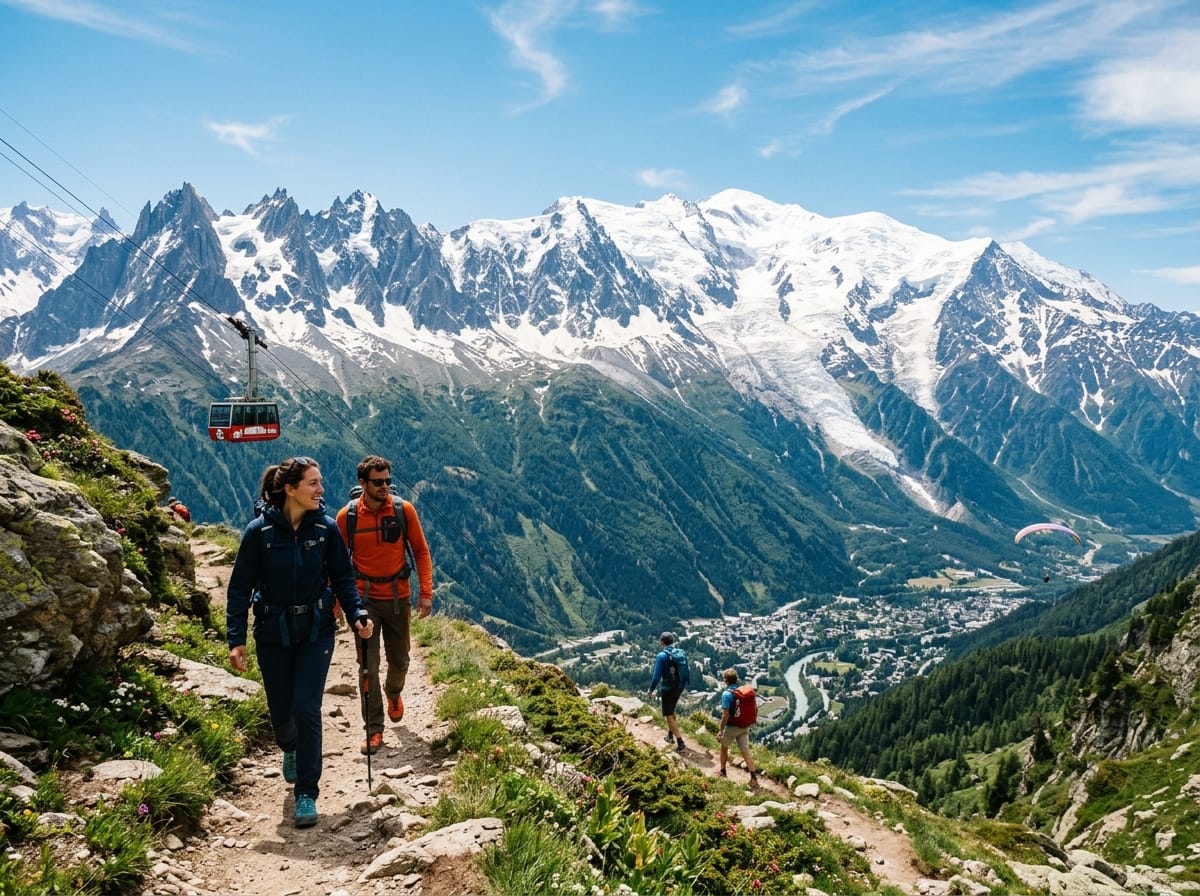
How Can You Experience Chamonix Like a Local in 2026?
Experiencing Chamonix authentically means adopting the rhythms and habits of valley residents. This approach leads to richer experiences, supports sustainable tourism by dispersing economic benefits, and helps you avoid the crowds. Here are actionable 2026 strategies for living like a local.
Master Local Logistics: Transit, Timing, and Tech
Locals rarely drive into Chamonix centre. They rely on the free, efficient bus network. Use lines #1 (Chamonix-Les Praz-Flégère) and #2 (Chamonix-Argentière) like a pro, downloading the “Chamonix Bus” app for real-time schedules. For quieter hikes, start from lesser-known trailheads like the Prarion cable car in Les Houches. In winter, savvy skiers use the Montenvers train for early Vallée Blanche access or buy a “Ski Pass Argentière” for dedicated, often quieter, access to that sector. The 2026 edition of the official Chamonix app will feature live “crowd heat maps” for major trails and lifts, a tool locals will use daily.
Eat and Drink at Community Favorites
Venture 5-10 minutes from the town center for authentic value. In Les Praz, La Caleche (open since 1962) serves exceptional raclette for €22. For the best pastries, join the queue at Pâtisserie Richard on Rue du Docteur Paccard at 6:00 AM. The finest *tartiflette* is often found in Argentière at Le Dahu. For apéritif, locals favor Bar’d Up for wine or Moo Bar’s happy hour (5–7 PM). Shop for picnic ingredients at the Casino supermarket in Les Praz or the Friday/Sunday market for direct-from-farm Savoyard cheese and charcuterie.
Embrace the Mountain Ethos: Respect, Preparedness, and Participation
Living like a local means respecting the alpine environment. Stay on marked trails to prevent erosion, carry out all waste, and use refillable bottles at public fountains dispensing pristine alpine water. Always be prepared: mountain weather changes fast. Locals carry a waterproof layer, extra warmth, a headlamp, and sufficient food/water on every hike. In 2026, consider joining a “Clean Mountain Day” volunteer trail maintenance outing organized by the tourist office, a rewarding way to
FAQ
What is the main takeaway from Chamonix Travel Guide 2026: Alps Insider Tips, Prices and Itinerary?
This definitive Chamonix travel guide for 2026 delivers essential Alps insider tips, precise cost breakdowns, and actionable itineraries to plan your perfect trip, capitalizing on groundbreaking sustainable developments and cultural openings that make 2026 a pivotal year to visit.
Why Is 2026 a Landmark Year for Visiting Chamonix?
Chamonix has always been the epicenter of alpine adventure, but 2026 marks a profound evolution. This is the year the valley's ambitious "Chamonix 2030" sustainable development plan, backed by over €120 million in investment, becomes vividly tangible for visitors.
What Are the Absolute Must-Do Experiences in Chamonix for 2026?
With an overwhelming array of options, focusing on experiences enhanced by 2026's developments ensures a trip that is both iconic and insightful. This curated list prioritizes strategic timing, value, and minimizing environmental impact, backed by concrete pricing forecasts and data-driven advice tailored for the upcoming year.
How Much Will a Trip to Chamonix Cost in 2026?
Chamonix is a premium destination, but strategic planning can align the experience with various budgets. This detailed 2026 cost analysis uses current price trends and official projections to provide a transparent financial blueprint, covering accommodation, dining, activities, and transport to help you plan without surprises.
Editorial note: The FranceVibe editorial team reviews this guide against the article’s checks, comparisons, and examples before updates are published.