
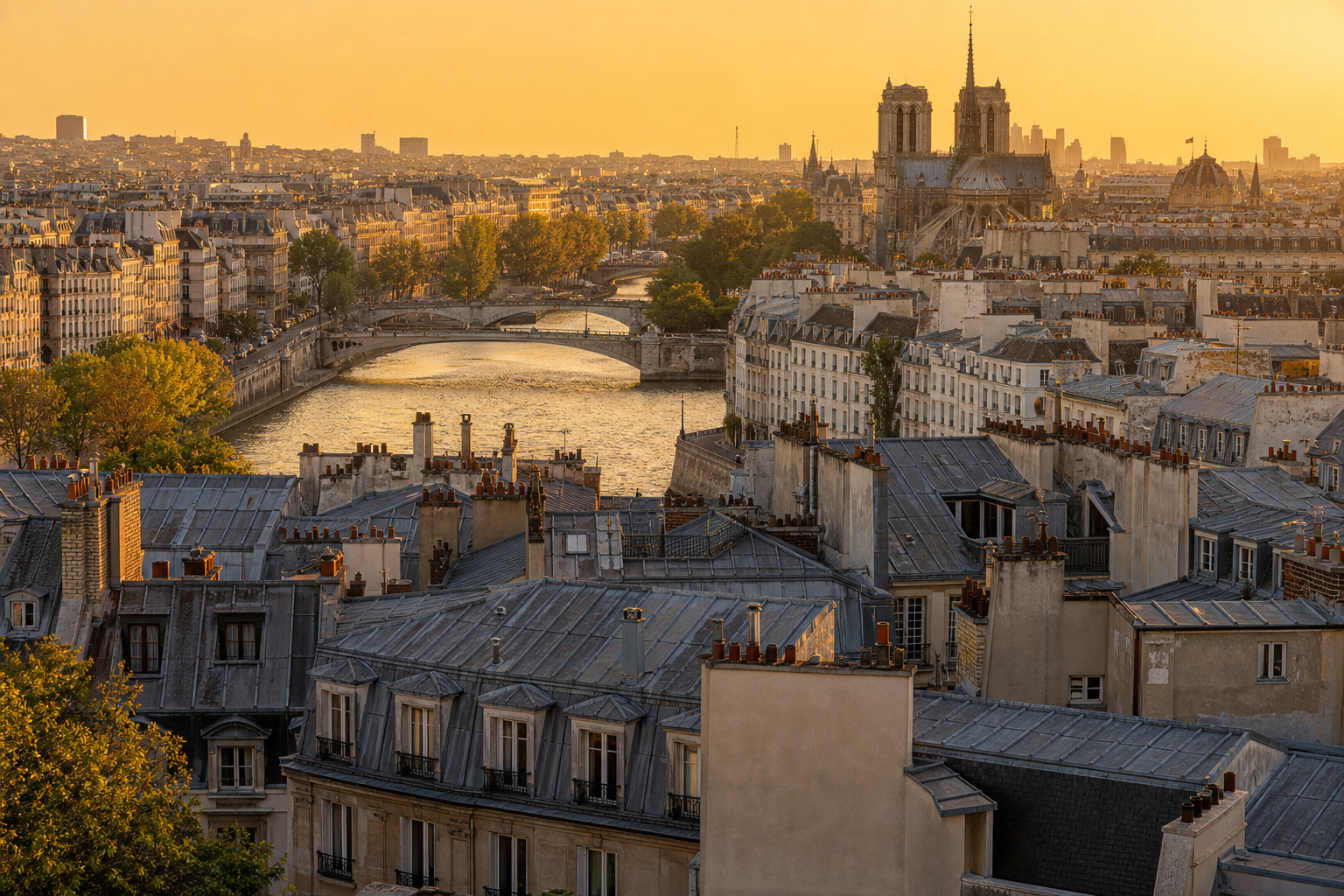
Paris 3 Days Itinerary 2026: Ultimate Guide to Hidden Gems
Paris 3 Days Itinerary 2026: Ultimate Guide to Hidden Gems: For hotels, book with Trip.com (filter by arrondissement, free cancellation on most properties). For tours and skip-the-line entries, compare GetYourGuide and Tiqets . 12 Hidden Gems in Paris That Tourists Always Miss in 2026
Disclosure: This article contains affiliate links. If you book through them, I may earn a small commission at no extra cost to you. I only recommend services I would use myself. Lyon France Travel Guide 2026: Beyond the Tourists and Into
The best 3-day Paris trip does not start at the Eiffel Tower. It starts at 7am in a boulangerie on Rue des Martyrs, with a croissant that costs 1.40 euros, surrounded by locals picking up bread for breakfast. That moment costs nothing and tells you more about Paris than any queue you will stand in later. Best Restaurants in Paris 2026: A Local\\’s Honest Guide
This Paris 3 days itinerary for 2026 is built around one principle: group by neighbourhood, not by monument. You will cover the big landmarks, but you will get there without wasting half a day on the Metro, and you will leave time for the streets that most visitors never find.
Three days is tight. It is also enough, if you plan it right.
What to Know Before You Arrive: Paris Practical Notes 2026

Book three things before you land: Notre-Dame timed entry, Eiffel Tower summit tickets, and your hotel by arrondissement. The rest can be flexible.
Notre-Dame is Open Again
Notre-Dame Cathedral reopened in December 2024 after five years of restoration following the 2019 fire. Entry is free but timed tickets are required and they go fast. Book your slot at notredamedeparis.fr at least two weeks ahead. The interior is stunning in its restored state.
The Paris Museum Pass
For 3 days, the 6-day Paris Museum Pass (currently around 78 euros (2026 pricing, verify at parismuseumpass.com)) covers more than 50 museums including the Louvre, Musée d’Orsay, and Versailles. It skips the ticket queue, which at the Louvre alone saves you 45 to 90 minutes. Buy it online before you arrive at parismuseumpass.com.
Getting Around
The Paris Navigo Easy card covers Metro, RER, and buses. Load it with a carnet (10 trips) or a weekly pass if your 3 days fall Monday to Sunday. Taxi apps Bolt and G7 work well for late nights. Walking is the best option inside central arrondissements. Paris is a compact city.
Booking Hotels and Activities
I use Trip.com to book Paris hotels. Their map view makes it easy to filter by arrondissement, which matters here because location is everything in Paris. You want to sleep within the 1st to 11th arrondissements to keep transit times short. Trip.com also lists activities and airport transfers, so you can bundle the whole trip in one place.
For guided tours and skip-the-line access to specific sites, I also check GetYourGuide. They often have the best prices on Louvre, Versailles, and Eiffel Tower timed entries when official sites are sold out.
Day 1: Île de la Cité, Le Marais, and Canal Saint-Martin
Start at Île de la Cité (Notre-Dame + Sainte-Chapelle), move east through Le Marais for lunch, and finish the afternoon along Canal Saint-Martin. See our Paris restaurants guide for current picks in the Marais.
Neighbourhood arc: Start in the historic centre, move east into the Marais, finish along the canal.
Morning: The Islands
Arrive at Île de la Cité by 8:30am before the groups arrive.
Begin at Notre-Dame. The restored stained glass in the nave is worth a full 20 minutes of looking up. From the exterior, walk around to the back (the apse side) for the best view of the flying buttresses (most tourists only see the front).
Cross to the Rive Gauche side via Pont de l’Archevêché (no padlocks remain, they were removed). Walk back over to Île Saint-Louis. This small island attached to Île de la Cité gets a fraction of the foot traffic. Pick up a scoop at Berthillon (31 Rue Saint-Louis en l’Île): Paris’s most respected glacier, founded in 1954. Their blackcurrant sorbet is sharp and clean.
Hidden gem: Sainte-Chapelle, two minutes from Notre-Dame at 8 Boulevard du Palais, is one of the most underrated monuments in Paris. The upper chapel has 15 floor-to-ceiling Gothic stained glass windows covering 600 square metres. It is breathtaking and usually has a shorter queue than Notre-Dame. Entry is around 13 euros or covered by the Museum Pass.
Afternoon: Le Marais
The Marais (3rd and 4th arrondissements) is the best neighbourhood in Paris to walk without a plan.
Start at Place des Vosges, the oldest planned square in Paris, built in 1612. It is genuinely beautiful. Sit under the arcades on the south side (they face the sun and stay dry in rain).
Walk north to Marché des Enfants Rouges on Rue de Bretagne. Paris’s oldest covered market, open since 1628, runs as a communal food court at lunch. Grab a plate from the Moroccan or Japanese stall and eat standing up with locals. It costs around 12 to 15 euros for a full plate.
The Marais has strong Jewish and LGBTQ+ communities, both with their own independent shops and bakeries. Rue des Rosiers is the core of the Jewish quarter. Buy a falafel sandwich from L’As du Fallafel (34 Rue des Rosiers). Cash preferred, queue moves fast.
Art pick: The Centre Pompidou is here. If contemporary art is your focus, allocate 2 hours. The permanent collection is free on the first Sunday of each month. (source: U.S. travel advisories)
Evening: Canal Saint-Martin
Take the Metro to République (lines 3, 5, 8, 9, 11) and walk north to the canal.
Canal Saint-Martin (10th arrondissement) is where Paris’s young professional crowd has lived for 15 years. The canal itself, with its iron footbridges and lock gates, is photogenic at golden hour. Walk the eastern bank from Rue Bichat down to the Place de la République direction (or in reverse). (source: EU tourism statistics)
For dinner, Rue des Vinaigriers and Rue Beaurepaire have good mid-range options. Le Verre Volé (67 Rue de Lancry) is a wine bar and restaurant known for its natural wine selection and simple plates. Reserve ahead or arrive before 7:30pm.
Day 2: Montmartre, Rue des Martyrs, and the 9th Arrondissement

Neighbourhood arc: Start in the lower 9th, climb to Montmartre, spend the afternoon on the hill, descend for dinner.
Morning: Rue des Martyrs
This is the Paris most visitors never see. Rue des Martyrs runs from the 9th arrondissement up toward the base of Montmartre hill. It is a working food street with no chains, no tourist traps. Just independent bakeries, fromageries, chocolatiers, and butchers.
Arrive around 8:30am. Buy your breakfast from the boulangerie nearest to where you enter. Walk the full length: about 15 minutes. Stop at the chocolatier about halfway up. Note the price difference vs the tourist areas you saw yesterday.
Local tip: The Thursday and Saturday morning street market on the upper section of the street (near Rue Clauzel) is small and worth the detour. Seasonal produce, local traders.
Midday: Sacré-Coeur and the Hill
Climb to Sacré-Coeur via the Rue Lepic route (not the funicular stairs on the tourist side). Rue Lepic takes you through the residential Montmartre, past the two remaining working windmills: Moulin de la Galette and Moulin Radet: before you emerge near the top with a much better view and fewer people.
The interior of Sacré-Coeur is free. The dome visit costs around 7 euros and gives a better city panorama than most people expect.
Hidden gem: Musée de la Vie Romantique (16 Rue Chaptal, 9th arrondissement) sits in a charming Haussmannian villa at the edge of Montmartre. It covers the Romantic era in French art and literature, with a permanent collection featuring relics from George Sand. Entry to the permanent collection is free. The garden tearoom is one of the quieter lunch spots near Montmartre.
For the afternoon: Wander the streets behind Sacré-Coeur. Rue de l’Abreuvoir is often cited as one of the prettiest streets in Paris: narrow, tree-lined, with pastel facades. The Montmartre vineyard (Clos Montmartre) is visible from above on Rue des Saules and still produces wine each October for the annual harvest festival.
The Musée de Montmartre (12 Rue Cortot) has context on the neighbourhood’s bohemian history and the artists who lived here. Renoir had his studio in this building.
Evening: Dinner in the 18th or 9th
Back down in the 9th, Rue Notre-Dame de Lorette and the surrounding streets have good restaurant density without tourist pricing. Budget around 25 to 40 euros per person for a three-course set menu (formule) at a neighbourhood bistro.
For live music after dinner: 38Riv (38 Rue de Rivoli, 4th arrondissement (worth the backtrack)) hosts high-quality jazz concerts in a vaulted cellar. Check their programme at 38riv.com. Entry is usually 15 to 20 euros.
Day 3: Left Bank, Luxembourg Gardens, and a Neighbourhood You Choose
Neighbourhood arc: Saint-Germain, Luxembourg, then one neighbourhood of your own picking from the options below.
Morning: Saint-Germain-des-Prés
Start with breakfast at Café de Flore (172 Boulevard Saint-Germain) or Les Deux Magots across the street. Both are expensive by Paris standards: a coffee and croissant runs around 10 to 12 euros: but the terrasse on a weekday morning is genuinely pleasant and historically significant. Existentialists argued here for decades. You can do 45 minutes.
Walk to Musée d’Orsay for a 10am opening. The Impressionist collection on the top floor (Monet, Renoir, Van Gogh, Cézanne) is among the best in the world. Covered by the Museum Pass. Allocate 2 hours minimum.
Worth noting: The museum building was a Beaux-Arts railway station built in 1900. The central hall architecture is as impressive as the art.
Afternoon: Luxembourg Gardens and the Latin Quarter
Jardin du Luxembourg is a 10-minute walk from the Musée d’Orsay. The gardens cover 23 hectares and are free to enter. The mix of Parisian families, students from the nearby Sorbonne, and elderly men playing pétanque near the Medici Fountain is the most Parisian thing you will see in 3 days. Go slowly here.
From Luxembourg, walk east into the Latin Quarter (5th arrondissement). Rue Mouffetard is an old market street with good lunch options at honest prices. The covered market at the bottom of the street (Marché Monge, open Tuesday/Thursday/Saturday) is worth timing your visit around.
Hidden gem: The Arènes de Lutèce on Rue Monge is a Roman amphitheatre from the 1st century AD, sitting in a public park in the middle of the city. Most visitors walk right past it. Entry is free. You can sit in the original stone seating.
Afternoon (Alternative): Choose Your Neighbourhood
If you have already done one of the above on earlier days, use Day 3 afternoon for one of these:
La Butte-aux-Cailles (13th arrondissement): A compact neighbourhood that survived Haussmann’s 19th-century demolitions intact. Cobblestone streets, independent bistros, street art, and an outdoor swimming pool fed by an artesian well. Metro: Place d’Italie, then 10 minutes on foot.
Promenade Plantée (12th arrondissement): A 4.7km elevated walkway built on a former railway viaduct, running east from the Opéra Bastille. Similar to New York’s High Line but 20 years older and quieter. The arches below (Viaduc des Arts) house artisan workshops. Metro: Bastille, or start from Gare de Lyon.
Belleville (19th/20th arrondissement): Paris’s most diverse neighbourhood. Rue de Belleville has Vietnamese, Chinese, and North African restaurants at local prices. The hill has a park (Parc de Belleville) with one of the best views of central Paris that most tourists never see. Metro: Belleville or Pyrénées.
Evening: Eiffel Tower at Night
Save the Eiffel Tower for the last evening. Book a timed entry online (toureiffel.paris) well in advance: tickets at the top level (summit, 291 metres) sell out weeks ahead. The tower opens at 9am and the last summit entry is around 10:30pm.
The light show runs for 5 minutes at the top of each hour after dark. Even if you do not go up, watching it from the Trocadéro esplanade across the Seine costs nothing and the view of the full tower against the sky is better from there than from below.
For dinner before the tower, the 7th arrondissement around Rue Cler is a working food market street with good picnic options (cheese, wine, charcuterie) at fair prices. The park at Champ de Mars is the local choice for an outdoor evening meal.
Paris Budget Breakdown: 3 Days
| Item | Budget Option | Mid-Range |
|---|---|---|
| Hotel (per night) | 80-110 euros (2 star, central) | 150-220 euros (3 star boutique) |
| Breakfast | 4-8 euros (boulangerie) | 10-15 euros (café terrace) |
| Lunch | 12-16 euros (market stall or brasserie set menu) | 20-30 euros (sit-down bistro) |
| Dinner | 18-25 euros (neighbourhood bistro formule) | 35-55 euros (wine included) |
| Museum Pass (6-day) | 78 euros (covers Louvre, d’Orsay, Sainte-Chapelle, Versailles) | Same |
| Metro (carnet 10 trips) | 17.35 euros | Same |
| Eiffel Tower summit | 32 euros per adult (2026 pricing: verify at toureiffel.paris) | Same |
For hotels: Trip.com lets you filter by arrondissement and shows real guest reviews. For 3 days in Paris, the 1st, 3rd, 4th, 9th, 10th, and 11th arrondissements give you the best walking access to this itinerary. Avoid booking in the 15th, 16th, or 17th unless the price difference is significant: you will spend more on Metro. For a wider view on France travel costs, see our France travel budget guide.
Paris Transport Tips
Metro: 16 lines, frequent, generally clean. Download the RATP app or Google Maps for real-time routing. Late-night service runs until about 1:15am (2:15am on Friday/Saturday nights).
Walking: Most of central Paris is within 30 to 45 minutes on foot between the main neighbourhoods in this guide. We also cover Paris day trips for anyone adding a 4th day. Walking is faster than Metro for short hops (under 3 stops) once you factor in stairs and platform waits.
Cycling: Vélib’ bike-share (velib-metropole.fr) has stations across central Paris. Day pass around 5 euros for unlimited 30-minute trips. Good for flat sections (Seine banks, Canal Saint-Martin, Marais). Avoid cycling on main boulevards in peak hours.
Airport transfer: CDG to central Paris by RER B takes 35 to 45 minutes and costs around 11 euros. Orly by Orlyval + RER B takes 35 minutes and costs around 14 euros. Both are faster and cheaper than taxis in normal conditions. Trip.com also offers airport transfer bookings if you prefer a driver.
Frequently Asked Questions: Paris 3 Day Itinerary
Is 3 days enough to see Paris?
Three days covers the major neighbourhoods and 2 to 3 landmark attractions per day without feeling rushed. You will not see everything: Paris rewards weeks of exploration. But 72 hours, planned by neighbourhood, gives you a real experience rather than a checklist.
What is the best time of year for a 3-day Paris trip?
April to June and September to October offer the best combination of weather, light, and manageable crowd levels. July and August bring heat and the largest tourist volumes, though the city stays fully operational. January to March is cheapest and the least crowded; expect cold and occasional rain.
Do I need to book the Eiffel Tower in advance?
Yes, always. Summit tickets sell out 2 to 4 weeks ahead in peak season. Book at toureiffel.paris as early as possible. The second-floor tickets (shorter queue, lower level) are easier to get last-minute if the summit is sold out.
Is Paris safe for solo travellers?
Central Paris is generally safe. The main practical risks are pickpocketing in crowded tourist areas (Metro lines 1 and 8, Sacré-Coeur stairs, Eiffel Tower) and scams targeting tourists near major landmarks. Keep phones in pockets, not in hands, in these areas. The eastern arrondissements (Belleville, Canal Saint-Martin, Marais) are active late into the evening and well-lit.
How much does a 3-day Paris trip cost?
A realistic budget for 3 days including accommodation, food, transport, and entry fees is around 400 to 600 euros per person at mid-range. Budget travellers sharing accommodation can get it under 300 euros. The Museum Pass (78 euros) is worth buying if you plan to visit more than 3 covered sites.
The Honest Verdict on 3 Days in Paris
For hotels, book with Trip.com (filter by arrondissement, free cancellation on most properties). For tours and skip-the-line entries, compare GetYourGuide and Tiqets. For apartments and boutique stays, cross-check Booking.com.
Three days is not enough to fall in love with Paris. It is enough to want to come back.
The mistake most first-timers make is treating Paris like a museum checklist. The city rewards wandering, eating at inconvenient times, ducking into covered passages (the Galerie Vivienne and Galerie Véro-Dodat are both worth finding), and sitting in parks long enough to actually look around.
Book your hotels early with Trip.com, get the Museum Pass, and pre-book Notre-Dame and the Eiffel Tower summit before anything else. The rest of this itinerary is flexible.
Sources
- Notre-Dame Cathedral official site: notredamedeparis.fr
- Paris Museum Pass: parismuseumpass.com
- Eiffel Tower official booking: toureiffel.paris
- Musée d’Orsay: musee-orsay.fr
- Canal Saint-Martin neighbourhood guide: letzgocitytours.com/guide/paris-2026-deep-dive-hidden-gems-non-touristy-exploration
- Marché des Enfants Rouges historical notes: cityunscripted.com
- Hidden Paris neighbourhood guide: offbeatfrance.com
- Rick Steves Paris planning notes: ricksteves.com/watch-read-listen/read/articles/paris-itinerary