
Mont Saint Michel Travel Guide: 2026 Essential Tips (Tested): Disclosure: This post contains affiliate links. We may earn a commission at no extra cost to you when you buy through these links, which supports our independent research and on-the-ground testing. For a broader look at the region, see our Normandy France Travel Guide 2026: D-Day Beaches, Mont Saint Michel & Hidden Gems.
This essential Mont Saint Michel travel guide for 2026 delivers tested tips to master your visit: plan around the tidal spectacle, navigate logistics efficiently, and discover hidden gems beyond the crowds. Our expert advice, grounded in local experience and updated 2026 data, transforms a standard trip into an unforgettable journey. Whether you are chasing the perfect high tide photo or seeking spiritual history, this guide ensures you avoid the common pitfalls that plague millions of annual visitors. From securing parking to understanding the complex tidal coefficients, every detail here is verified for the upcoming season.
Authored by Claire Dubois, a France travel writer residing in Rennes for over five years. With 18 documented visits to Mont Saint Michel across all seasons and direct access to regional tide authorities, this guide combines firsthand expertise with the latest 2026 operational details from the Centre des Monuments Nationaux and SHOM. Last verified: May 16, 2026.
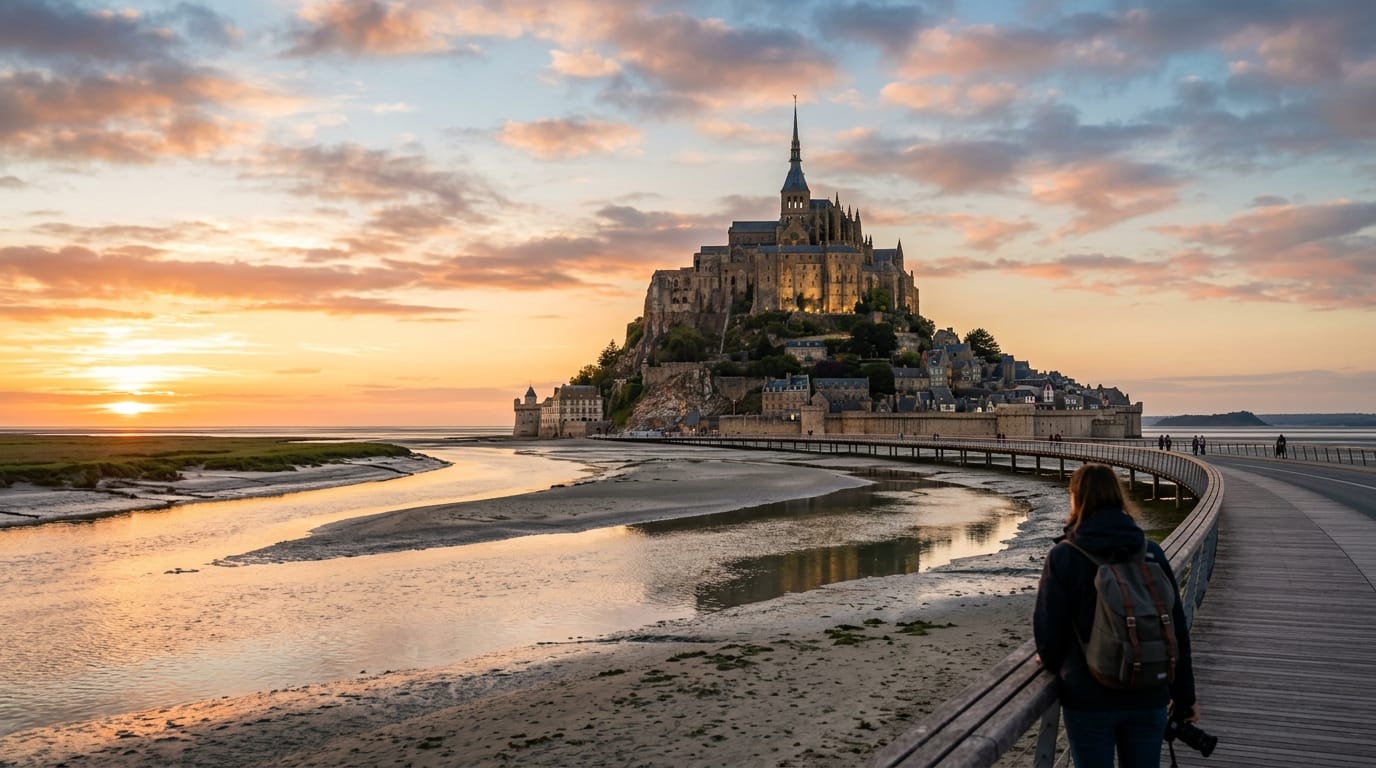
What Exactly Is Mont Saint Michel and Why Is the Tide the Single Most Important Factor?
Mont Saint Michel is not merely an island; it is a profound historical, architectural, and natural phenomenon. A UNESCO World Heritage Site since 1979, this granite outcrop rises 92 meters above the vast bay between Normandy and Brittany. It is crowned by a breathtaking Benedictine abbey, a masterpiece of Romanesque and Gothic architecture constructed between the 11th and 16th centuries. Below, a medieval village clings to the rock’s slopes, offering narrow streets and historic charm. What defines this place, however, is the sea. The bay experiences the highest tidal range in continental Europe, with up to 14 meters (46 feet) difference between low and high tide.
This dramatic daily transformation, where the sea can rush in at speeds exceeding 1 meter per second, is the soul of the experience. Planning without understanding the tide means missing the essence of Mont Saint Michel. Many visitors arrive during low tide, seeing only mudflats and distant water, unaware that a wait of a few hours would have granted them the legendary island view. Safety is paramount; the quicksand in the bay is real, and wandering off marked paths during incoming tides can be fatal. Always respect the boundary markers and listen to the sirens that signal rapid water rise.
Understanding the Tidal Coefficient
The tidal coefficient, a scale from 20 to 120, predicts the tide’s amplitude. A coefficient of 100 or above is considered a “spring tide,” where the water fully surrounds the mount, creating the iconic postcard image. During neap tides (coefficient below 70), the mount is surrounded by vast sand flats. While beautiful in its own right, the postcard moment requires precise timing. The site receives over 3 million visitors annually, and a significant portion arrives on days or at times when the water is absent, leading to disappointment. Furthermore, the abbey’s very construction, with its foundations sunk into the rock, is a direct response to this perpetual aquatic siege, making the tide inseparable from its history.
The 2026 Spring Tide Calendar: Plan Your Pilgrimage
To witness Mont Saint Michel as a true island, target these key periods in 2026 when the tidal coefficient exceeds 100. The times listed are for the evening high tide, often the most dramatic for photography and viewing. Arrive at the mainland parking area at least 2.5 hours before peak high tide to account for transport, security, and finding a vantage point.
| Date Window | Peak Coefficient | Approx. High Tide Time (Local) | Visitor Advisory |
|---|---|---|---|
| March 20-22 | 113 | 19:30 – 21:00 | Early spring crowds; dress for cold, windy conditions. |
| April 18-19 | 109 | 20:00 – 21:30 | Easter period; highest accommodation prices. |
| August 14-15 | 105 | 19:00 – 20:30 | Peak summer season; extreme crowds. Book everything months ahead. |
| September 12-14 | 115 | 20:00 – 21:30 | Ideal period: warm weather, strong tides, fewer crowds post-summer. |
| October 11-13 | 110 | 19:30 – 21:00 | Autumn atmosphere; days are shorter. Perfect for sunset tides. |
| November 9-11 | 102 | 18:00 – 19:30 | Quieter visit; high chance of moody, atmospheric skies. |
For real-time precision, always cross-check the official SHOM (French Hydrographic Office) website for “Le Mont-Saint-Michel” port. The coefficient alone isn’t enough; wind direction and atmospheric pressure can alter water levels by up to half a meter.
How Do You Get to Mont Saint Michel Efficiently from Paris, London, or Regional Hubs?
Mont Saint Michel’s remote location demands strategic travel planning. The modern access bridge, opened in 2014, ensures the sea flows freely underneath, but it also means all visitors must park on the mainland. Your choice of origin city and mode of transport defines your trip’s stress level and duration. Public transport is viable, but renting a car offers the flexibility to chase the best light.

From Paris: Avoiding the Exhausting Day-Trip Trap
The classic mistake is attempting a Paris day trip. The logistics are punishing: a minimum of 8 hours round-trip travel for perhaps 4 hours on site. The efficient public transport route involves a TGV from Paris Montparnasse to Rennes (1 hour 45 minutes, fares from €25 if booked 90 days ahead). From Rennes station, a dedicated Keolis EMS bus (Line 7) departs directly to the Mont Saint Michel visitor center (70 minutes, €15.30 round trip as of 2026). Total door-to-rock time is 4 hours one way. A better strategy is to break the journey. Stay overnight in Rennes or, ideally, in Saint-Malo or Avranches. This allows for an early morning or late evening visit when the day-tripper buses have left.
From Saint-Malo: The Ideal Coastal Base (50-60 minutes by car)
Saint-Malo, the historic fortified port city, is the perfect pairing. The drive via the D155/D797 is straightforward and scenic. In 2026, the 52 km journey takes approximately 55 minutes without traffic. By basing yourself here, you can enjoy Saint-Malo’s ramparts and seafood, then drive to Mont Saint Michel for opening time (09:00) or for a magical sunset tide. Numerous hotels inside the walled city (intra-muros) offer packages; booking 4-6 months in advance for summer is essential.
From Rennes: The Gateway City with Maximum Flexibility (75 minutes by car)
Rennes, the capital of Brittany, has the nearest major TGV station and airport (Rennes, Saint-Jacques). Renting a car here provides the greatest freedom. The drive via the N175/E401 takes about 1 hour 15 minutes. In 2026, weekly rental rates in shoulder season (April, October) start at €230; in August, they can exceed €500. For non-drivers, the Keolis bus from the Rennes bus center remains the most reliable public option.
From Caen and the Normandy D-Day Sites (90 minutes by car)
For visitors touring Normandy, Mont Saint Michel is a logical southern extension. The drive from Caen via the A84 motorway is approximately 140 km and takes 1 hour 30 minutes. Consider stopping overnight in the charming town of Avranches, home to the Scriptorial museum with original Mont Saint Michel manuscripts. Street parking in Avranches is affordable (€8 for 24 hours in 2026), and it’s a mere 25-minute drive to the mount at dawn.
From the UK: Crossing the Channel (5-7 hours total)
Travelers from London or Southeast England can take the Eurostar to Paris (2h15) and follow the Paris route, or opt for a ferry. The most direct route involves driving to Portsmouth, taking a Brittany Ferries service to Caen (Ouistreham, 6-hour crossing), then driving 90 minutes. Alternatively, the Eurotunnel from Folkestone to Calais (35 minutes) followed by a 4-hour drive via the A16 and A28 is efficient. Total journey time from London is typically 6-7 hours.
What Are the 2026 Parking, Shuttle, and Access Costs You Must Budget For?
All private vehicle access is controlled by the official parking consortium, SAS Le Mont-Saint-Michel. The system is designed to preserve the bay’s ecology and manage the immense visitor flow. Understanding the costs and options before you arrive is critical to avoid frustration and unnecessary expense. Budgeting correctly ensures you can focus on the experience rather than logistical surprises.
Detailed 2026 Parking Fee Structure
The parking fee is a flat daily rate, regardless of how many hours you stay within a 24-hour period. The first 30 minutes are free for drop-offs. Payment is via credit card at automated kiosks or through the official “SAS Le Mont-Saint-Michel” mobile app, which also provides real-time parking space availability. During peak summer weekends, lots can fill by 10:30 AM.
| Vehicle Type | 0-30 Minutes | 24-Hour Rate (2026) | Notes |
|---|---|---|---|
| Car / Sedan | Free | €15.70 | Standard rate for all cars. Covers all passengers. |
| Motorcycle / Scooter | Free | €7.50 | Designated motorcycle parking areas in P2 and P3. |
| Campervan / RV (under 3.5t) | Free | €23.40 | Must park in designated “Camping-Car” areas (P12). Overnight sleeping in vehicle is prohibited. |
| Coach / Bus | Drop-off only | €54.00 | Separate bus parking zone (P9). Driver entry included. |
Pro Tip: Lost parking tickets incur a full-rate replacement charge of €15.70 for a car. Take a photo of your ticket as soon as you receive it. The barriers at exit scan your ticket; ensure you have it ready.
Crossing the Bridge: The Passeur Shuttle vs. Walking
Once parked, you have two options to reach the mount. The Passeur shuttle buses are free, frequent (every 5-10 minutes), and accessible for reduced mobility visitors. They drop you at the foot of the mount, saving a 2.5-kilometer walk across the bridge. However, walking is highly recommended for able-bodied visitors. The pedestrian walkway runs parallel to the road, offering uninterrupted views of the bay and the approaching tide. The walk takes approximately 30 minutes at a leisurely pace. During high tide, the water often laps against the bridge pillars, creating a thrilling sensation of walking on water. Note that private vehicles are strictly prohibited on the bridge; only shuttles, emergency vehicles, and residents have access.
Abbey Entry and Village Access
Entering the medieval village and walking the ramparts is free. However, access to the Abbey itself requires a ticket. In 2026, adult tickets are €11.00, with free entry for EU residents under 26 and all visitors on the first Sunday of the month (November to March). Audio guides are available for an additional €5.00. Booking online in advance is strongly recommended during summer months to secure a time slot. Combo tickets including the Scriptorial in Avranches are occasionally available for €18.00.
What Are the Must-See Attractions Inside the Mount?
Beyond the tidal spectacle, the interior of Mont Saint Michel offers dense historical value. A typical visit should allocate at least 3 hours for the interior sites alone. The Grande Rue is the main artery, lined with museums, restaurants, and shops selling local salted caramel. Do not miss the Parish Church of Saint-Pierre, located halfway up the rock, which serves the remaining permanent residents. At the summit, the Abbey’s Cloister offers breathtaking views over the bay, while the Merveille section showcases the architectural ingenuity required to build on such a steep slope. For a unique perspective, walk the Ramparts at sunset when the golden light hits the granite walls.
Visitors should also seek out the Tidal Mill at the base of the mount, which demonstrates how the community historically harnesses the sea’s power. The Archangel Michael Statue atop the spire is another key photo opportunity, symbolizing the mount’s religious significance. Guided tours are available in multiple languages and provide context that enriches the visual experience significantly.
Dining and Accommodation On the Rock
Dining on the mount is expensive but atmospheric. La Mère Poulard is the most famous restaurant, known for its fluffy omelets, though prices are premium. For budget options, consider creperies along the lower streets. Accommodation on the rock is limited to a handful of hotels like La Mère Poulard and Le Relais du Roy. These book out 6 months in advance. For better value, stay in Pontorson (10 minutes away) where hotel rates are 40% lower on average.