Lyon France Travel Guide 2026: Beyond the Tourists and Into the Real City
This article contains affiliate links. We may earn a commission at no extra cost to you.
Most first-time visitors to Lyon leave disappointed. They spend two days, eat at obvious tourist restaurants on the Presqu’île, and then they’re left wondering what all the fuss was about. Honestly, the problem is simple: Lyon’s best experiences are hidden in plain sight. We’re talking about the traboules (secret passageways), the authentic bouchons that would never advertise online, and those amazing neighborhoods guidebooks barely mention. This guide fixes that for you.
Why Lyon Is France’s Most Underrated City in 2026
Sure, Paris gets all the headlines. But if you ask me, Lyon — France’s third-largest city — is where the country’s absolute best food, stunning Renaissance architecture, and genuine cultural life actually happen. According to Lonely Planet’s 2025 Best in Europe ranking, Lyon snagged 4th place overall, and its gastronomic reputation has only gotten stronger. In fact, the city boasts more Michelin-starred restaurants per capita than any other French city outside Paris, according to Michelin’s 2025 Guide.
The numbers really tell a story: Lyon welcomes 6 million tourists annually compared to Paris’s 40 million. What does that mean for you? You’ll experience the same extraordinary culture with roughly 15% of the crowd density. Plus, hotel prices average around €120-180/night here, which is a steal compared to the €200-350+ you’d pay in Paris for similar quality. Think about it!
So, what exactly are you getting? Two UNESCO World Heritage-listed districts (Vieux Lyon and the Silk District), the world’s most respected cooking school (Institut Paul Bocuse), a Roman amphitheater that’s still in active use, and a food culture that the French themselves consider the absolute pinnacle of their culinary tradition. Pretty impressive, right?
The Traboules: Lyon’s Secret Passageway System
This is what genuinely surprises most people. Beneath Lyon’s beautiful Renaissance façades, you’ll find a network of over 230 traboules — these narrow, covered passageways connect courtyards, staircases, and hidden gardens that weave through the heart of Vieux Lyon and the Croix-Rousse hill. Silk workers originally built them to transport fabric, keeping it safe from the rain. Later, they became vital hiding spots for the Resistance during WWII.
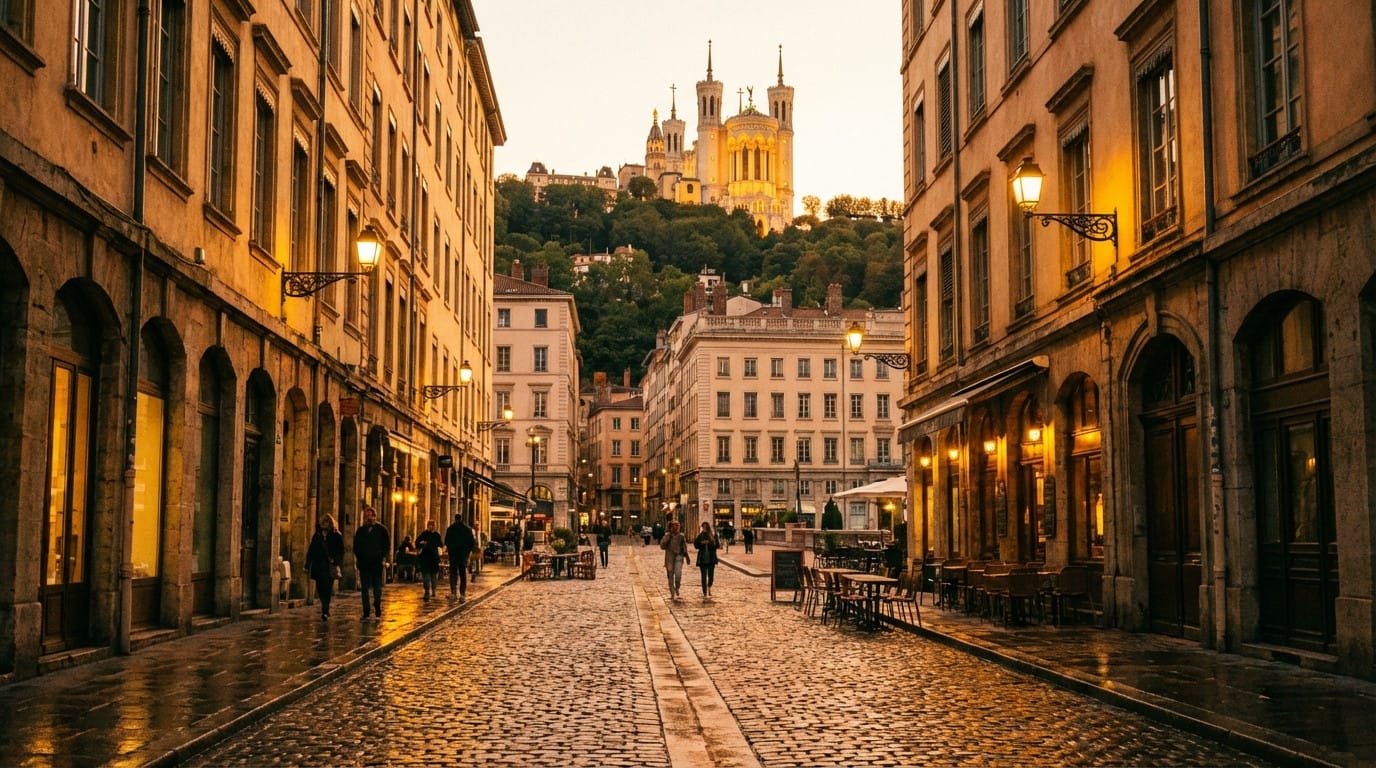
Most of them are publicly accessible during daylight hours, which is fantastic. For the best traboule route in Vieux Lyon, start at 27 rue Saint-Jean, walk through to rue des Trois Maries, then just keep going to 54 rue Saint-Jean. You’ll want to budget at least 90 minutes to really explore them properly. What I find really cool is how the light changes dramatically in the late afternoon, making those limestone courtyards glow amber.
Over in Croix-Rousse, the Grand Passage at 9 place Colbert stretches for more than 500 meters through multiple courtyards — it’s one of the longest traboules in the city. Access is free and unrestricted most days, so go check it out!
Where to Eat: The Bouchon System Explained
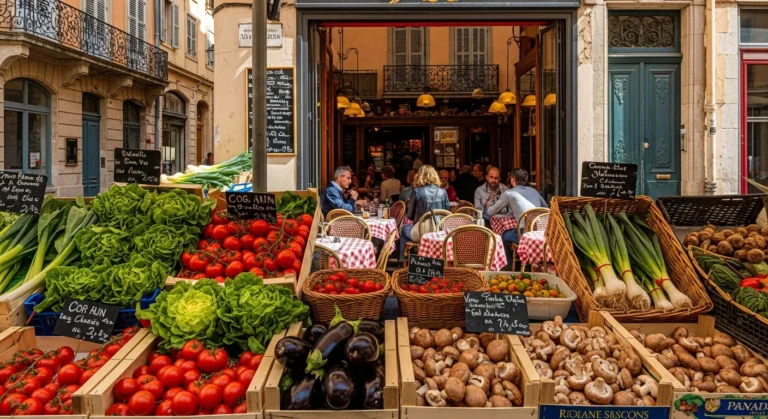
A bouchon is Lyon’s specific style of neighborhood bistro — it’s the complete opposite of fine dining. Picture checked tablecloths, shared tables, no reservations, weekly menus handwritten on chalkboards, and cooking that traces directly back to the silk workers and domestic cooks (historically women, known as mères lyonnaises) who created Lyon’s culinary identity in the 19th century.
Here’s the key dish you absolutely need to understand: quenelles de brochet (pike quenelles in cream sauce). If you eat only one thing in Lyon, let it be this. It sounds simple — ground pike fish formed into dumplings, poached, then baked in a rich cream/écrevisse (crayfish) sauce. But the execution in the best bouchons is truly extraordinary: the quenelle puffs up to three times its size in the oven, arriving at your table impossibly light inside, golden, and perfectly crisp outside. It’s a revelation.
Recommended bouchons (verified authentic by the Association des Bouchons Lyonnais):
- Café des Fédérations (8 rue Major Martin) — This place is classic, often crowded, and they don’t take reservations at lunch. Make sure you order the cervelle de canut (herbed fresh cheese) as a starter.
- Le Garet (7 rue du Garet) — You’ll find it tourist-free in the evening, and their pork preparations are outstanding. Just know it’s closed on weekends.
- Bouchon Les Lyonnaises (1 rue Tramassac) — This is one of the few bouchons that actually has genuine terrace seating in Vieux Lyon.
For your budget: expect to pay €18-28 for a full lunch (entrée, plat, dessert) with a pichet of Beaujolais. Dinner usually runs €25-40 with wine. Honestly, that’s exceptional value for the quality you’re getting.
→ Best hotels in Lyon — compare prices and book with free cancellation
Neighborhoods: Where to Actually Spend Your Time
Vieux Lyon (Vieux-Lyon arrondissement): This is the Renaissance old town on the west bank. You’ll find 15th-17th century architecture here, all those famous traboules, and most of the bouchons. It gets busiest on weekend afternoons. Your best bet is to visit early morning (before 9 am) when it truly belongs to the locals, or in the evening (after 7 pm) once the day-trippers have left.
Croix-Rousse: This is the former silk workers’ hill, just north of the city center. It’s bohemian, market-oriented, and wonderfully authentic. The Saturday morning market on Boulevard de la Croix-Rousse (7 am-1 pm) is, in my opinion, Lyon’s best food market — it’s significantly superior to the more famous Quais de Saône market. The climb up is steep, no doubt, but the views from the top over the city totally justify every single step.
Presqu’île: This is the peninsula nestled between the Saône and Rhône rivers — basically central Lyon. Here you’ll find major museums (the Musée des Beaux-Arts at Place des Terreaux is surprisingly undervisited and truly remarkable), high-end shopping, and some of the best café terraces around.
La Confluence: Head to the southern tip where the rivers meet, and you’ll discover Lyon’s contemporary architecture district. It’s full of innovative residential buildings and the impressive Musée des Confluences (natural history and anthropology). It has a completely different architectural character from the historic city, making it excellent for an afternoon of modern contrast.
Practical Information for 2026
Getting there: From Paris, the TGV takes just 2 hours (€25-80 depending on how far in advance you book). If you’re flying into Paris CDG airport, there’s a direct TGV to Lyon Part-Dieu, so you won’t need to change cities. Book your tickets via SNCF.connect or Rail Europe.
Getting around: Lyon’s TCL metro and funicular system pretty much covers all the major points of interest. A 24-hour unlimited pass costs €6 in 2026. Both the funicular F1 and F2 from Vieux Lyon up to Fourvière (Roman amphitheater) and Saint-Just are included — and trust me, they’re essential for avoiding a very steep climb!
Best time to visit: I’d say May-June and September-October are ideal. Try to avoid August, as many bouchons close for their owners’ holidays. Also, late November-December sees a huge spike in tourist density for the Fête des Lumières (December 8-11, 2026) — it’s spectacular, but incredibly crowded.
2026 hotel recommendations by budget:
- Budget (€80-130/night): Hotel des Artistes (Presqu’île) or Hôtel Saint-Paul (Vieux Lyon)
- Mid-range (€150-200/night): Fourvière Hôtel (unique location on the hill, offering amazing views over the city)
- Splurge (€250+/night): Cour des Loges (Vieux Lyon, a stunning 15th-century Renaissance mansion, 5-star)
→ Search Lyon hotels with instant price comparison and free cancellation
The Fourvière Hill: Roman Lyon
Before Lyon was even French, it was Roman — specifically, the capital of Roman Gaul (Lugdunum), founded in 43 BC. The archaeological site on Fourvière Hill features two Roman theaters: the Grand Théâtre (which held 10,000 people back in its day) and the Odéon. Both are still actively used for performances today, which is pretty cool. Entry to the archaeological park is free, and there’s a small museum on-site (€4).
The Basilique Notre-Dame de Fourvière (1872-1884) at the very top of the hill is an overwrought, gilded monument that the Lyonnais themselves affectionately mock as their “elephant.” But don’t let that deter you! The view from the esplanade over the city — with the Presqu’île below and the Alps visible on clear days — is the definitive Lyon panoramic photo you’ll want to snap. My advice? Take the funicular up, explore the Roman site, visit the basilica (especially for its floor mosaics), then enjoy a leisurely walk back down through the traboules of Vieux Lyon.
3-Day Lyon Itinerary (Non-Tourist Version)
Day 1: Morning — Hit up the Croix-Rousse market (if it’s Sat/Sun) or the Quai Saint-Antoine market (Tue-Sun). Afternoon — Explore the Traboules of Vieux Lyon (you can do this self-guided with the free map from the Office de Tourisme). Dinner — Grab a table at a bouchon like Le Garet or Café des Fédérations.
Day 2: Morning — Head up Fourvière Hill by funicular, check out the Roman theaters, and visit the basilica. Afternoon — Explore the Presqu’île: visit the Musée des Beaux-Arts and Place des Terreaux. Evening — Enjoy an aperitif in the bars of Rue Mercière, then have dinner in La Confluence.
Day 3: Morning — Visit the Institut Lumière (the birthplace of cinema, located in the Lumière brothers’ family home in the Monplaisir district, €14 entry). Afternoon — Explore the Musée des Confluences. Depart late afternoon.
Related France Guides
Frequently Asked Questions
Is Lyon worth visiting over Paris for a first trip to France?
If food, authentic culture, and avoiding massive crowds are your top priorities — absolutely, yes. Lyon gives you France’s best gastronomy, incredible history, and that genuine, lived experience of French urban life that Paris, at its most touristy, just doesn’t provide anymore. For most visitors, Lyon is truly a revelation.
How many days do you need in Lyon?
Two full days is the bare minimum to properly cover Vieux Lyon, Croix-Rousse, Fourvière, and the Presqu’île. Three days lets you add Monplaisir (for the Lumière museum) and La Confluence without feeling rushed. If you have four or more days, you’ll be rewarded with a slower exploration of the Cité Internationale and the charming surrounding villages.
What is the best time of year to visit Lyon?
May-June and September-October offer ideal weather (18-24°C), full bouchon schedules (which is important!), and lower crowd density. December 8-11 for Fête des Lumières (the city’s famous light festival) is spectacular, but be warned, it’s extremely busy — you’ll need to book accommodation 3-6 months in advance.
Is Lyon expensive compared to other French cities?
Lyon is significantly cheaper than Paris — we’re talking roughly 30-40% less for accommodation and restaurants at equivalent quality levels. For a full day (including transport, meals, and entry fees) with both a bouchon lunch and dinner, you’re looking at about €70-100 per person in 2026.
Do I need to speak French in Lyon?
In tourist areas and hotels, you’ll find English is widely spoken. However, in traditional bouchons and markets, knowing a little French can be really helpful — menus might be in French only. Generally, the Lyonnais are warm and patient with non-French speakers, which is a nice contrast to that occasional Parisian stereotype.