Best Food Cities in France Beyond Paris: Complete Insider Guide 2026
Last Updated: March 2026
Paris gets all the culinary fame — but France’s most exciting eating is happening elsewhere. From Lyon’s legendary bouchons to Marseille’s brutal bouillabaisse scene, here are the French food cities that will genuinely change how you think about eating.
Related France Guides
Table of Contents
- Why Eating Beyond Paris Changes Everything
- What Most Food Guides Get Wrong About French Cuisine
- The 7 Best Food Cities in France Beyond Paris
- Practical Planning: When to Go, Costs, Transport
- Hidden Gems Only Locals Eat At
- ETIAS & Entry Requirements for 2026
- Frequently Asked Questions
I’ve spent fifteen years eating my way through France — from three-star temples in Lyon to fish shacks in Sète where the owner is also the fisherman. The honest truth: some of my best meals in France cost under €15 and happened nowhere near a Michelin star.
Why Eating Beyond Paris Changes Everything
France has 635 Michelin-starred restaurants as of 2025 — and fewer than 90 are in Paris. The rest are scattered across a country where regional identity and cuisine are fiercely protected. Lyon alone has more stars per capita than any city on earth.
According to Atout France (France’s national tourism agency), food tourism accounts for 23% of all traveler spending in France — and 67% of food tourists say regional cuisine was a primary reason for their trip. The market has spoken: France’s real food story isn’t in Paris.
Budget matters too. A three-course lunch in a Lyon bouchon: €18–22. The equivalent quality in Paris: €45+. Every city outside the capital offers dramatically better food value.
What Most Food Guides Get Wrong About French Cuisine
Every food article tells you to go to Lyon because it’s “the gastronomic capital of France.” That’s true — and completely unhelpful without context. Most travelers visit one bouchon, eat quenelles and andouillette, and leave convinced they’ve done Lyon.
The contrarian reality: France’s most innovative cooking isn’t happening in Lyon or Paris. It’s in Marseille’s immigrant-influenced street food scene, in Basque Country’s pintxos bars, and in Bordeaux’s neo-bistro movement where young chefs are rewriting classic French cuisine with Gascon produce and zero pretension.
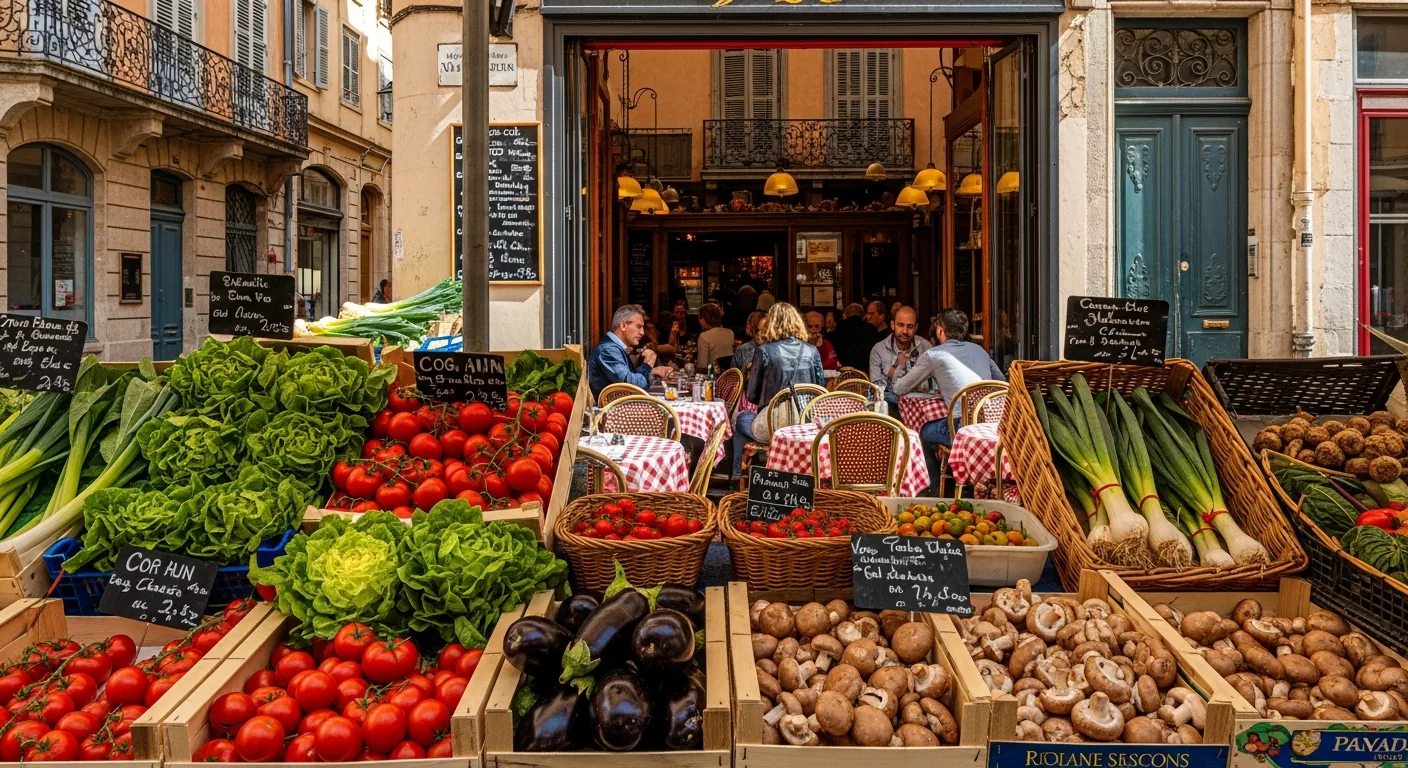
Another thing guides miss: the covered markets (marchés couverts) are where locals actually shop and eat. Les Halles de Lyon Paul Bocuse, Marché de la Boqueria de Bordeaux (actually the Marché des Capucins), Marché Saint-Quentin in Toulouse — these are not tourist attractions, they’re functional food centers that happen to be spectacular.
The 7 Best Food Cities in France Beyond Paris
1. Lyon — The Undisputed Capital (If You Know Where to Eat)
Must eat: Bouchon lunch, Les Halles Bocuse, Croix-Rousse market breakfast
Lyon’s bouchons — the small, family-run restaurants serving traditional Lyonnais cuisine — are the city’s soul. Pork is king: tablier de sapeur (tripe in breadcrumbs), rosette de Lyon (dried sausage), cervelle de canut (fresh cheese with herbs). These are not dishes for the squeamish. They are extraordinary.
Les Halles de Lyon Paul Bocuse (102 Cours Lafayette) is the finest covered food market in France. Open Tuesday–Sunday until 10:30pm on Fridays. Budget €20–35 for a proper market lunch with wine.
For fine dining on a budget, look for the formule déjeuner (lunch menu) at starred restaurants — Michelin addresses routinely offer 2-course lunch for €32–45, the same kitchen that charges €120 at dinner.
2. Marseille — Raw, Real, and Completely Underrated
Must eat: Authentic bouillabaisse, panisse, navette cookies from Four des Navettes
Marseille is France’s second city and its most misunderstood food destination. The city’s cuisine is shaped by centuries of port culture — North African, Italian, Greek, Spanish influences layered over Provençal foundations.
Authentic bouillabaisse requires advance booking and a serious budget: the Charter (Charte de la Bouillabaisse Marseillaise) restaurants — Chez Fonfon, Le Miramar, Toinou — serve it at €65–85 per person minimum, and it’s worth every centime. The dish requires 4+ varieties of local Mediterannean rock fish you cannot get elsewhere.
Street food: panisse (chickpea fritters, €2–3) from stalls near the Vieux-Port. Le Four des Navettes (136 Rue Sainte) has been baking orange-blossom navette biscuits since 1781 — the oldest bakery in Marseille. A bag of 12 costs €6.
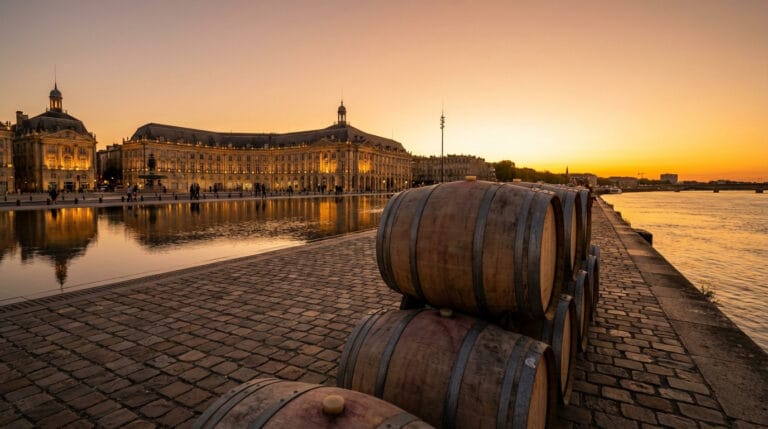
3. Bordeaux — The Neo-Bistro Revolution
Must eat: Canelés, entrecôte à la bordelaise, Marché des Capucins breakfast
Bordeaux used to be stuffy — white tablecloths, formal service, menus designed to accompany the wine rather than stand alone. That changed around 2018 when a wave of young chefs opened neo-bistros in the Saint-Pierre and Saint-Michel neighborhoods.
Le Bordeaux by Gordon Ramsay is deliberately not on this list. The Marché des Capucins (open until 1pm daily, closed Monday) is: Bordeaux’s “belly,” where locals eat oysters with white wine at 8am and it’s completely normal. A dozen oysters with bread and butter: €12–15.
Canelés — small, caramelized rum-and-vanilla pastries from Bordeaux — are the world’s most perfect pastry. Baillardran (6 locations in the city) does them best: €1.20 each, eat immediately.
4. Toulouse — The Pink City’s Cassoulet Culture
Must eat: Cassoulet, saucisse de Toulouse, violet artichoke salad
Toulouse is the capital of Gascony’s culinary tradition — duck, goose fat, Armagnac, foie gras, and the cassoulet wars (Toulouse vs Castelnaudary vs Carcassonne: all three claim the original). Toulouse’s version uses its own Saucisse de Toulouse and confit duck.
Chez Emile (13 Place Saint-Georges) serves Toulouse’s most respected cassoulet at €24. The Marché Victor Hugo (covered market, open until 1:30pm, closed Monday) is spectacular — two floors, 100+ vendors, €4 glasses of Gaillac wine at the upper-floor restaurants.
5. Strasbourg — Where France Meets Alsatian Tradition
Must eat: Choucroute garnie, flammekueche, baeckeoffe
Strasbourg is technically France but culinarily its own universe — deeply influenced by German and Swiss traditions, with dishes that don’t exist anywhere else. Choucroute garnie (sauerkraut with 6 different pork preparations) at Maison Kammerzell (16 Place de la Cathédrale) is the definitive version: €24, feeds two people amply.
Flammekueche (thin-crust tart with crème fraîche, onions, and lardons) is Alsace’s answer to pizza and costs €9–13. The December Christmas market (the oldest in France, since 1570) adds mulled wine and gingerbread to the equation — the city is at its most atmospheric.
6. Nice — The Mediterranean Table
Must eat: Socca, pan bagnat, ratatouille niçoise, pissaladière
Nice cuisine is Niçoise — distinct from both French and Italian cooking, shaped by the city’s historical independence. Socca (chickpea flour crepe, cooked in a wood-fired oven) from Chez René Socca (2 Rue Miralheti) is €3 and extraordinary. Eat it standing up, at the counter, with a glass of Bellet rosé.
The Cours Saleya market (open Tuesday–Sunday mornings) is the best market in southern France — produce, flowers, olives, local cheese. Arrive by 8am before the tour groups. A complete socca-and-market breakfast costs €8–12.
7. Biarritz & Basque Country — Pintxos and Pyrenean Produce
Must eat: Pintxos bar circuit, piperade, Bayonne ham, Basque cake
French Basque Country (Pays Basque) has its own language, culture, and cuisine entirely. The pintxos bar tradition from nearby San Sebastián has fully crossed the border — Bayonne and Saint-Jean-de-Luz have excellent pintxos circuits where €2–3 per piece, eaten standing at a zinc bar, is the drill.
Bayonne ham (Jambon de Bayonne, PDO-protected) is sold at Pierre Ibaialde (41 Rue des Cordeliers, Bayonne) — a charcuterie museum and shop combined. Tours available, €5, includes tasting. A 500g wedge of aged ham: €18–22, the best souvenir you can bring home.
Practical Planning: When to Go, How to Get There, What to Budget
Best time: September–November for harvest produce and cooler temperatures. May–June for markets and outdoor eating. December for Christmas market cities (Strasbourg, Colmar, Bordeaux).
Transport: All cities served by TGV from Paris. Lyon: 2h (€25–60). Bordeaux: 2h04 (€30–80). Marseille: 3h (€35–75). Toulouse: 4h10 (€40–85). Nice: 5h30 (€50–90) or fly (€50–80 one-way). Biarritz: 4h40 from Paris, or fly.
Budget per day (food-focused): Market breakfast €5–10 | Bouchon/bistro lunch €18–30 | Dinner with wine €35–60 | Snacks/street food €8–15. Total: €65–115/day eating well.
Hidden Gems Only Locals Eat At
Sète (Hérault): Called the “Venice of the Languedoc,” Sète has a fishing culture and cuisine entirely its own. Tielle sétoise (octopus pie) is the local specialty — sold from bakeries at €4 a slice. The Grand Buffet de Sète does a €28 all-you-can-eat seafood lunch that locals queue for on Sundays.
Périgueux (Dordogne): The truffle and foie gras capital of France. November–March, the Saturday market in Place Saint-Louis becomes a truffle market — black Périgord truffles at €300–500/kg but you can buy slices for €5–10. Every restaurant within 30km uses them generously.
Rouen (Normandy): Camembert, Livarot, Pont-l’Évêque — Normandy’s cheeses are world-famous but eating them at source is something else. The Marché du Vieux-Marché in Rouen (Tuesday, Friday, Saturday) has fromagers who sell direct from the farm. A full cheese board with local cider: €12.
ETIAS & Entry Requirements for 2026
Non-EU visitors (Americans, Canadians, Australians, British) need ETIAS authorization to enter France starting 2026. It is not a visa — it’s a pre-travel electronic clearance similar to the US ESTA.
Cost: €7 | Validity: 3 years or until passport expiry | Processing: Typically minutes, occasionally up to 96 hours. Apply only through the official EU ETIAS site — third-party sites charge up to €50 for the same thing.
A food circuit combining multiple French cities (Lyon → Bordeaux → Biarritz) is entirely covered by one ETIAS application for the Schengen Area.
Frequently Asked Questions
What is the food capital of France outside Paris?
Lyon is universally recognized as France’s gastronomic capital. With more Michelin stars per capita than any other city and a centuries-old bouchon tradition, it’s the benchmark. But Marseille, Bordeaux, and Toulouse each have strong cases for their own regional supremacy.
Is French food really as expensive as its reputation suggests?
Only if you eat in tourist restaurants. Market lunches cost €8–15. A bouchon formule déjeuner in Lyon is €18–22. Even Michelin-starred restaurants offer lunch menus at €35–50. The key: eat lunch as your main meal, eat at markets, and avoid anything with an English menu displayed outside.
What French city has the best street food?
Marseille and Nice have the most vibrant street food cultures — Mediterranean, North African, and Niçoise traditions creating genuinely unique fast food. Marseille’s panisse, Nice’s socca, and the pintxos bars of Biarritz are all street food worth a trip alone.
What is a bouchon and where can I find an authentic one?
A bouchon is a traditional Lyonnais restaurant serving pork-forward, offal-heavy local cuisine in a convivial, no-pretension setting. Authentic ones carry the “Les Bouchons Lyonnais” certification (around 20 certified establishments). Avoid Rue Mercière’s tourist bouchons — head to Croix-Rousse or the 7th arrondissement instead.
What is the best French food market to visit?
Les Halles de Lyon Paul Bocuse is the finest covered market in France. For outdoor markets: Cours Saleya in Nice (flowers and produce), Marché des Capucins in Bordeaux (seafood and wine), and Marché Victor Hugo in Toulouse. All run Tuesday through Sunday mornings.
Can I do a food-focused road trip through multiple French cities?
Absolutely — a 10-day circuit of Lyon → Provence → Marseille → Nice → Basque Country covers three radically different culinary traditions. All connected by TGV or scenic routes nationales. Budget €100–150/day for transport, accommodation, and serious eating.
—
Marie Dupont | Paris-based Travel Writer & France Expert | Lived in France 15 years. Marie has eaten in every French region multiple times and specializes in authentic local food experiences — the markets, the bouchons, the family tables that don’t appear on tourist maps.