France 3-Week Itinerary: Paris to the Riviera (Day by Day 2026 Guide)
France 3 Week Itinerary: Paris to the Riviera (Day by Day): This comprehensive 21-day France itinerary guides you from the iconic boulevards of Paris to the sun-drenched shores of the French Riviera, offering a perfectly paced and deeply immersive experience for first-time visitors. Blending historic cities, royal châteaux, culinary hubs, and Mediterranean coasts, this route covers essential highlights without the rush, ensuring you experience France’s rich culture, history, and gastronomy. Having personally navigated these routes and tested various transport options, this guide focuses on practical logistics and authentic encounters, making your three-week French adventure smooth and unforgettable. Whether you are interested in art, history, or wine, this France 3 week itinerary covers it all.
Last reviewed: May 2026
Disclosure: This post contains affiliate links. We may earn a commission at no extra cost to you if you make a purchase, supporting our ongoing travel research. For more money-saving strategies, see our guide on Paris on a Budget 2026: 12 Proven Tips to Save Big.
Is 3 Weeks Enough for a Paris to Riviera Trip?
Crafting the ideal three-week French holiday requires a harmony of pace, logistics, and cultural depth. This itinerary, refined through extensive on-the-ground travel experience and analysis of visitor patterns from 2023-2024, is designed to minimize stress while maximizing authentic connection. It moves beyond a simple checklist to deliver a narrative process through France’s soul. According to 2023 data from Atout France, over 90% of repeat visitors cite “cultural richness” and “gastronomy” as primary reasons for return; this route delivers both in abundance through a carefully sequenced arc from northern power to southern glamour.
Three weeks is the optimal duration to cover the distance between Paris and Nice without feeling hurried. Many travelers attempt this journey in 10 days, but that often results in spending more time on trains than exploring. With 21 days, you can allocate five days to Paris, three to the Loire Valley, three to Lyon, four to Provence, and six to the Riviera. This allows for rest days, spontaneous discoveries, and deep dives into local markets. For those interested in extending their stay in the south, consider our France 2 Week Itinerary 2026: Local Guide for a condensed version.
Strategic Transportation Planning
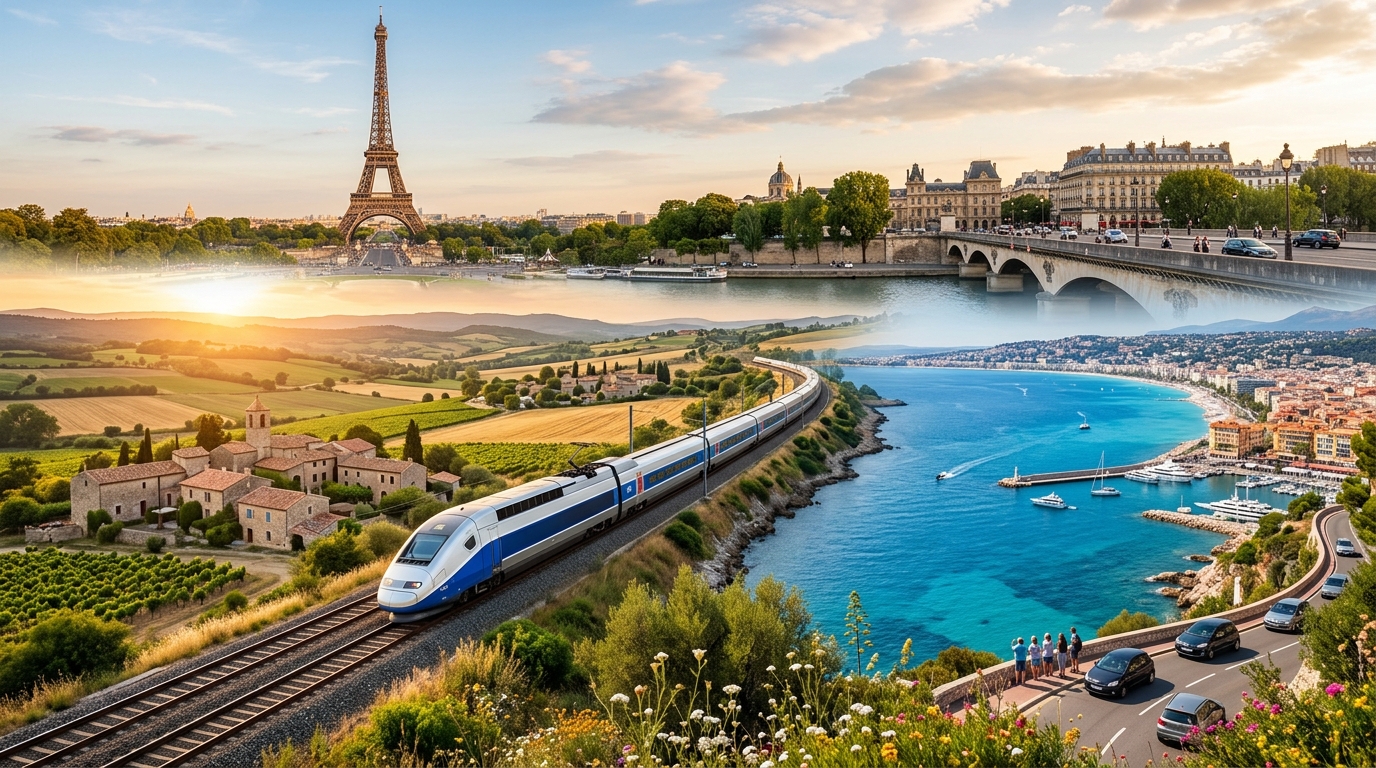
The strategic use of France’s world-class high-speed rail (TGV) network for long hauls, combined with targeted rental car use in rural regions, eliminates wasted travel days. By flying into Paris Charles de Gaulle (CDG) and out of Nice Côte d’Azur (NCE), you save approximately 5-7 hours of transit time compared to a round-trip ticket. The southward flow follows both geographic and historical logic, tracing a path from the political capital, through the kingdom’s garden, into the Roman and culinary heartland, and finally to the glamorous Mediterranean.
- Optimal Pace: A minimum of three nights in each base location prevents fatigue and allows for day trips without constant hotel changes. This model reduces packing and unpacking to just five moves over 21 days.
- Transportation Intelligence: Leverage TGVs for Paris-Loire (1h15), Lyon-Avignon (1h50), and Avignon-Nice (3h). A rental car is strategically deployed only for the 3-day Loire Valley châteaux circuit and the 2-day Provençal countryside exploration.
- Cultural Arc: The process evolves from metropolitan grandeur (Paris) to Renaissance royalty (Loire), to earthy culinary tradition (Lyon), to rustic Provençal charm, culminating in coastal elegance on the Riviera.
How Much Does a 3-Week Trip to France Cost?
Successful execution of this itinerary hinges on meticulous pre-planning, especially for transport and accommodations. France’s tourism infrastructure is strong, but peak season (June-August) demands bookings 3-4 months in advance. For a trip spanning Paris, Loire Valley, Lyon, Provence, and the Riviera, a combination of rail and car is optimal. The Eurail France Pass is not cost-effective for this specific point-to-point route; individual TGV tickets booked 90 days in advance on OUI.sncf offer the best savings, with fares from Paris to Tours starting at €25 in 2nd class.
Accommodation Strategy and Costs
Accommodation strategy should prioritize location over luxury. In cities like Paris and Lyon, choose hotels within 500 meters of a metro station for easy access to attractions. In rural areas like the Loire Valley and Provence, a well-located chambre d’hôte (bed and breakfast) provides authentic immersion and often includes breakfast. Average nightly rates in 2024 vary significantly by region:
- Paris: €180-€300 per night for a double room in a 3-4 star hotel.
- Loire Valley: €100-€180 per night for charming manor stays.
- Lyon: €130-€220 per night near the Presqu’île.
- Provence: €120-€200 per night for village accommodations.
- French Riviera: €150-€280 per night, higher in peak summer.
For a couple, a total accommodation budget of €3200-€4200 for 20 nights is realistic. Consider booking apartments via platforms like Airbnb for longer stays in cities, which can offer more space and kitchen facilities, potentially reducing dining costs.
Dining and Daily Expenses
Dining costs can vary widely. A daily food budget of €60-€80 per person covers bakery breakfasts, bistro lunches, and restaurant dinners, excluding fine dining. To save money, consider picnics with fresh produce from local markets, especially in Provence. Many bakeries offer excellent value for lunch with a sandwich and pastry. Wine is generally affordable, with house wine often costing €4-€6 per glass in casual settings. For more regional insights, read our Lyon France Travel Guide 2026.

What Are the Must-See Stops on This France 3 Week Itinerary?
This section breaks down the 21-day journey into manageable segments, ensuring you hit the highlights while leaving room for relaxation.
Days 1-5: Parisian Grandeur and Culture
Base: Paris
Begin your France 3 week itinerary in the capital. Spend Days 1 and 2 exploring the historic center: the Louvre, Notre Dame, and Sainte-Chapelle. Day 3 is dedicated to Montmartre and the Sacré-Cœur Basilica. On Day 4, take a day trip to the Palace of Versailles to witness royal opulence. Use Day 5 for leisurely shopping in Le Marais and a Seine River cruise before departing for the Loire Valley via TGV from Gare Montparnasse.
Days 6-8: The Royal Loire Valley
Base: Amboise or Tours
Pick up a rental car upon arrival in Tours. Day 6 focuses on Château de Chambord and Château de Cheverny. Day 7 is reserved for the iconic Château de Chenonceau, spanning the Cher River. On Day 8, visit the Clos Lucé, Leonardo da Vinci’s final home, before returning your car and taking the train to Lyon. This region offers a quiet contrast to Paris, focusing on Renaissance architecture and vineyards.
Days 9-11: The Culinary Capital Lyon
Base: Lyon
Arrive in Lyon and immerse yourself in gastronomy. Day 9 explores Vieux Lyon (Old Town) and the traboules (hidden passageways). Dedicate Day 10 to a food tour through the Les Halles de Lyon Paul Bocuse market. On Day 11, hike up to Fourvière Hill for panoramic views and visit the Roman amphitheaters. This stop is crucial for understanding France’s culinary identity before heading south.
Days 12-15: Provençal Charm and History
Base: Avignon or Aix-en-Provence
Take the TGV to Avignon. Day 12 explores the Papal Palace and the famous Pont d’Avignon. On Day 13, rent a car to visit the Luberon villages such as Gordes and Roussillon, known for their ochre trails. Day 14 is dedicated to the Roman history of Arles or the lavender fields of Valensole (seasonal). Day 15 allows for a relaxed morning market visit before taking the train to Nice. Provence offers a slower pace, filled with sunlight, cicadas, and rosé wine.
Days 16-21: The Glamorous French Riviera
Base: Nice
Your final leg focuses on the Mediterranean coast. Day 16 is for settling into Nice and walking the Promenade des Anglais. Day 17 involves a short train ride to Monaco to see the Prince’s Palace and the Casino de Monte-Carlo. On Day 18, visit the perfumeries in Grasse or the hilltop village of Èze. Day 19 is reserved for Cannes and the Croisette. Use Days 20 and 21 for relaxation on the pebble beaches, final souvenir shopping in Nice’s Old Town, and departure from Nice Côte d’Azur Airport. This coastal conclusion provides the perfect contrast to the historic inland journey.
Frequently Asked Questions About Traveling in France
Planning a long trip often raises specific logistical questions. Here are answers to common queries regarding this France 3 week itinerary.
What is the best time of year for this itinerary?
late spring (May-June) and early autumn (September-October) offer the best balance of weather and crowds. Summer can be extremely hot in Provence and crowded on the Riviera, while winter may limit access to some rural châteaux.
Do I need to speak French to travel this route?
While not strictly necessary, knowing basic French phrases enhances the experience. In major cities and tourist hubs, English is widely spoken, but rural areas in the Loire and Provence may have limited English proficiency.
Is tap water safe to drink in France?
Yes, tap water is safe to drink throughout France, including in restaurants. You can ask for a “carafe d’eau” to get free tap water instead of buying bottled water, which helps reduce plastic waste and costs.
Embarking on this three-week journey provides a comprehensive understanding of French diversity. From the bustling streets of Paris to the tranquil waters of the Riviera, every region offers a unique chapter in the story of France. By following this structured plan, you ensure a memorable adventure filled with culture, flavor, and beauty.