title: “Cannes 3-Day Itinerary: What Locals Actually Do in 2026”
slug: cannes-3-day-itinerary
meta_description: “Plan 3 perfect days in Cannes with this local 2026 guide. Real Croisette prices, Îles de Lérins tips, Le Suquet food spots, and a full budget breakdown from someone who lives on the Riviera.”
category: France Itineraries
date: 2026-04-23
author: Claire Fontaine
affiliate_disclosure: “This article contains affiliate links. We may earn a commission at no extra cost to you.” 7-Day Provence Itinerary: Hidden Villages and Local Tips
Cannes 3-Day Itinerary: What Locals Actually Do in 2026
TL;DR
- Total budget: €380–650 per person for 3 days (mid-range), excluding transport to Cannes and excluding the Festival du Film fortnight in mid-May
- Best months: April and June for warm sea without festival chaos, or late September when the yachts leave and the beaches empty out. Avoid May 12–23, 2026 (the Festival du Film) unless you have a press badge and a hotel booked since November
- Must-do: Take the €17 ferry to the Îles de Lérins and swim off the monastery beach on Saint-Honorat, eat lunch at the Marché Forville the morning the fishing boats land, walk the full curve of the Croisette at sunset from the Palais to the Vieux Port
- Skip: The restaurants on the Croisette with English menus and photos of the food – the same bouillabaisse at a Marché Forville bistro costs half
- Getting around: Cannes centre is walkable in 20 minutes end to end; the Palm Bus network (€1.50 single, €4 day pass) covers the hillside neighbourhoods; the coastal train (€2.50 to Antibes, €4 to Nice) handles the Riviera day trips
Cannes has a reputation problem. Most people know two things about it – the Film Festival and the Croisette – and neither represents the real city. The Croisette is a 2-km hotel strip that locals avoid from May to September. The Film Festival is 11 days in May when the entire city turns into a movie industry trade show. The rest of Cannes is a proper Mediterranean port with one of the best Provençal markets on the coast, a medieval hilltop neighbourhood, and two islands 20 minutes offshore that look like they belong in Greece. Paris on a Budget 2026: 12 Proven Tips to Save Big
I have spent the last four years splitting my time between Cannes and the hinterlands of the Alpes-Maritimes, and this Cannes 3-day itinerary is the one I send to friends before they book a hotel on the Croisette for €480/night. Not the version where you parade in front of the Palais and pay €9 for a coffee. The version where you actually eat Provençal at the Marché Forville, swim off the islands, and understand why Lord Brougham decided this place was worth building a villa in 1834. France 2 Week Itinerary 2026: Local Guide (Paris + Loire…
Find flights to Nice Côte d’Azur Airport (NCE) on Trip.com with flexible date search – NCE is 27 km east of Cannes with direct flights from 100+ European cities and an express shuttle to Cannes gare. Lyon France Travel Guide 2026: Beyond the Tourists and Into
How to Get to Cannes (and Why the Shuttle Beats the Taxi)
Cannes has no commercial airport. The nearest is Nice Côte d’Azur Airport (NCE), 27 km east. The best link is the direct Express 210 shuttle from the airport to Cannes gare routière: €22 one way, 50 minutes, every 30 minutes between 8am and 8pm. Book online for €20. A taxi is €75–90 flat rate – unforgivable unless you have a team of suitcases. [Source: Lignes d’Azur Express 210]
From Paris, the TGV Inoui runs direct to Cannes station in 5h20 for €50–130 depending on booking window. The station sits in the centre of town, 5 minutes’ walk to Rue d’Antibes (the main shopping street) and 10 minutes to the Croisette. From most European cities, compare direct flight prices on Aviasales – Nice gets budget carriers from London, Dublin, Berlin, Amsterdam, and 30+ other European hubs year-round.
Once in Cannes, the historic centre is entirely walkable. The Palm Bus network (€1.50 single, €4 day pass) covers the hillside neighbourhoods (Californie, La Bocca, the western villas) and connects to the ferry terminal for the Îles de Lérins. The most useful line is Palm Bus 1 (Cannes gare → Croisette → Palm Beach), which runs along the full seafront every 15 minutes. [Source: Palm Bus Cannes]
For day trips to other Riviera towns, the coastal train from Cannes gare is the smart option: €2.50 to Antibes (10 minutes), €2.80 to Juan-les-Pins (7 minutes), €4 to Nice-Ville (32 minutes), €3.20 to Monaco (47 minutes). Hourly service, sea views, and locals’ way to move along the coast.
For more on timing your visit, see our guide on the best time to visit Nice – most timing advice applies to Cannes equally.
Where to Stay in Cannes: 3 Neighbourhoods Locals Recommend
Do not stay on the Croisette unless your budget is €400+/night and you enjoy paying €10 for a coffee. Here is where to book instead.
Le Suquet (medieval hilltop) – The old town on the western hill above the Vieux Port. Narrow lanes, 17th-century houses, the best view of Cannes from the Tour du Suquet. Expect €100–170/night for a boutique 3-star, €180–290 for a 4-star. Best for first-timers who want the port and the market in walking distance.
Rue d’Antibes corridor – The 1 km shopping street parallel to the Croisette, three streets back from the sea. Hotels here run €85–150/night. You give up the direct sea view but gain 40% in rate and keep everything – Croisette, Vieux Port, Suquet, gare – inside a 10-minute walk.
La Bocca / Quartier du Prado – The working western side of the city, beyond the port. Smaller boutique hotels and apartment rentals at €70–115/night. This is where the fishermen live. You’ll take Palm Bus 20 (10 minutes) to the centre, but the prices are 40% cheaper and the market at Forville is 5 minutes’ walk.
| Neighbourhood | Price Range/Night | Best For | To Croisette |
|---|---|---|---|
| Le Suquet | €100–290 | First-timers, walkability | 8 min walk |
| Rue d’Antibes area | €85–250 | Mid-range, shopping | 5 min walk |
| La Bocca / Prado | €70–115 | Budget, repeat visitors | 10 min bus |
| Croisette seafront | €300–900+ | Luxury, Festival week | 0 min |
[Source: Booking.com Cannes, Cannes Palace Hotels]
Day 1: Le Suquet, the Marché Forville, and the Vieux Port
Morning (8:00 – 12:30)
Start at the Marché Forville as close to 8am as you can manage. This is the big covered market north of the Vieux Port, running every morning except Monday (Monday it becomes the antique market). Before 9am, you get the real version – fish still landing from the night boats, farmers from Grasse and the Var hinterlands, the smell of warm bread from three boulangeries. Get a coffee and a socca (€3) at the small bar inside the market. The fish stall at the east end sells the day’s catch at the price the restaurants pay – so if you are staying somewhere with a kitchen, buy a daurade for €14 and you just saved €45. [Source: Marché Forville]
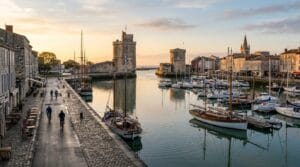
From the market, walk south 300 metres to the Vieux Port (the old harbour). This is the working half of Cannes – the fishing boats moor on the west side, the small pleasure boats in the middle, and the big yachts on the Croisette side. The difference in boat size from one side to the other is genuinely funny.
Climb Le Suquet – the medieval hilltop neighbourhood that was Cannes before the English invented it as a resort in 1834. The climb takes 8 minutes up Rue Saint-Antoine and delivers the best view of the bay. At the top you find the Église Notre-Dame-d’Espérance (free entry, 16th-century) and the Musée des Explorations du Monde housed in the 11th-century Tour du Suquet (€6 adult, closed Mondays, open 10am–6pm). Small collection but the tower stairs lead to a panoramic terrace that is essentially the rooftop of Cannes. [Source: Musée des Explorations du Monde]
From the Suquet’s summit, wander down through the narrow stone streets – Rue Saint-Antoine is the most photographed but Rue du Docteur-Pierre-Gazagnaire and Rue Perrissol are quieter and just as pretty.
| Attraction | 2026 Price | Time Needed | Book Ahead? |
|---|---|---|---|
| Musée des Explorations du Monde | €6 adult | 45 min | No |
| Église Notre-Dame-d’Espérance | Free | 20 min | No |
| Île Sainte-Marguerite ferry | €17 return | 30 min each way | Summer yes |
| Île Saint-Honorat ferry | €19 return | 20 min each way | Summer yes |
| Fort Royal (prison of Man in Iron Mask) | €6.50 adult | 1h | No |
| Villa Rothschild / Cannes Art Museum | Free | 1h | No |
| Vieux Port sailing tour (1.5h) | €28 adult | 1.5h | Summer yes |
| Palm Bus day pass | €4 | – | No |
[Source: Cannes Tourism Tickets]
Afternoon (13:00 – 18:00)
Lunch: Aux Bons Enfants (80 Rue Meynadier, no phone, cash preferred). This is the Cannes institution for Provençal cuisine. Six-table dining room, €26 three-course lunch of classic Niçard plates (aioli, daube, stuffed sardines), house wine €3 a glass. Queue at 12:30pm or you do not eat. No reservations. If the queue is too long, Table 22 par Noël Mantel (22 Rue Saint-Antoine) on the Suquet does a €28 two-course modern Provençal lunch.
After lunch, walk the Croisette – the 2-km seafront boulevard built in 1864 and still the social spine of the town. Start at the Palais des Festivals (the big concrete building at the west end with the red carpet) and walk east past the grand hotels: the Majestic (1926), the Carlton (1911), the Martinez (1929). The pavement is mosaic-tiled with palm prints from Festival winners. The piers (jetées) at the mid-Croisette give you the classic postcard photo.
Beach options on the Croisette:
– Plage de la Croisette (free sections) – sandy but narrow strips between the private beach clubs. Bring a mat.
– Plage du Midi (west of the Palais) – longer free public sand, family-friendly, 20 minutes’ walk from the centre.
– Plage du Mourre Rouge (east end of the Croisette) – the small local beach where actually Cannois go. 10 minutes from the centre on Palm Bus 1.
– Private beach clubs (Plage Royale, Plage du Martinez) – €35–60/day for a lounger and an umbrella. Worth it if you want the Riviera-movie experience once.
Most Cannes beaches are pay-beaches versus Nice where most are free gravel. Budget for one €35 beach-club afternoon if you want the full experience.
Evening (19:30 – 22:30)
Dinner: La Palme d’Or (in the Martinez Hotel, 73 La Croisette). Two-star Michelin with a €165 seven-course dinner – the splurge of the trip. Otherwise Astoux et Brun (27 Rue Félix Faure, no reservations) is the institution for shellfish: plateau de fruits de mer for two €60–85, oysters €19 a dozen, open every day until midnight, busy until closing. Arrive at 7:30pm and you’ll still wait 15–20 minutes.
For something lighter, La Brouette de Grand-Mère (9bis Rue d’Oran, cash only) does a €34 three-course dinner of hearty French bistro food with a carafe of house wine at €10. The family has run it for 50 years. Book the day before. (source: U.S. travel advisories)
End the night walking Rue Saint-Antoine back up the Suquet after dinner. Between 9:30pm and 11pm the restaurants have their tables spilling out onto the cobbles, musicians play on the corners, and the view from the top of the hill over the lit Croisette is the single best picture you will take on this trip. (source: EU tourism statistics)
Day 2: The Îles de Lérins and the Islands Locals Escape To
Today you leave the mainland for the two small islands 1.5 km offshore. This is the day that saves the trip for everyone who was starting to find Cannes over-polished.
Morning (9:00 – 13:00)
Take the ferry from the Gare Maritime (next to the Palais des Festivals) to Île Sainte-Marguerite (€17 round trip, 15 minutes each way, every 30 minutes in summer, hourly in winter). This is the bigger of the two Lérins islands – 3.5 km long, 900 metres wide, covered in pine and eucalyptus forest. There are no cars, no shops beyond two kiosks, and no hotels. Just a 17th-century fort, a lighthouse, three walking trails, and a handful of rocky coves where locals swim. [Source: Compagnie Riviera Lines]
At the island, walk south from the ferry dock to the Fort Royal (€6.50 adult, open 10am–5:45pm in summer, 10:30am–4:45pm winter). This is the fortress where the Man in the Iron Mask was imprisoned from 1687 to 1698. His cell is the third one along the west wing; the graffiti on the walls dates from later naval prisoners. The Musée de la Mer inside the fort has excellent Roman shipwreck artefacts salvaged from the waters offshore.
After the fort, follow the Sentier Botanique (marked path, 4.5 km circuit, 90 minutes flat walking) around the island’s perimeter. You’ll pass a series of small rocky coves where you can drop your bag and swim in clear water over 3–5 metres of sandy bottom. The water here is genuinely stunning – Caribbean-turquoise on clear days. Bring reef shoes (€8 at any Monoprix) and a mask if you have one; the snorkelling is basic but fun.
Afternoon (13:00 – 17:30)
Lunch on the island: La Guérite (the only proper restaurant on Sainte-Marguerite, bookings essential, €60–90 per head for Provençal seafood) or L’Escale (the kiosk, €12–18 for sandwiches, salads, and cold plates). Locals bring a picnic from the Marché Forville – bread, cheese, charcuterie, tomatoes, a bottle of rosé – and eat it under the pines.
After lunch, take the local shuttle ferry (€7 extra, runs every 30 minutes) between Sainte-Marguerite and Île Saint-Honorat. This is the smaller, quieter island – 1.5 km long, owned and inhabited by 24 Cistercian monks who run a vineyard and make the wines themselves. The abbey church is free to visit. The island has the single best swimming beach in the Cannes area: Plage du Cloître, the monastery beach on the south shore. Clear water, pine shade, zero crowds (the monks limit total day visitors to about 1,500). [Source: Abbaye de Lérins]
Walk the island circumference in about 45 minutes. Visit the Monastère Fortifié at the south-east point (€6 adult) – an 11th-century fortified tower the monks built to defend themselves from Saracen raids. Buy a bottle of the monks’ own wine (Saint-Honorat red, €28) at the small shop near the ferry dock.
Last ferry back to Cannes runs at 6pm in summer, 5pm in winter. Check the exact time before you sail out.
For those who want to explore more Riviera islands, check out our guide to hidden coastal spots in southern France.
Evening (19:00 – 22:00)
Dinner: Le Maschou (15 Rue Saint-Antoine, on the Suquet). The Provençal grill institution – they grill huge cuts of meat over an open wood fire in the back dining room. €45 per head with wine. Excellent carnivore comfort food after a salty day at sea. Reservations essential.
For something lighter, Sea Sens (1 Rue Notre Dame, on the roof of the Five Seas Hotel) does a €68 set menu of modern French with a roof terrace view over the Bay of Cannes. Or L’Affable (5 Rue Lafontaine) for a €48 three-course dinner of modern French in an old-Cannes dining room just one street off the Croisette.
Compare flights home or to your next destination on Aviasales – it checks 200+ airlines across Nice and the Riviera, often finding budget direct flights others miss.
Day 3: Day-Trip Options and the Hidden Cannes
Cannes is small enough that you will have exhausted the tourist list by Day 3. Here are the three best uses of a third day.
Option A: Antibes and the Picasso Museum
Take the coastal train from Cannes gare (€2.50, 10 minutes) to Antibes. The ramparts-facing old town is 400 metres from the station. Spend the morning at the Marché Provençal (Cours Masséna, 7am–1pm every day except Monday), then walk the 16th-century ramparts to the Musée Picasso (€8 adult, closed Mondays). Picasso spent six months here in 1946 and left the museum 23 paintings and 44 drawings. It’s the reason Antibes has the best Picasso collection in the world after the one in Paris. [Source: Musée Picasso Antibes]
After lunch, walk the Sentier du Littoral – the free coastal path around the Cap d’Antibes peninsula. It’s 5 km one way from Plage de la Garoupe to the Villa Eilenroc gardens, with 30 minutes of the best Mediterranean views on the Riviera. Flat and signposted.
Return to Cannes by the evening coastal train.
Option B: The Medieval Villages of the Back Country
Rent a car for a day (€55–75 through Europcar at Cannes gare) and drive up into the Alpes-Maritimes hinterlands:
- Mougins – 15 minutes northwest of Cannes, the hilltop village where Picasso lived his last 12 years. The Musée d’Art Classique de Mougins closed in 2024 but the village itself is a perfectly preserved circular walled town.
- Valbonne – 25 minutes north, a 13th-century bastide town built in a strict grid by monks. The Friday morning market is one of the best in the Alpes-Maritimes.
- Gourdon – 45 minutes north, a clifftop village 760 metres up with a castle on the edge of a 500-metre drop. Smaller, quieter, almost no tourists, the air 10°C cooler than Cannes in summer.
- Grasse – 30 minutes north, the perfume capital. Free visits at the three major perfume houses: Fragonard, Molinard, Galimard. The International Perfume Museum (€8) is excellent.
Drive back via the Gorges du Loup – a dramatic limestone river gorge with waterfalls and swimming holes.
Option C: Monaco and Èze
Take the coastal train from Cannes (€3.20, 47 minutes) to Monaco-Monte-Carlo. Walk the Palace quarter, the oceanographic museum (€19 adult – the Jacques Cousteau aquarium is genuinely excellent), and the casino of Monte-Carlo. Lunch at La Condamine market (cheaper than any Monaco restaurant, great socca bar).
Continue by local train to Èze-sur-Mer (€1.60), then the free half-hour hike up the Nietzsche Path to the medieval hilltop village of Èze at 429 metres. The Jardin Exotique at the top (€6 adult) has the best clifftop view in the Alpes-Maritimes. Return by coastal train in the evening.
Evening (19:00 – 21:30)
Whichever day-trip option you took, come back for a last dinner in Cannes.
Last dinner: Le Bâoli (Port Pierre Canto, the yacht marina east of the Palm Beach) if you want the modern-international-Cannes experience – €50–80 per head, excellent sushi, a scene. Book 2 weeks ahead.
For a classic Cannes send-off, La Môme Plage or Plage Royale Beach Club for a dinner on the sand with feet literally in the beach (€55–80 per head, summer only).
For value, Mantel (22 Rue Saint-Antoine on the Suquet) at €48 tasting menu remains the best quality-for-price in town. Book 3 days ahead.
End the night with a walk on the Croisette after 10pm, when the beach-club umbrellas come down and the strip feels like what it was in 1960 – palms rustling, waves, lit hotels, and the lights of the yachts at anchor. Whether Cannes is your thing or not, this is the moment when you understand why people keep coming back.
Cannes 3-Day Budget Breakdown
Here is what three days in Cannes actually costs per person in 2026, based on mid-range choices (outside the Festival period):
| Category | Budget | Mid-Range | Splurge |
|---|---|---|---|
| Accommodation (3 nights) | €100–170 (hostel/Airbnb) | €330–540 (3-star hotel) | €900–2700 (4-star Croisette) |
| Food & drink (3 days) | €85–125 | €180–280 | €380–620 |
| Activities & museums | €20–50 | €55–130 | €180–350 |
| Local transport + ferries | €15–25 | €30–55 | €80–150 |
| Total per person | €220–370 | €595–1,005 | €1,540–3,820 |
The budget version assumes hostel dorms, picnic lunches from the Marché Forville, and free beaches. Mid-range includes a 3-star in Le Suquet, the Îles de Lérins ferry, the Picasso Museum, and two proper bistro dinners. Splurge adds a beach-club afternoon, dinners at Mantel or Le Maschou, and a 4-star hotel on the Croisette.
Festival period (May 12–23, 2026): Hotel prices jump 300–600%. A €250 room becomes €950. Book by November the year before or stay in Antibes (20 minutes by train) and commute.
Getting Around Cannes Without a Car
Do not rent a car for Cannes proper. Parking is impossible in the centre and expensive everywhere (€3.20/hour in the underground lots). The old town and the Croisette are entirely walkable. The Palm Bus covers the hills:
- Palm Bus Line 1: Cannes gare ↔ Croisette ↔ Palm Beach (the spine)
- Palm Bus Line 8: Cannes gare ↔ Le Suquet (for the hill)
- Palm Bus Line 20: Cannes gare ↔ La Bocca (west side)
A day pass costs €4 and works on all Palm Bus routes. Single rides €1.50.
For day trips, the coastal train from Cannes gare is the smart option: €2.50 to Antibes, €2.80 to Juan-les-Pins, €4 to Nice-Ville, €3.20 to Monaco, with hourly service and sea views. [Source: SNCF TER PACA]
For a comparison with another Riviera option, see our Nice 3-day itinerary.
When to Visit Cannes in 2026
April, early May: The sweet spot. Temperatures 18–22°C, sea still too cold to swim for most, terraces fill on sunny days, prices 30% below peak. The MIP-TV television market (early April) and the TaxFreeMap (late April) draw business crowds without turning the city upside down.
May 12–23, 2026 (Festival du Film): The city becomes Hollywood-sur-Mer. Hotel prices multiply 4–6×, restaurants take 2-month-advance bookings, the Croisette is essentially closed to regular tourists. Only go if you have a press badge. Otherwise: avoid.
June: After the Festival ends, Cannes is still busy but manageable. Sea hits 21°C by mid-June, hotel prices drop sharply, the beach season proper begins.
July, August: Peak summer. Sea temperature 24–26°C, everything open, but hotel prices jump 50–80% and the Croisette fills with cruise-ship day-trippers. The Festival d’Art Pyrotechnique (international fireworks competition, mid-July and early August) is the town’s summer highlight – fireworks launched from the Bay of Cannes, visible free from the Croisette.
September: The second sweet spot. Still warm (sea 23°C through late September), yachts leave after September 15, hotel prices drop 25%, the restaurants take walk-ins again. MIPCOM (television market, mid-October) brings business crowds briefly.
October, November: Temperatures 15–20°C, first rains, tourist population at its lowest. The Friday covered market stays brilliant. The Festival de la Plaisance (the Cannes Yacht Show, early September) is worth avoiding if you hate crowds.
December, March: Quiet, mild (average 13–15°C in daytime), 300 sun days per year. The Christmas market on the Allées de la Liberté runs late November through 31 December. Hotel prices at their lowest of the year. Most beach clubs closed, but walking the Croisette in winter sun is one of the quieter pleasures of the Riviera.
Book your Cannes trip on Trip.com – flights into Nice, hotels in Le Suquet or the Rue d’Antibes area, and Riviera activities in one place with free cancellation on most bookings.
FAQ: Cannes 3-Day Itinerary
Is 3 days enough for Cannes?
Three days is the right amount for Cannes itself, with one day dedicated to the Îles de Lérins and one day for a Riviera excursion to Antibes, Monaco, or the back-country villages. If you want to also visit Saint-Tropez (2.5 hours each way) or explore the Gorges du Verdon (90 minutes inland), stretch to four or five days. Three days covers Le Suquet, the Vieux Port, the Marché Forville, the Croisette, the islands, and one day-trip without rushing.
How much does a trip to Cannes cost in 2026?
A mid-range 3-day trip costs roughly €595–1,005 per person, including a 3-star hotel in Le Suquet, restaurant meals, the islands ferry, and local transport. Budget travellers in hostels with market picnics can do it for €220–370. Hotel prices average €100–170/night for a 3-star in Le Suquet, far higher for Croisette seafront. During the Festival du Film (May 12–23, 2026), multiply all hotel prices by 4–6×. [Source: Budget Your Trip Cannes]
Is Cannes better than Nice for a 3-day trip?
Nice is better for first-timers to the Riviera: larger, more diverse, better museums, €1.70 tram instead of €1.50 bus, free gravel beaches versus Cannes’ mostly-paid sand beaches. Cannes is better for: the Îles de Lérins (genuinely excellent), the Marché Forville (the best Provençal market on the coast), and glamour-watching during Festival season. Most repeat Riviera visitors stay in Nice and day-trip to Cannes.
What food is Cannes known for?
Cannes shares Nice’s Niçard-influenced cuisine with more emphasis on seafood: bouillabaisse (the Cannes-Provençal fish stew), soupe de poissons (the pre-bouillabaisse fish soup), pan-bagnat (the salade niçoise sandwich), petits farcis (stuffed vegetables), and socca (chickpea flatbread). Local wines: Bellet (tiny AOC of 60 hectares in the Nice hills), Côtes de Provence rosé (ubiquitous), and the monks’ own Saint-Honorat red from the Lérins island.
Is Cannes expensive compared to other French cities?
Cannes is among the most expensive cities in France, similar to Paris or Saint-Tropez in high season. Expect to pay 30–50% more than in Montpellier or Lyon for restaurants, hotels, and activities. The biggest savings come from eating at the Marché Forville bistros instead of the Croisette chains, swimming at free public beaches (Plage du Midi) instead of paying €40 at the clubs, and staying in Le Suquet or Rue d’Antibes rather than the Croisette seafront.
What’s the best way to get from Nice Airport to Cannes?
The Express 210 shuttle bus. It runs every 30 minutes from 8am to 8pm, takes 50 minutes to Cannes gare routière for €22 one way (€20 if booked online). Taxi from airport to Cannes is €75–90 flat rate, not worth it unless you are arriving late or have oversized luggage. For arrivals outside 8am–8pm, the tram + coastal train combo works: tram T2 to Nice gare then coastal train to Cannes (€2 + €7, 70 minutes total).
When is the Cannes Film Festival and should I visit then?
The 2026 Festival du Film de Cannes runs May 12–23. Unless you have a press badge, official invitation, or a hotel booked eight months in advance, do not visit during these dates. Hotel prices jump 300–600%, restaurants fill with reservations-only bookings, and the Croisette is essentially closed to casual visitors. The standing-outside-the-Palais experience (watching stars arrive for screenings) is free but cramped. Visit any other week of April, September for a vastly better experience at 1/4 the price.
Claire Fontaine writes about France from the inside – the real version, not the postcard. More Côte d’Azur content coming to francevibe.com throughout 2026.