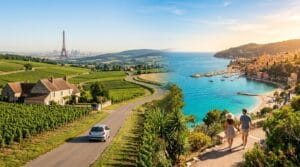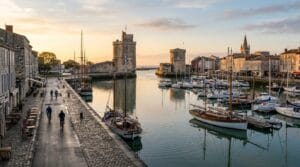
Provence, France, is truly the perfect destination for a slow-travel week in 2026. Seriously, imagine a region where lavender fields stretch forever, medieval villages cling to sun-baked limestone valleys, and you can go from Roman amphitheaters to working vineyards all in a single afternoon. A 7-day Provence itinerary gives you just enough time to really soak in the region’s distinct personalities — from the wild Camargue to the cultural heart of Aix-en-Provence and the utterly cinematic villages of the Luberon — without ever feeling rushed.
I actually spent two weeks in Provence, digging deep to research this itinerary. I drove those tiny D roads that never show up on tourist maps and stayed in gîtes run by families who’ve been there for four generations. This isn’t just postcard Provence; it’s the real deal.
Before You Go: When to Visit Provence in 2026
The classic Provence lavender season runs from late June to early August, which is when those famous lavender fields in Valensole Plateau and Sault hit peak bloom. But here’s the thing: this period also means peak tourist crowds and accommodation prices that can be up to 40% higher than during the shoulder season.
According to the Provence Tourism Board’s 2025 visitor statistics, May and September are the fastest-growing travel months. Why? Because travelers are catching on that the region is just as stunning outside of lavender season. Spring brings gorgeous poppies and almond blossoms; early autumn means grape harvest (vendanges), truffle season, and that beautiful softening of summer’s harsh light that makes everything photographically extraordinary. It’s a photographer’s dream, honestly.
So, the sweet spots for 2026? I’d say May 15 – June 10 (before the lavender madness hits), or September 10 – October 15 (harvest season, fewer people, and still wonderfully warm). Definitely try to avoid the last two weeks of July and August unless you’ve booked your accommodation 6+ months ahead. Trust me on this one.
Day 1-2: Aix-en-Provence — Culture Base
Fly right into Marseille-Provence Airport (MRS) and then just hop on the Navette bus or train for a quick 20-minute ride to Aix-en-Provence. This city is going to be your cultural anchor for the first two days.
Aix essentials: The Cours Mirabeau? It’s one of France’s most beautiful boulevards, hands down. It’s lined with plane trees, stunning 18th-century hôtels particuliers, and outdoor cafés perfect for people-watching. The Tuesday, Thursday, and Saturday morning markets on Place Richelme and Place des Prêcheurs are some of the best food markets in France, no exaggeration. And the Atelier Cézanne — the painter’s perfectly preserved studio — costs only €6.50 and offers such extraordinary insight into how he worked. It’s a must-see.
Where to eat: For Provençal classics like bouillabaisse or daube de boeuf, you can’t go wrong with Jacquou le Croquant. If you’re looking for an exceptional prix-fixe dinner that really showcases local truffles and lamb, Le Formal is your spot. On a budget? Head to the Cours Julien market for some delicious socca and olive tapenades.
Where to stay: If you’re looking to splurge, Hôtel Cézanne is a 4-star boutique option right in the center, or there’s Villa Gallici, a 5-star hotel with a pool and a fantastic gastronomic restaurant. For budget travelers, self-catering apartments on Place des Cardeurs are a great idea.
Day 2 addition: Take a 30-minute drive to the Sainte-Victoire mountain, the very one Cézanne painted 87 times. The Tholonet trail (3 hours round trip, moderate difficulty) gives you the painter’s actual vantage points and some truly extraordinary views over the Provençal basin. Worth the hike!
Day 3: The Camargue — Europe’s Wild Delta
Drive about 1.5 hours southwest to the Camargue. This isn’t just Europe’s largest river delta; it’s one of its last truly wild landscapes, which I find fascinating. The 930 km² nature reserve at the mouth of the Rhône is home to white horses that roam freely, pink flamingos feeding in saline lagoons, and black bulls looked after by gardians (French cowboys) using methods that haven’t changed in centuries. How cool is that?
Must-see: You’ll want to hit the Étang de Vaccarès observation points for flamingos (best viewing is early morning, and seriously, bring binoculars!). Then there’s Les-Saintes-Maries-de-la-Mer, the pilgrimage town right at the heart of the Camargue, with its black Madonna and a lively Gitan (Roma) cultural tradition. For context on this unique ecosystem, swing by the Réserve Nationale de Camargue visitor center.
Practical tip: Rent a horse for a 2-hour guided ride through the marsh. It’s really the only way to access many areas, and it’s an extraordinary experience even if you’re not a seasoned rider. Check out Promenade Équestre Le Cacharel: it’s €40 per person, and you absolutely need to reserve ahead.
Day 4: The Luberon — Medieval Villages Route
Time to drive northeast through the Luberon massif, the very region Peter Mayle made famous with A Year in Provence. Honestly, the hilltop villages here deserve a full day each, but we’re going to hit five of them on one route. Pretty ambitious, right?
Luberon village circuit (north to south):
- Gordes — This is the most photographed village in France, and for good reason. Stone houses literally cascade down a limestone cliff. Get there before 10 am if you want to experience those empty, quiet streets. Oh, and the nearby Abbaye de Sénanque (that medieval monastery framed by lavender) is only 4km away.
- Roussillon — Built right on an ochre deposit, the entire village is painted in shades from bright yellow to deep red. The Sentier des Ocres (45-minute walk) through the ochre quarry? Unmissable.
- Ménerbes — This is the quiet antidote to Gordes’ crowds. You’ll find lovely wine estates and the Maison de la Truffe et du Vin du Luberon for tastings here.
- Lacoste — A village totally dominated by the ruined château of the Marquis de Sade. Pierre Cardin actually owns much of it now, which makes it a genuinely strange, fascinating place to visit.
- Bonnieux — The bakery on the central square opens at 7 am, which is perfect for an early start. And the cedar forest trail behind the village leads to views that honestly make the climb worth every single step.
Day 5: Les Baux-de-Provence and Alpilles
The dramatic limestone ridge of the Alpilles definitely deserves an entire day. Les Baux-de-Provence, perched high on a white rock outcrop, is one of the most vertigo-inducing medieval sites you’ll find in France. The ruined château (€10 entry) offers incredible 360° views over the Camargue, Rhône Valley, and the Luberon. What a sight!
Don’t miss: Carrières de Lumières. This is an immersive art experience, truly stunning, with projections onto the walls of an old quarry. The 2026 exhibition features Dalí and Spanish surrealists. It’s technically brilliant, and entry is €14. If your budget allows, combine it with lunch at L’Oustaou de Baumanière (two Michelin stars, legendary local dishes), or go for the farmhouse lunch at Mas de l’Oulivié for exceptional value.
In the afternoon, drive over to Saint-Rémy-de-Provence, the Roman city where Van Gogh painted during his time at the Saint-Paul-de-Mausole asylum. The nearby Roman ruins at Les Antiques (which are free, by the way) are extraordinary — an arch and mausoleum from 30 BC in nearly perfect condition. Pretty wild to think about.
Day 6: Avignon and the Pont du Gard
Drive just 30 minutes north to Avignon, the incredible walled city where seven popes ruled back in the 14th century. The Palais des Papes (€14) is the largest Gothic palace in the world and, in my opinion, even more impressive inside than its monolithic exterior suggests. The Pont d’Avignon (you know, the famous bridge from the children’s song) stretches into the Rhône from the city walls — you can walk on it for €5 entry.
For the afternoon, head 20 minutes east to the Pont du Gard. This is the best-preserved Roman aqueduct in the world, a 50-meter-high bridge spanning the Gard River, built way back in 19 BC. Swimming in the river right beneath it is free, and honestly, it’s one of the most pleasurable experiences you can have in southern France on a warm day. The on-site museum (€10, includes access) provides geological and engineering context that makes this structure even more mind-blowing.
For practical travel planning and booking links for Provence, check out our guides on Paris travel guide, Normandy travel guide, and our essential France travel tips.
Day 7: Wine Country and Departure
Châteauneuf-du-Pape, just 20 minutes north of Avignon, is one of France’s most prestigious wine appellations. Its grenache-dominant blends are aged in cellars dug right into the same volcanic bedrock as the vines. Several estates offer free tasting visits; I’d prioritize Château Rayas, Château Beaucastel, and Clos des Papes. The ruined papal summer castle overlooking the vineyards makes for a really photogenic stop before you head back to Marseille.
The 95-mile journey from Châteauneuf-du-Pape to Marseille Provence Airport takes about 1.5 hours, which leaves you some time for a final lunch in the coastal Calanques. These are those stunning turquoise limestone fjords east of Marseille where you can swim in clear Mediterranean water, all in the shadow of 400-meter white cliffs. What a way to finish your trip, right?
Practical Planning: Budget, Transport & Accommodation
Getting around: You absolutely need a car for Provence if you want to explore the Luberon, Camargue, and Alpilles routes properly. You can rent one from Marseille airport (expect to pay €280-350 for a week from major providers). While Aix-en-Provence and Avignon are easily reachable by train from Marseille and Paris, public transport just doesn’t reach most of those charming villages.
Budget breakdown per person (7 days):
- Accommodation (mid-range gîte/2-star hotel): €70-120/night → €490-840
- Food: €30-60/day (self-catering breakfast, market lunch, restaurant dinner) → €210-420
- Car rental: €40-50/day → €280-350
- Attractions: €80-120 total
- Total: €1,060-1,730 per person
Book in advance: You’ll need timed tickets for Abbaye de Sénanque access, and restaurant reservations are a must for any Michelin-starred or popular establishments. And, of course, accommodation if you’re visiting between June and August.
For accommodation booking with the best price guarantee, we recommend comparing options via Booking.com and GetYourGuide for local experiences: Compare Provence hotels →
Frequently Asked Questions
When is the best time to visit Provence France?
May-June and September-October are the optimal months, hands down. You’ll find fewer crowds than in summer, super comfortable temperatures (around 22-28°C), and stunning seasonal landscapes (think spring flowers in May, grape harvest in September). If lavender is your absolute priority, late June to early August gives you peak bloom at Valensole Plateau and Sault, but be prepared for maximum tourist density during that time.
Do I need a car to visit Provence?
For the classic Provence experience, the one that covers the Luberon villages, the Camargue, and the Alpilles? Yes, a car is absolutely essential. While major cities like Aix-en-Provence, Avignon, and Marseille have decent train connections, those charming hilltop villages and beautiful nature reserves that truly define Provence are pretty much inaccessible by public transport.
What is the most beautiful village in Provence?
Gordes consistently ranks among the most beautiful villages in France — those stone buildings cascading down a limestone cliff, with Sénanque Abbey’s lavender fields just 4km away. Les Baux-de-Provence is a strong contender for the most dramatic, in my opinion. But for authenticity with fewer crowds, Ménerbes and Lacoste offer similar architectural beauty with significantly lower visitor numbers.
Is Provence expensive to visit?
It’s generally less expensive than Paris for equivalent quality. You can expect to spend €30-50/day on food if you grab lunch at market stalls and make your own breakfast from local market ingredients. Accommodation runs about €70-150/night for quality gîtes or 2-3 star hotels. The main cost, honestly, is the rental car. Overall, a week in Provence for two will likely cost you €2,000-3,200 all-in at a mid-range level.
What French phrases do I need for Provence?
Bonjour (hello, always say this first!), merci (thank you), s’il vous plaît (please), une bouteille de rosé, s’il vous plaît (essential in Provence, trust me), est-ce qu’il y a du Wi-Fi? (is there Wi-Fi?), and l’addition, s’il vous plaît (the bill, please). While English is widely understood in tourist areas, making a genuine effort with basic French is always warmly received. It really goes a long way!
Sophie Laurent is a French travel writer and cultural journalist based between Paris and Aix-en-Provence. She has covered French destinations for international travel publications for 12 years, with a specialty in slow travel, food culture, and off-the-beaten-path French regions.