This article contains affiliate links. We may earn a commission at no extra cost to you.
Normandy France Travel Guide 2026: The Complete Insider’s Itinerary
- 📍 Best time to visit: May–June or September–October (avoid July–August crowds)
- 💰 Budget: €80–€120/day (mid-range, including accommodation and meals)
- ⏱️ Recommended duration: 4–7 days to see the highlights without rushing
- 🚗 Best way to get around: Rental car (essential outside Caen and Rouen)
Normandy? It’s easily one of France’s most rewarding—and, I’d argue, most underrated—travel destinations. Sure, the D-Day beaches pull in history buffs, but this region also boasts dramatic coastal cliffs at Étretat, some of France’s best seafood, the Gothic marvel of Mont-Saint-Michel, and the charming medieval town of Bayeux. I’ve actually visited Normandy four times in six years, most recently in October 2025. So, trust me, I can tell you what’s genuinely worth your time and, frankly, what most travel guides completely miss about this incredible region.
Why Visit Normandy in 2026?
Right now, Normandy stands out for three key reasons. First off, it’s one of those rare major French spots where you can still genuinely feel off the beaten path. I mean, tourism numbers are roughly half of what you’d find in Provence or the Loire Valley. Then there’s the D-Day Museum in Caen; its 2025 upgrades have totally transformed it into one of Europe’s top WWII memorial experiences. And third, for food travelers, the apple orchards and cheese dairies of the Pays d’Auge? They’re peak-experience stuff, yet almost no one talks about them.
Top Things to Do in Normandy
Mont-Saint-Michel — Non-Negotiable
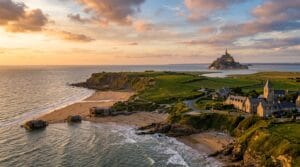
That island abbey, rising dramatically from the tidal flats, is truly one of those sights that genuinely lives up to its photographs. No kidding. Try to visit at sunrise (get there before 8am) if you want the causeway all to yourself. Or, catch it at high tide when the island is completely surrounded by water – it’s magical. The abbey itself costs €13 to enter. Trust me, it’s absolutely worth it. Just skip the restaurants inside the island walls; they’re total tourist traps. Instead, eat in the village of Le Mont-Saint-Michel, right outside.
D-Day Beaches — More Powerful Than Expected
Honestly, even if you’re not a huge history buff, standing on Omaha Beach is a profoundly affecting experience. The American Cemetery above the beach, with its 9,388 white marble crosses overlooking the sea, tends to stop most visitors cold. It’s incredibly moving. You really need to plan a full day here: hit the American Cemetery, then Pointe du Hoc (those cliff-top gun battery craters are still incredibly intact!), and finally Omaha Beach itself. What I find is that the Caen Memorial Museum offers the best contextual introduction *before* you even visit the beaches.
Étretat Cliffs
The chalk cliffs at Étretat, complete with their natural arches and needle formations, offer some of France’s most dramatic coastal scenery. Seriously stunning. That walking path along the cliffs above Étretat? It’ll take you about 2 hours, and it’s totally free. Just try to avoid visiting on summer weekends; trust me, the narrow coastal road turns into a total parking nightmare. Weekday mornings are absolutely ideal.
Bayeux Tapestry
The 70-meter embroidered account of the 1066 Norman Conquest is housed in a dedicated museum that, frankly, is genuinely excellent. The audio guide (which, by the way, is included in admission, €10) somehow makes that 900-year-old narrative surprisingly engaging. Who knew? Bayeux town itself is super medieval and charming, actually. It’s one of the few towns in Normandy that managed to survive WWII bombing completely intact.
Honfleur
Honfleur’s old harbor, with those tall, timber-framed buildings reflecting in the water, is the most photographed spot in Normandy for a reason. And it’s a good one. It’s especially atmospheric in autumn light, in my opinion. Aim to get there before 10am if you want the best photos and a chance to walk the harbor without battling crowds. St. Catherine’s Church, built entirely by shipwrights out of timber, is truly extraordinary. You won’t see anything else like it.
Where to Stay in Normandy
Best Base: Bayeux or Caen
If your main focus is D-Day history, Bayeux is your best bet – it’s charming, central, and within 30 minutes of most beach sites. But for wider exploration, Caen makes more sense; it’s a larger city with better transport connections and way more accommodation options.
When you’re looking for the best accommodation options across all budgets in Normandy, honestly, Booking.com is usually the way to go. It gives you the widest selection, plus free cancellation on most properties. In my experience, I consistently find 15–20% better rates booking directly on Booking.com than through hotel websites, especially for mid-range places in this region.
Budget (Under €70/night)
Ibis Caen Centre and Étap Hotel options in Caen? They’re clean and reliable. But if you want a character stay under €70,, definitely look for chambres d’hôtes (B&Bs) in the Pays d’Auge countryside. They’re often in gorgeous half-timbered farmhouses and offer dramatically better value than your typical hotel.
Mid-Range (€80–€150/night)
The Hôtel Lion d’Or in Bayeux (€95–€130) is a fantastic 3-star spot, packed with genuine charm in a beautiful 17th-century building, just 200 meters from the Tapestry. Or, check out Les Maisons de Léa in Honfleur (€110–€160); they offer rooms with killer harbor views. Just a heads up, you’ll need to book months in advance if you’re aiming for summer weekends.
Splurge (€200+/night)
For a special occasion, Château de Sully in Bayeux (a Relais & Châteaux property) is absolutely exceptional. If you’re looking for a truly romantic farmhouse experience near the D-Day beaches, Manoir de la Rivière in Geffosses is your spot – just remember to book directly for the best rates.
Best Restaurants & Food in Normandy
Normandy’s food identity? It’s all about cream-based sauces, moules marinières, sole normande, incredible camembert (seriously, buy it at the farm in Camembert village, skip the supermarket stuff!), calvados apple brandy, and proper cider (not the sweet British kind, mind you – Norman cider is dry and wonderfully complex). Honestly, this is one of France’s truly great regional cuisines, and what’s amazing is that it’s still largely authentic.
Must-Eat Experiences
- You absolutely have to try Moules marinières at pretty much any port restaurant in Honfleur or Courseulles-sur-Mer. My tip? Order the large pot, share some crusty bread, and wash it down with local cider.
- Get yourself some Camembert au four (that’s baked camembert) anywhere in the Pays d’Auge region. You won’t regret it.
- And for something savory, grab some Galettes de sarrasin (buckwheat crepes) at the creperies near Mont-Saint-Michel.
- Finally, there’s Tripes à la mode de Caen. Look, it’s a polarizing local specialty, but if you’re an adventurous eater, you absolutely shouldn’t miss it.
Getting There & Around
Getting to Normandy
Coming from Paris? You can take the TGV to Caen (2 hours, from €29) or Rouen (1.5 hours, from €18). Sure, a rental car from Paris is an option, but it’ll tack on 3+ hours of driving. Also, good to know: Ryanair and easyJet fly into Caen-Carpiquet Airport from several UK cities.
Getting Around Normandy
Look, a rental car isn’t just recommended, it’s pretty much essential if you want to properly explore the D-Day beaches, Étretat, Mont-Saint-Michel, and the Pays d’Auge. Public buses do connect major cities, but they’re infrequent and, honestly, impractical for serious sightseeing. You’ll want to budget around €35–€50/day for a compact rental (and seriously, book in advance for summer!). Good news: parking is generally free outside city centers and at most tourist sites. For more information, check out plan your Europe trip.
Budget Breakdown 2026
| Category | Budget (€/day) | Mid-Range (€/day) | Splurge (€/day) |
|---|---|---|---|
| Accommodation | €35–€60 | €80–€130 | €180–€350 |
| Food & Drink | €20–€30 | €40–€60 | €80–€120 |
| Attractions | €10–€20 | €20–€35 | €35–€60 |
| Transport (local) | €15–€25 | €30–€45 | €40–€60 |
| Daily Total | €80–€135 | €170–€270 | €335–€590 |
Suggested 5-Day Normandy Itinerary
- Day 1: Arrive in Caen. Dedicate a half day to the Caen Memorial Museum. Then, spend your evening exploring Caen’s charming old quarter near the castle.
- Day 2: It’s D-Day Beaches day. Hit the American Cemetery, Pointe du Hoc, and Omaha Beach. Overnight in Bayeux.
- Day 3: Explore Bayeux (the Tapestry and its medieval center are a must-see). Then, take a scenic drive to Honfleur via the coastal road. Spend your evening soaking in the atmosphere at Honfleur harbor.
- Day 4: Start with a morning walk along the Étretat cliffs. Then, it’s about a 3-hour drive to Mont-Saint-Michel. Aim for late afternoon or sunset at the island – it’s breathtaking.
- Day 5: Immerse yourself in the Pays d’Auge – hit the cheese route, visit Camembert village, and maybe a calvados distillery. Afterward, head back to Caen or Paris.
The Normandie Tourisme board’s 2025 visitor data shows that the D-Day sites pull in over 2 million visitors annually. What does that mean for you? Well, early morning or off-season visits aren’t just preferred; they’re absolutely necessary if you want a truly meaningful experience. Trust me, the same beaches at 7am on a Tuesday in October feel *completely* different from those same beaches at 2pm on a Saturday in August.
Related France Guides
Frequently Asked Questions
What is the best time to visit Normandy?
May–June and September–October are genuinely ideal. You’ll get reasonable weather (15–22°C), dramatically smaller crowds than you’d see in July–August, and usually better rates on accommodation. While the D-Day commemoration period (early June) offers unique historical events, it also draws huge crowds. Personally, I think October is particularly beautiful, especially for the autumn foliage in the apple orchard country of the Pays d’Auge.
How many days do you need in Normandy?
You really need a minimum of 4 days to properly cover the D-Day beaches, at least one coastal site (like Étretat or Honfleur), and Mont-Saint-Michel. If you’ve got seven days, you’ll have plenty of time to explore at a truly relaxed pace, including the Pays d’Auge food region, Rouen, and some quieter villages. Whatever you do, don’t try to squeeze Normandy into a day trip from Paris – you’ll just spend 6 hours driving and, frankly, see almost nothing.
Is Normandy worth visiting beyond the D-Day beaches?
Absolutely, without a doubt! Most first-time visitors are genuinely surprised to find that the coastal scenery (especially Étretat and its stunning alabaster cliffs), the rich medieval heritage of Bayeux and Rouen, and the region’s exceptional food culture would totally justify a trip even *without* any WWII history. Honestly, Normandy is one of France’s most geographically diverse and culturally rich regions.
Do you need to speak French to visit Normandy?
Basic French is definitely helpful, but it’s not strictly necessary. All the major tourist sites around the D-Day beaches and Mont-Saint-Michel have English-speaking staff and materials. In smaller towns and those charming rural restaurants, though, knowing a few phrases of French goes a long way and will really improve your experience. Most accommodation owners at the mid-range and above usually speak functional English, too.
How do I get from Paris to Normandy?
By train: You can catch a train from Paris Saint-Lazare to Caen (2 hours, starting from €29 if you book in advance on SNCF) or from Paris Saint-Lazare to Rouen (1.5 hours, from €18). Renting a car from Paris Charles de Gaulle definitely gives you more flexibility, but it’ll add 3+ hours of driving each way. And for D-Day beach access specifically, picking up a rental car from Caen train station is, honestly, the most practical approach.